
Planting
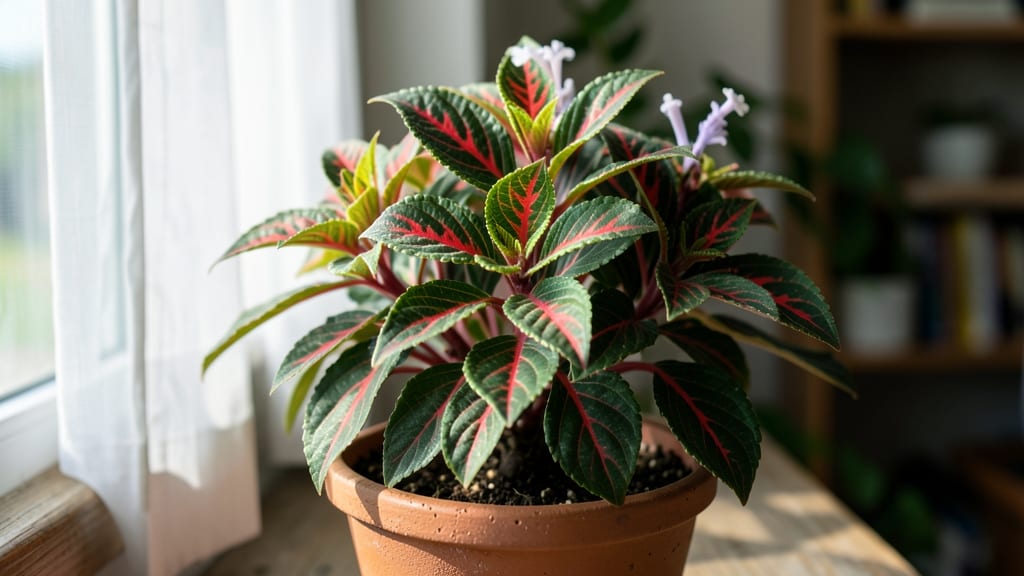
Green leaf red veins plants—such as Coleus and certain Pothos varieties—display striking foliage where bold burgundy or crimson veins contrast sharply against bright green leaves. These plants flourish with bright indirect sunlight, regular watering, and well-draining potting mix to maintain their vivid coloration.
These plants aren't just visually stunning—their vibrant coloration comes from anthocyanins, natural pigments that thrive under specific growing conditions. 🌿 For example, Coleus leaves can shift from deep red to bright pink depending on light exposure, while Pothos varieties like 'Neon' or 'Red Emerald' maintain their rich veins when kept in moderate humidity.
The key to preventing dull leaves lies in balancing moisture and light, as too much direct sun can scorch the delicate foliage while insufficient light fades the red tones over time.
If you're new to growing these plants, start with a simple care routine: water when the top inch of soil feels dry, and rotate the pot occasionally to ensure even light exposure.
A mix of peat moss and perlite works well for drainage, and a gentle fertilizer during spring and summer can boost their health without overwhelming the roots.
💡 In This Article
- Identifying Common Plants with Green Leaves and Red Veins
- Optimal Care Tips for Vibrant Red-Veined Foliage
Identifying common plants with green leaves and red veins
The striking contrast of green leaves with bold red veins comes from specific botanical traits. For example, Coleus (Solenostemon) features thick, oval leaves with veins that can range from deep burgundy to bright pink, depending on light exposure.
The leaf edges often have jagged, serrated textures, and the stems are square-shaped—a key identifier. Meanwhile, Pothos varieties like 'Red Emerald' showcase heart-shaped leaves with prominent red veins that run parallel to the midrib, creating a dramatic visual effect.
Another standout is Caladiums, which produce arrowhead-shaped leaves with bold red veins radiating from the center. Unlike Coleus or Pothos, Caladiums grow from tubers and prefer higher humidity, making them ideal for bathrooms or kitchens.
The vein patterns in Caladiums are more intricate, often resembling a network of fine lines rather than broad streaks. 🌿 To differentiate these plants, examine leaf shape, vein thickness, and growth habits—Coleus grows upright with bushy foliage, while Pothos trails or climbs, and Caladiums spread horizontally.
The color intensity of these red veins is directly tied to anthocyanin production, a type of pigment that responds to light and temperature. In low light, Coleus leaves may develop deeper red hues, while Pothos veins can fade to a muted pink.
This sensitivity to light is why these plants often lose their vibrancy in dim conditions—anthocyanins break down when starved of sufficient light, turning leaves dull green.
For instance, a 'Black Dragon' Coleus thrives in bright indirect light, where its veins remain a rich crimson, but in a north-facing window, the red may dull to a pale pink.
If you're unsure which plant you have, check the leaf arrangement and stem structure. Coleus has opposite leaves (two per node) with square stems, while Pothos has alternate leaves (one per node) with round stems.
Caladiums, on the other hand, grow from underground tubers and lack traditional stems, instead producing leaves directly from the soil. These distinctions help narrow down the plant type and guide care routines tailored to their specific needs.
For a quick visual check, hold a leaf up to a bright light source—the way the veins cast shadows can reveal their thickness and pattern. Thick, bold veins (like in 'Pink Champagne' Coleus) indicate high anthocyanin content, while finer veins (common in 'Silver Satin' Pothos) suggest a more subtle contrast.
This simple test can confirm whether your plant falls into the vibrant red-veined category or a similar but less striking variety.
One common mistake is confusing red-veined plants with those that have red edges (like some varieties of Peperomia) or entirely red leaves (such as certain Begonias).
The key difference lies in the vein structure—red-veined plants have green leaf tissue with red lines running through them, while red-edged varieties have green centers with red borders. This distinction is crucial for care, as red-edged plants often tolerate more direct sunlight than their veined counterparts.
To deepen your identification skills, observe how the plant grows over time. Coleus often develops new leaves with shifting colors as it matures, while Pothos maintains consistent veining unless stressed. Caladiums, meanwhile, produce new leaves seasonally, with each batch potentially showcasing different vein intensities.
These growth patterns provide clues to the plant's health and care requirements, helping you tailor your approach for the most vibrant foliage possible. 💫