
Planting
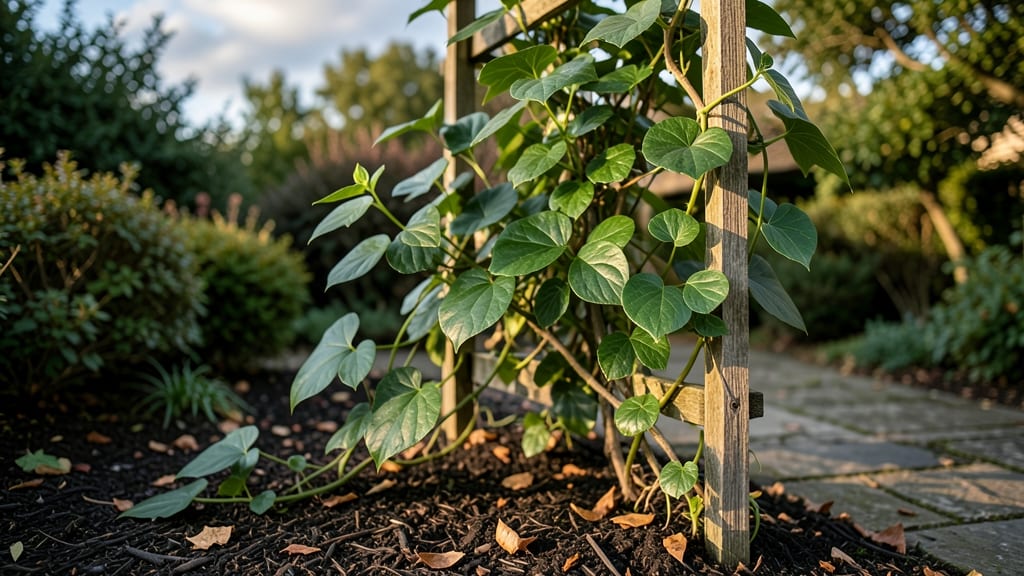
That mysterious vine creeping up your trellis might be identifying climbing plants by leaf—and the secret is in the details you’ve been ignoring. 🌿 Look closer at the leaf shape, edges, and veins, and you’ll unlock clues that transform a guessing game into a confident match.
I’ve used this method to ID everything from aggressive ivy to delicate wisteria, and it works even when flowers aren’t in sight.
The first step? Leaf shape—is it lobed like Boston ivy, heart-shaped like clematis, or compound like honeysuckle? Next, check the edges: smooth (wisteria), toothed (Virginia creeper), or deeply lobed (poison ivy).
Veins tell another story: palmate (five main veins) or pinnate (single central vein). Grab a magnifying glass if needed—these features narrow it down faster than any app.
You’ll spot the differences that matter: clematis leaves are simple and opposite, while ivy has glossy, evergreen lobes. Wisteria leaves are compound with 9-19 leaflets, while jasmine has smaller, oval singles.
Once you train your eye, you’ll recognize patterns that make ID effortless—no more pulling out plants to check the label later.
For tricky cases, snap a photo and use a plant ID app like PlantNet or ask your local gardening group. The key is patience—some climbers, like morning glory, change leaf shape as they mature. Start with these basics, and you’ll go from confused to confident in no time.
How Plant Traits Evolve Naturally
Climbing plants develop their unique leaf structures—from lobed shapes to serrated edges—as a result of evolutionary adaptations shaped by survival needs. Understanding why these traits emerge helps gardeners and botanists decode their identities. Here’s how nature’s pressures sculpt climbing foliage:
Leaves aren’t just decorative; they’re survival tools. Climbing plants often grow in competitive environments where sunlight, space, and nutrients are scarce. Their leaf traits evolve to maximize efficiency:
- Light Capture: Broad, thin leaves (like those of Clematis) maximize photosynthesis by catching as much sunlight as possible. In shady forests, some climbing plants develop larger surface areas to absorb faint light.
- Water Conservation: Plants in arid climates (e.g., Passiflora) often have thick, waxy leaves or deep lobes to reduce water loss through transpiration.
- Clinging Mechanisms: Some leaves, like those of Boston Ivy (Parthenocissus tricuspidata), develop aerial roots or tendrils—sometimes disguised as leafy structures—to latch onto surfaces.
Leaf morphology isn’t just about sunlight—it’s also a mix of genetics and environment. Here’s how each plays a role:
| Factor | Effect on Leaf Shape | Example Plants |
|---|---|---|
| Genetics | Inherited traits determine base leaf structure (e.g., palmate vs. pinnate veins). Mutations can lead to unique variations like lobed or serrated edges. | Virginia Creeper (Parthenocissus quinquefolia) – 5 leaflets; Poison Ivy (Toxicodendron radicans) – 3 leaflets. |
| Sunlight Exposure | Plants in full sun often develop smaller, tougher leaves to prevent overheating, while shade-dwellers grow larger, softer leaves. | Honeysuckle (Lonicera) – Glossy leaves in sun; English Ivy (Hedera helix) – Darker, broader leaves in shade. |
| Soil Nutrients | Nutrient-rich soil encourages lush, vibrant foliage**, while poor soil may lead to smaller, tougher leaves with deeper veins for efficient water transport. | Grapevines (Vitis) – Large, lobed leaves in fertile soil; stunted growth in rocky terrain. |
Sometimes, leaf traits change due to human activity or altered habitats. For example:
- Pollution Tolerance: Plants in urban areas (like Creeping Fig (Ficus pumila)) may develop thicker cuticles or smaller leaves to resist air pollution.
- Pruning and Training: Gardeners who prune climbing plants (e.g., Wisteria) can inadvertently encourage larger, more divided leaves by redirecting energy growth.
- Climate Change: Rising temperatures may cause some climbing plants to produce lighter-colored or hairier leaves as a protective adaptation.
To really identify a climbing plant by its leaf, look beyond just shape—check for:
- 🔍 Veins: Are they palmate (spreading from one point) or pinnate (parallel along the stem)?
- 🌡️ Texture: Smooth, fuzzy, or waxy? This can indicate moisture needs.
- ✨ Arrangement: Are leaves opposite (paired at nodes) or alternate (staggered)?
These clues reveal whether a plant is adapted to climb via tendrils, roots, or sheer weight—key traits for accurate ID!
Quick Guide To Identifying Climbing Plants
If you’ve ever stared at a lush, leafy vine and wondered, "What in the world is this?"—you’re not alone. 🌿 Climbing plants can be tricky to pinpoint, but with the right approach, you can decode their identity like a pro.
Below, we break down the most common challenges and provide step-by-step solutions to help you identify climbing plants by leaf with confidence.
Some climbing plants share striking similarities—think ivy vs. Virginia creeper or morning glory vs. bittersweet. If you’re staring at two vines with almost identical leaves, don’t panic. Here’s how to tell them apart:
📐 Compare Leaf Shapes & Arrangement
- Ivy (Hedera helix): Leaves are lobed like a maple (3-5 rounded points) and grow in opposite pairs along the stem.
- Virginia Creeper (Parthenocissus quinquefolia): Leaves have 5 pointed lobes (like a tiny hand) and grow in palmate clusters (all radiating from one point).
- Morning Glory (Ipomoea spp.): Leaves are heart-shaped with smooth edges and grow in a spiral pattern up the stem.
Pro Tip: 💡 Snap a photo of the leaf and the stem attachment—this combo is often the game-changer!
🌡️ Check the Climate & Growth Habit
- Tropical vines (e.g., Mandevilla, Bougainvillea): Thick, glossy leaves with no hairs—they thrive in warm climates.
- Temperate vines (e.g., Clematis, Wisteria): Leaves may be fuzzy or compound (multiple leaflets per stem), adapting to cooler weather.
Prevention Tip: ✨ Keep a plant journal with notes on leaf texture, color changes, and where you spotted the vine. Over time, you’ll spot patterns that narrow down the options.
Sometimes, the vine you’re trying to ID has chewed leaves, disease spots, or no leaves at all. Here’s how to work with what you’ve got:
🔪 Look for Stem & Bark Clues
- Thorns or tendrils? Passionflower vines have curly tendrils, while blackberry brambles have sharp thorns.
- Smooth vs. ridged bark: Wisteria has deep furrows, while grapevines have smoother, lighter bark.
🌱 Examine the Growth Pattern
- Twining vines (e.g., Morning Glory, Honeysuckle): Wrap around supports in a spiral motion.
- Clinging vines (e.g., Ivy, Boston Ivy): Use rootlets or adhesive pads to stick to walls.
Pro Tip: 🔥 If leaves are gone, scratch the stem—some vines (like poison ivy) have distinctive white sap or hairy stems.
Prevention Tip: 🌡️ Water vines in the early morning to reduce fungal diseases (like powdery mildew) that can distort leaves.
If you’re torn between two possible IDs, use this elimination chart to narrow it down:
| Feature | Option 1: Clematis | Option 2: Jasmine |
|---|---|---|
| Leaf Shape | Compound (3+ leaflets), fuzzy undersides | Oval, smooth, often paired |
| Flowers | Bell-shaped, no fragrance | Star-shaped, highly fragrant |
| Growth Habit | Clings with petioles (leaf stems) | Twines clockwise around supports |
Pro Tip: 🎯 Smell the leaves! Some vines (like jasmine or star jasmine) have a distinctive scent that’s a dead giveaway.
Prevention Tip: ✨ Label your plants at the base with a small stake and the name. No more guessing games!
With these strategies, you’ll go from leaf-looker to plant detective in no time. Happy identifying! 🕵️♂️🌿
Frequently asked questions
What are the most common climbing plants with distinctive leaves?
Start with these standout examples: Ivy (lobed, glossy leaves), Clematis (fuzzy, compound leaflets), Wisteria (long clusters of oval leaflets), and Honeysuckle (smooth, oval leaves with pointed tips). These four cover a wide range of leaf shapes and textures that help narrow down your mystery vine.
How do I tell apart ivy and Virginia creeper?
Look at the leaf arrangement: Ivy has opposite leaves (paired at each node) with 3-5 rounded lobes, while Virginia creeper has 5 pointed lobes arranged in a palmate cluster (like a tiny hand). Also check the stems—Virginia creeper turns red in fall, while ivy stays green.
What should I do if the leaves are damaged or missing?
Check the stem and bark instead: Passionflower vines have curly tendrils, Wisteria has deeply grooved bark, and Poison ivy leaves grow in groups of three with smooth edges. If you can't see leaves, examine the growth pattern—twining (like morning glory) vs. clinging (like ivy).
Are there any climbing plants with fragrant leaves?
Yes! Jasmine (especially star jasmine) and Honeysuckle both have highly aromatic leaves when crushed. Clematis leaves may have a faint sweet scent, while Grapevines sometimes release a musky fragrance. Smell test carefully—some vines like Poison Ivy can cause allergic reactions.
What's the best tool for identifying climbing plants?
Start with a magnifying glass (for leaf details) and a plant ID app like PlantNet or PictureThis. For tricky cases, join local gardening forums where members can help verify your findings. Keep a small notebook to track leaf textures, arrangements, and growth habits over time.