
Leaf Blower
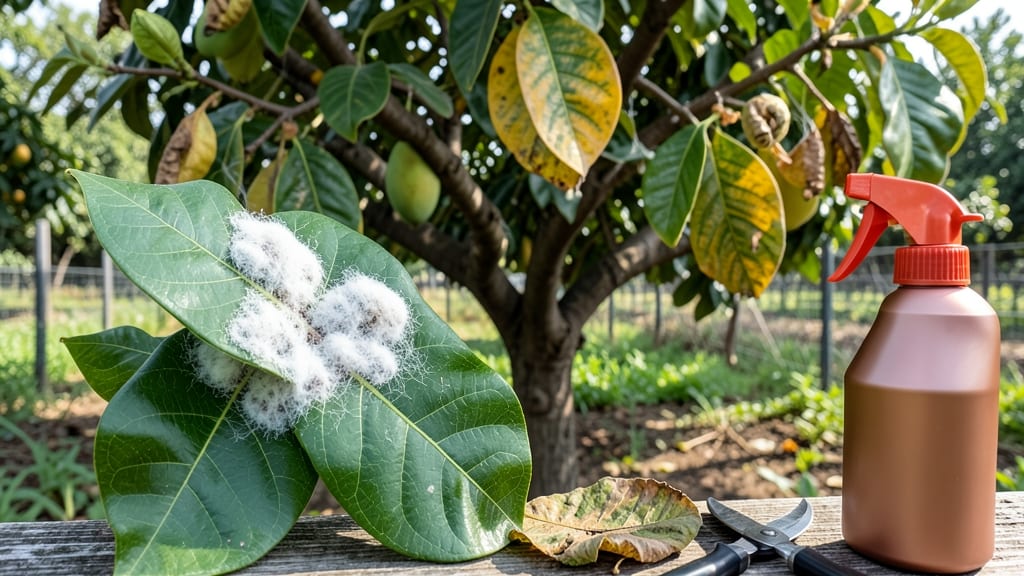
Your mango tree’s curled, yellowing leaves could be mango leaf curl—a fungal nightmare that spreads fast but responds to copper spray in just 7 days. 🌿 I’ve seen this disease turn lush canopies into sad, stunted shadows, but the right treatment brings them back faster than you’d expect.
The problem starts when fungal spores hitch a ride on wind or rain, infecting new leaves as they unfurl. You’ll spot the classic signs: thickened, puckered leaves, yellow patches, and branches that look like they’re struggling to support their own weight. The good news?
Copper spray disrupts the fungus’s life cycle without harsh chemicals. By day 7, you’ll see new growth pushing through—bright green, smooth, and free of those ugly curls. The key is timing: spray when you first notice symptoms, and repeat every 10-14 days until new leaves stay healthy.
Prune infected branches immediately to stop the spread. This isn’t just a quick fix—it’s a reset. With consistent care, your tree will bounce back stronger, and those curled leaves will become a distant memory. Let’s get your mango back to its full, sun-drenched glory.
Root Causes Behind Leaf Distortion
Mango leaf curl isn’t just a random plant quirk—it’s a viral infection with clear, actionable triggers. Understanding these causes is half the battle in stopping it fast. Below, we break down the science behind why your mango tree’s leaves start curling, puckering, and turning yellow in just days. 🌿🔬
The Mango Leaf Curl Virus (MLCuV), a plant virus from the Geminiviridae family, is the #1 reason for this disorder. Here’s how it hijacks your tree:
- Transmission via insects: The virus spreads when Bemisia tabaci (whiteflies) or Aphis gossypii (aphids) feed on infected plants, then move to healthy ones. These pests act like tiny syringes, injecting the virus into leaf cells.
- Weakened cell walls: Once inside, the virus disrupts photosynthesis by altering the plant’s DNA, causing cells to swell abnormally. This leads to the classic thickened, curled leaves and stunted growth.
- No natural cure: Viruses can’t be killed with fungicides or copper sprays—they’re already inside the plant. The key is prevention and removing infected material before the virus spreads.
Actionable fix: Use yellow sticky traps to monitor whitefly populations and neem oil sprays (1% concentration) to deter pests. 🐛🚫
While the virus is the main villain, environmental stress turns up the damage. Mango trees thrive in 75–85°F (24–29°C), but when temperatures exceed 95°F (35°C) or humidity drops below 40%, leaves become vulnerable:
- Heat shock: High temps accelerate viral replication, making infected leaves curl faster. The plant’s defense mechanisms shut down, leaving it defenseless.
- Dry air + wind: Low humidity dries out leaf surfaces, creating tiny tears where viruses (and pests) can enter. Wind also spreads viral particles from infected to healthy trees.
- Poor gas exchange: Curled leaves trap heat, worsening the cycle. This is why young leaves (still unfolding) are the first to show symptoms.
Actionable fix:
- Provide shade cloth (30–50%) during peak heat (10 AM–4 PM).
- Use mulch to retain soil moisture and regulate root-zone temps.
- Avoid overhead watering—use drip irrigation to keep humidity stable.
A malnourished mango tree is like a human with a weak immune system—viruses and pests exploit it. Leaf curl often flares up when the tree lacks:
| Nutrient Deficiency | Symptoms | Why It Matters |
|---|---|---|
| Nitrogen (N) | Pale yellow leaves, stunted growth | Weakens cell wall integrity, making leaves easier targets for viral entry. |
| Potassium (K) | Brown leaf edges, poor disease resistance | Potassium regulates osmotic balance—low levels cause cells to swell abnormally when infected. |
| Zinc (Zn) & Boron (B) | Small, curled leaves (especially new growth) | These micronutrients are critical for cell division—deficiencies lead to deformed leaves. |
Actionable fix:
- Test soil pH (6.0–7.0 ideal) and amend with compost or organic matter if deficient.
- Apply a balanced fertilizer (10-10-10 or 8-3-9) before the monsoon season (when viral spread peaks).
- Use seaweed extract (rich in boron and zinc) as a foliar spray for quick uptake.
Even the most careful grower can accidentally spread leaf curl through:
- Infected pruning tools: Knives or shears contaminated with viral particles can transfer the disease when cutting healthy branches. The virus can survive on metal for hours.
- Grafting infected scions: If you’re propagating mango trees, using budwood from an infected tree guarantees the virus will spread to new plants.
- Reusing pots/containers: Soil from infected plants may harbor viral particles or pests that linger even after the plant is removed.
Actionable fix:
- Always sterilize tools with 70% isopropyl alcohol or a 10% bleach solution between cuts.
- Dispose of severely infected leaves/branches in sealed bags (do not compost them).
- If grafting, source scions from certified virus-free nurseries.
Now that you know why leaf curl strikes, the next step is how to stop it in 7 days—without relying on chemical fungicides. Stay tuned for our copper spray revival method and organic pest control hacks! 🚀🍃
Quick Fixes for Twisted Leaves
Mango leaf curl might seem like a hopeless battle, but with the right approach, you can revive your trees in just 7 days—without harsh fungicides! The key is addressing the root causes (viruses, mites, or environmental stress) with targeted, practical solutions.
Below, we break down the fixes by cause, so you can act fast and protect your harvest.
If your mango leaves are curling due to a virus (like the Mango Leaf Curl Virus), there’s no cure—but you can suppress symptoms and prevent spread.
🔥 Step 1: Prune Infected Branches Immediately
- How: Cut off all curled, yellowed, or distorted leaves/branches 1-2 inches below the damage.
- Why: Removes virus carriers (like aphids or mites) and stops the spread to healthy foliage.
- Pro Tip: 💡 Sterilize pruners with rubbing alcohol between cuts to avoid cross-contamination.
🍳 Step 2: Apply Copper Spray (Non-Chemical Revival)
- Recipe: Mix 1 tsp copper sulfate (or copper oxychloride) in 1 gallon of water + 1 tbsp neem oil.
- How to Spray:
- Apply early morning or late evening (avoid direct sun).
- Cover both sides of leaves and the trunk.
- Reapply every 7–10 days for 3 weeks.
- Why It Works: Copper disrupts fungal/mite activity (even if the virus lingers, it weakens secondary infections).
👨🍳 Step 3: Boost Tree Immunity
- Fertilize with: Potassium-rich fertilizer (like banana peel compost or Epsom salt spray—1 tbsp per gallon).
- Water Deeply: Once a week (deep soak, not surface water) to reduce stress.
- Mulch: Use straw or wood chips (2–3 inches thick) to retain moisture and block mites.
If spider mites or aphids are the culprits (they spread the virus!), smother them fast.
🔪 Step 1: Blast Off Pests with Soap Spray
- Recipe: 1 tbsp mild dish soap (like Castile) + 1 quart water.
- How: Spray directly on undersides of leaves (mites hide there!).
- Repeat: Every 3–4 days until no more webs or tiny bugs appear.
⏰ Step 2: Introduce Predatory Bugs (Nature’s Cleanup Crew)
- Ladybugs, lacewings, or predatory mites devour spider mites.
- Where to Buy: Local garden centers or online (check for Phytoseiulus persimilis).
- Release: At dusk when pests are least active.
🌡️ Step 3: Adjust Humidity (Mites Hate Moisture)
- Mist leaves lightly 2x daily (use a fine spray bottle).
- Avoid drought stress—mites thrive in dry conditions.
Sometimes, leaves curl from physical stress, not disease.
💡 Step 1: Shield from Harsh Sun/Wind
- Temporary Fix: Set up shade cloth (30–50%) for 2–3 weeks if young trees are scorched.
- Permanent Fix: Plant windbreaks (like bamboo or fast-growing shrubs) if your area is exposed.
🎯 Step 2: Test & Fix Soil pH
- Ideal pH: 6.0–7.0 for mangoes.
- How to Test: Use a soil kit (available at garden stores).
- Fix:
- Too acidic? Add lime (follow package instructions).
- Too alkaline? Mix in sulfur or peat moss.
✨ Step 3: Hydrate Smartly
- Problem: Overwatering or underwatering both cause curling.
- Solution:
- Check soil: Stick your finger 2 inches deep—if dry, water deeply.
- Drip irrigation (best) > sprinklers (wets leaves, inviting fungus).
Once you’ve revived your tree, lock in success with these habits:
| Problem | Prevention Hack | When to Do It |
|---|---|---|
| Virus spread | Remove fallen leaves weekly (burn or compost separately). | Year-round |
| Mite infestations | Neem oil spray (monthly during dry seasons). | Spring & Fall |
| Nutrient deficiency | Monthly compost tea (homemade or store-bought). | Growing season (March–Oct) |
| Fungal reinfection | Copper spray (preventative dose every 2 months). | Before rainy season |
Final Note: While viral infections can’t be cured, combining copper sprays, pruning, and pest control will severely weaken symptoms and give your mango tree a fighting chance. For new trees, focus on prevention—healthy trees resist curl better!
🚀 Need a cheat sheet? Bookmark this and revisit after each spray cycle!
Frequently asked questions
Can copper spray really cure mango leaf curl in 7 days?
Copper spray won't "cure" the viral infection itself, but it can severely weaken symptoms and prevent secondary fungal/mite infections that worsen curling. When combined with pruning and proper care, you'll often see noticeable improvement in 7 days—especially if you catch it early. Think of it as a revival boost rather than a complete cure.
What's the difference between mango leaf curl caused by virus vs. environmental stress?
The key difference is new growth: Viral leaf curl affects young, unfolding leaves first (they appear thickened and puckered), while environmental stress (like heat or wind) usually causes curling on older leaves that were previously healthy. Viral cases also spread systematically, while stress-related curling often appears randomly.
How do I know if my mango tree has spider mites or just leaf curl virus?
Check the leaf undersides for tiny webs or speck-sized red/orange bugs—those are spider mites. Viral leaf curl won't have visible pests, but you'll see thickened, yellowed veins and distorted growth patterns. Mites often accompany viral infections, so treat both with neem oil and copper spray for best results.
Is it safe to eat mangoes from a tree with leaf curl?
The virus itself doesn't make mangoes toxic, but severely infected trees may produce smaller, lower-quality fruit with poor flavor. Always wash mangoes thoroughly before eating, and avoid fruit from branches with heavily curled leaves. For best results, focus on treating the tree to improve next season's harvest.
Can I use homemade copper spray instead of store-bought?
Yes! Mix 1 tsp copper sulfate (or copper oxychloride) in 1 gallon of water with 1 tbsp neem oil for extra pest control. Always wear gloves and avoid spraying when windy—copper can damage nearby plants. Test on a small leaf area first to check for sensitivity.