
Diseases
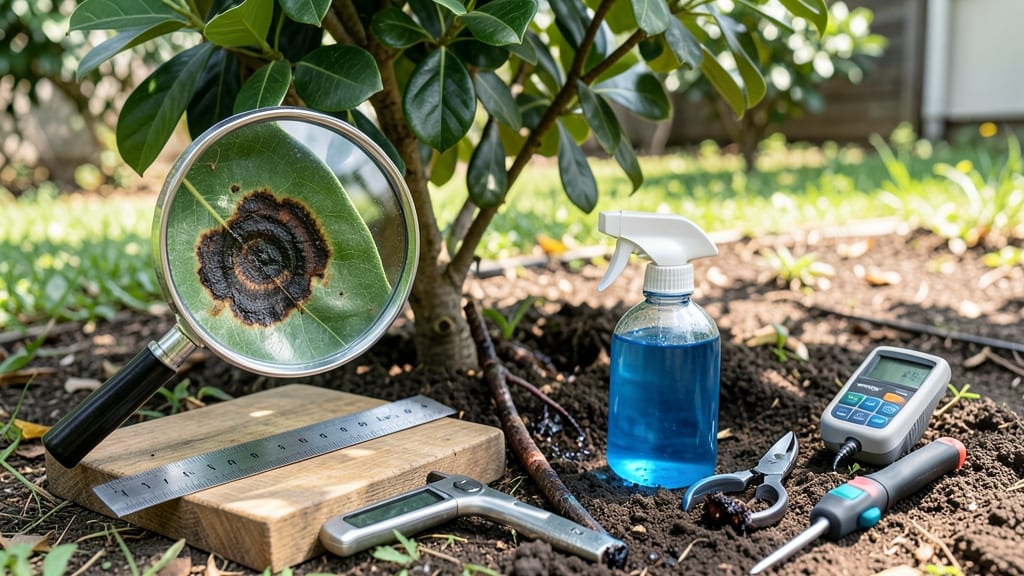
Avocado leaf diseases can turn your tree’s lush canopy into a sad, spotted mess—unless you act fast. 🌿 I’ve battled anthracnose, bacterial spots, and fungal infections that left my tree looking like it lost a fight with a lawnmower, but these solutions work if you catch them early.
The real villain? Too much moisture, poor airflow, or ignoring early warning signs like tiny brown spots or yellowing edges. Most diseases thrive when leaves stay wet for hours, so pruning for airflow and watering at the base (not overhead) cuts off their power.
You’ll restore that vibrant green in weeks with the right mix of pruning, fungicides, and cultural tweaks. I’ve seen trees go from "sad and spotted" to "back to business" in just a few sprays and a little TLC—it’s all about timing and consistency.
This works for home gardens, urban patios, or even container-grown trees. Let’s get those leaves healthy again!
Root Causes Of Leaf Troubles
When your avocado tree’s leaves start looking less than perfect—spotted, discolored, or wilted—it’s often a cry for help from the plant itself. Understanding why these issues arise is the first step in saving your tree.
Below, we break down the most common culprits behind avocado leaf diseases, explained in clear, actionable science.
Fungi are the #1 cause of avocado leaf diseases, thriving in warm, humid conditions. These microscopic organisms don’t just attack leaves—they consume them, leaving behind telltale signs like:
- Powdery mildew: White, flour-like patches on leaves (caused by Oidium or Erysiphe species). Fungi release spores that germinate in damp conditions, creating a suffocating film over leaves, blocking sunlight and stunting photosynthesis.
- Anthracnose: Dark, sunken spots with a yellow halo (triggered by Colletotrichum fungi). These pathogens enter through wounds or natural openings, then release enzymes that break down leaf tissue.
- Leaf spot diseases: Brown or black spots with yellow margins (often Phyllosticta or Cercospora). These fungi exploit weak spots, spreading rapidly in wet climates.
Why it happens: Fungi need moisture to spread. Overhead watering, poor air circulation, or dense foliage create the perfect breeding ground. Even one infected leaf can release thousands of spores, turning a single problem into an epidemic.
Unlike fungi, bacteria don’t just sit on leaves—they infiltrate them. The most destructive culprits for avocados include:
- Xanthomonas campestris pv. citrumelo: Causes bacterial spot disease, appearing as water-soaked lesions that turn dark and ooze when wet. Bacteria enter through stomata (leaf pores) or wounds, then multiply in the plant’s vascular system.
- Pseudomonas syringae: Triggers bacterial leaf blight, leading to wilting, yellowing, and blackened veins. This bacterium thrives in cool, wet conditions and spreads via wind, tools, or even contaminated water.
Why it happens: Bacteria hitchhike on water droplets, tools, or even your hands. They don’t need humidity to survive—they just need entry points. Pruning wounds, hail damage, or even splashing irrigation water can give them access.
Leaves don’t just need water—they need nutrients to fight off diseases. When your avocado tree is deficient in key minerals, it becomes vulnerable to pathogens. Common deficiencies include:
| Deficiency | Leaf Symptoms | Why It Weakens Leaves |
|---|---|---|
| Nitrogen (N) | Pale yellowing (chlorosis) between veins | Nitrogen is critical for chlorophyll production. Without it, leaves can’t photosynthesize efficiently, making them easier targets for fungi and bacteria. |
| Magnesium (Mg) | Interveinal yellowing (starts in older leaves) | Magnesium is the center of chlorophyll molecules. A deficiency disrupts energy production, weakening the leaf’s immune response. |
| Potassium (K) | Yellowing at leaf edges (scorching) | Potassium regulates cell membrane integrity. Low levels make leaves more permeable, allowing pathogens to invade easier. |
Why it happens: Poor soil quality, overwatering (which leaches nutrients), or improper pH (avocados prefer 6.0–7.0) can lock out essential minerals. Without these nutrients, leaves lose their ability to repel and recover from infections.
Avocado trees are tropical plants—they hate extreme conditions. When environmental factors go haywire, diseases move in like vultures. Key stressors include:
- Excess moisture: Soggy soil or poor drainage creates anaerobic conditions, stressing roots and making leaves more susceptible to fungal infections.
- High humidity: Fungi love humidity above 80%. When leaves stay wet for long periods (like in a greenhouse or after rain), spores germinate and spread.
- Temperature swings: Sudden cold snaps or heatwaves shock the tree, weakening its defenses. Cold stress can even kill leaf tissue, creating entry points for bacteria.
- Poor air circulation: Dense foliage or crowded trees trap moisture and spores, accelerating disease spread. Stagnant air prevents evaporation, keeping leaves damp longer.
Why it happens: Avocados evolved in stable, warm climates. When conditions fluctuate or become extreme, the tree’s physiological stress response kicks in—diverting energy away from disease resistance and toward survival.
Pro Tip: 💡 Most leaf diseases start with a single stressor. Fix the root cause (e.g., improve drainage, thin foliage, or adjust watering), and you’ll starve out 80% of potential infections before they take hold.
Quick Fixes for Healthy Avocado Leaves
Avocado leaf diseases can turn your lush green trees into a sad, spotted mess—but don’t panic! With the right approach, you can nurse your plant back to health and keep future problems at bay.
Below, we’ve mapped out practical, step-by-step solutions for the most common issues, from fungal infections to nutrient deficiencies. Prevention tips are included to stop recurrence in its tracks.
If your avocado leaves are covered in black spots, powdery white patches, or mushy rot, fungi are likely the culprit. These thrive in damp, humid conditions, so act fast!
🔥 Treat Fungal Spots (Anthracnose, Leaf Spot)
- Prune Infected Leaves 🌿
- Use sterilized pruners (wipe with rubbing alcohol) to remove all spotted or yellowing leaves. Dispose of them in the trash—not the compost!
- Apply Fungicide 💊
- Organic option: Mix 1 tsp baking soda + 1 tbsp neem oil + 1 quart water + a drop of dish soap (as a surfactant). Spray every 7–10 days until new growth appears.
- Chemical option: Use copper fungicide (follow label instructions) for severe cases.
- Improve Airflow 🌬️
- Thin out dense foliage and space plants 3–5 feet apart to reduce humidity buildup.
🌡️ Stop Powdery Mildew (White Dusty Coating)
- Wipe Leaves Daily 🧼
- Use a soft cloth dampened with water and a few drops of mild soap to clean leaves.
- Boost Sunlight ☀️
- Move your avocado to a sunnier spot (6+ hours of direct light). Mildew loves shade!
- Preventive Spray 🌿
- Spray leaves with a 1:10 dilution of hydrogen peroxide (3%) weekly to deter spores.
💡 Prevention Tips for Fungi
- Water at the base (never overhead) to keep leaves dry.
- Avoid overwatering—let the top 2 inches of soil dry out between waterings.
- Sterilize tools after pruning to prevent spreading spores.
If leaves are yellowing between veins, curling, or dropping prematurely, your avocado may be hungry for key nutrients.
🥬 Fix Iron or Nitrogen Deficiency (Yellow Leaves)
- Test Your Soil 📊
- Use a DIY soil test kit or send a sample to a local extension office. Avocados love slightly acidic soil (pH 6.0–7.0).
- Amend the Soil 🌱
- For iron deficiency: Mix 1 tbsp iron chelate into water and apply as a foliar spray.
- For nitrogen deficiency: Use a balanced fertilizer (10-10-10) in early spring and summer.
- Organic Boost 🍄
- Top-dress with compost or worm castings for slow-release nutrients.
💪 Fix Magnesium Deficiency (Yellow Edges)
- Apply Epsom Salt 🧂
- Dissolve 1 tbsp Epsom salt in 1 gallon of water and spray on leaves monthly.
- Use Dolomitic Lime 🪨
- Sprinkle 1–2 tbsp around the base (but avoid overdoing it—too much raises pH).
✨ Prevention Tips for Nutrient Issues
- Fertilize lightly—avocados are sensitive to excess salts.
- Mulch with compost to retain moisture and nutrients.
- Repot every 2–3 years if growing in containers.
Spiders, mites, and aphids love avocado leaves—but you can kick them out!
🕷️ Treat Spider Mites & Aphids (Tiny Webs or Sticky Sap)
- Blast Them Off 💦
- Spray leaves with a strong stream of water to dislodge pests.
- Neem Oil Spray 🌿
- Mix 1 tsp neem oil + 1 tsp mild soap in 1 quart water. Spray every 5 days until gone.
- Introduce Beneficial Insects 🐞
- Ladybugs and lacewings eat aphids—buy them online or attract them with dill or fennel plants.
💡 Prevention Tips for Pests
- Inspect new plants before bringing them home.
- Keep the area clean—remove fallen leaves where pests hide.
- Use reflective mulch (like aluminum foil) to deter flying insects.
- Trim dead branches to redirect energy to healthy growth.
- Water deeply but infrequently—avocados hate soggy roots.
- Rotate your plant every few weeks for even sunlight exposure.
Remember: Consistency is key! Some issues take weeks to months to fully resolve, but with patience and care, your avocado will bounce back stronger than ever. 🌟
Frequently asked questions
How can I tell if my avocado tree has a fungal disease vs. bacterial infection?
Fungal diseases like anthracnose or leaf spot show up as dry, brown/black spots with yellow halos, often with a powdery texture. Bacterial infections (like bacterial spot) create water-soaked lesions that ooze when wet and have irregular, greasy-looking edges. Check for fungal growth (like white fuzz) or bacterial slime for clues.
Is it safe to use homemade remedies on avocado leaves?
Yes, but with caution! A 1:10 dilution of hydrogen peroxide (3%) or baking soda + neem oil spray works for mild fungal issues. Always test on a small leaf first—some trees may react poorly. For severe infections, opt for copper fungicide (follow label instructions).
Why do my avocado leaves keep getting yellow, even after treating diseases?
Yellowing can signal nutrient deficiencies (like iron or magnesium) or overwatering. Check soil pH (6.0–7.0 is ideal) and adjust fertilizer. Yellow edges often mean magnesium deficiency—try Epsom salt spray. If the issue persists, test soil for nutrient imbalances.
How often should I prune my avocado tree to prevent diseases?
Prune 2–3 times a year (spring, summer, and light pruning in fall) to improve airflow. Remove all diseased leaves immediately with sterilized tools, and thin dense branches. Pruning reduces humidity buildup, cutting off fungal/bacterial spread by up to 70%.
Can I save my avocado tree if it’s already lost most of its leaves?
It depends! If the root system is healthy, new leaves will regrow in 4–8 weeks with proper care. Focus on watering at the base, fertilizing lightly, and protecting from pests. If the trunk is soft or roots are rotting, the tree may not recover—consult a specialist.