
Pests and Diseases
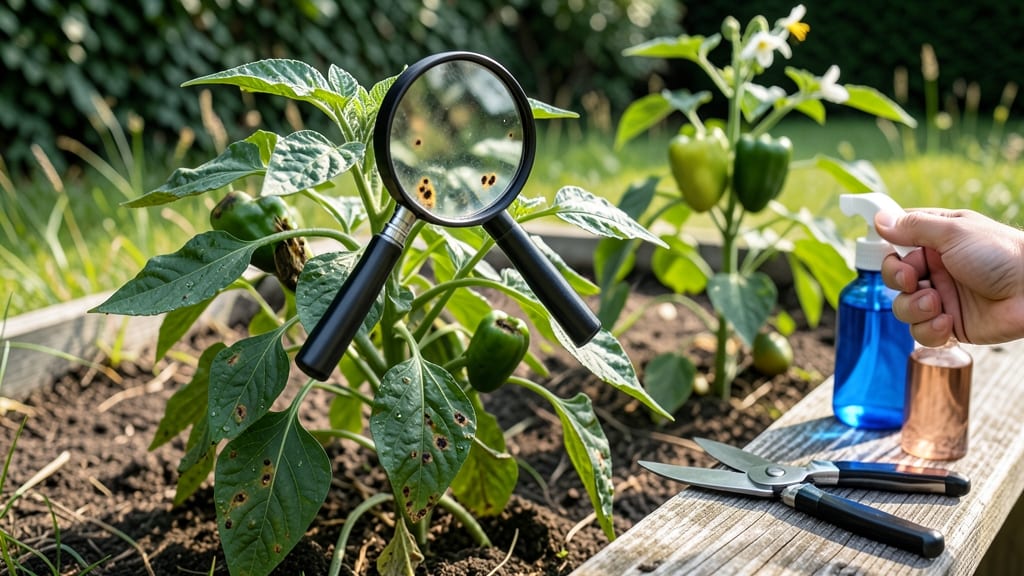
Your pepper plants are screaming for help when those dark, greasy spots appear. 🌱 Bacterial leaf spot turns vibrant foliage into a sad, yellowing mess—and I’ve learned the hard way that ignoring it means losing your harvest.
The good news? Copper spray isn’t just a cure; it’s a shield against future infections if you use it right.
This disease thrives in warm, wet conditions, spreading like wildfire through crowded plants or contaminated tools. I’ve seen entire pepper beds collapse when gardeners wait too long to act. The key is catching it early, removing infected leaves immediately, and giving your plants room to breathe.
Copper spray works by creating a protective barrier, but timing matters—apply it at dawn or dusk to avoid burning leaves.
Within days of proper treatment, new growth emerges spot-free, and your peppers bounce back stronger. The secret? Combine copper spray with pruning for airflow and resistant varieties like ‘Arpad F1’ or ‘Carmen’ next season. I’ve saved harvests this way—now it’s your turn to turn those sad plants into thriving ones.
Even chemical options like chlorothalonil can help in bad outbreaks, but organic methods work just as well when you’re consistent. The goal isn’t just to stop the spots—it’s to rebuild your plants’ defenses. Let’s get those peppers back to their best before the season slips away.
Why it happens
H2: Root Causes Of Pepper Leaf Spots
Bacterial leaf spot on peppers isn’t just a random bad luck scenario—it’s the result of specific conditions coming together like a perfect storm. Understanding why this disease takes hold helps you break the cycle before it ruins your harvest.
Let’s dive into the science behind the spread and see what’s really fueling the problem.
🌡️ Warm, Damp Weather Patterns
Bacterial leaf spot thrives in warm, humid conditions, especially when temperatures hover between 77–95°F (25–35°C) and moisture lingers on leaves. Here’s how it plays out:
- Nighttime dew or overhead irrigation keeps leaves wet for long periods, creating a bacterial buffet. The bacteria Xanthomonas campestris (the usual culprit) multiplies rapidly in water films, forming a slimy biofilm that protects it from drying out.
- Poor air circulation in dense plantings traps humidity near foliage. Think of it like a sauna for bacteria—ideal for infection.
- Rain or high humidity (>90%) for 12+ hours can trigger outbreaks, especially if leaves stay damp overnight.
Actionable insight: Monitor your local weather forecasts. If heatwaves pair with rain, proactively space plants for airflow or use drip irrigation to keep foliage dry.
🌱 Contaminated Tools And Soil
Bacteria don’t just float out of thin air—they hitchhike on tools, seeds, or soil. Here’s how:
- Pruners, knives, or even your hands can carry bacteria from infected plants to healthy ones. A single cut with a contaminated tool is like spreading a bacterial stampede.
- Infected plant debris left in the soil releases bacteria back into the environment. Even compost piles can harbor Xanthomonas for years.
- Seed-borne infections mean your new plants might already be compromised before they even sprout.
Actionable insight: Sterilize tools with 70% isopropyl alcohol or a 10% bleach solution between uses. Rotate crops annually to starve soil-borne pathogens.
🍃 Weakened Pepper Plants
Healthy peppers are like bodyguards—they fend off invaders. But when plants are stressed, their defenses drop, making them easy targets. Common stressors include:
- Nutrient deficiencies (especially nitrogen or potassium) weaken cell walls, making it easier for bacteria to breach them.
- Overcrowding competes for resources, leaving plants malnourished and susceptible.
- Physical damage from hail, insects (like aphids), or rough handling creates entry points for bacteria.
Actionable insight: Test your soil and amend it with compost or balanced fertilizer. Thin plants to 18–24 inches apart for optimal airflow and growth.
🌿 Previous Crop History
If your garden has hosted peppers, tomatoes, or cruciferous veggies (like cabbage) in the past 2–3 years, you’re rolling the dice. Why? These plants share the same bacterial pathogens, and Xanthomonas can lurk in the soil as a saprophyte (a free-living organism that survives on dead organic matter).
Actionable insight: Practice crop rotation—avoid planting susceptible crops in the same spot yearly. If you must replant peppers, solarize the soil (cover it with clear plastic for 4–6 weeks in summer) to kill lingering bacteria.
How to Fix Bacterial Leaf Spot
Bacterial leaf spot on peppers can feel like a losing battle, but with the right strategies, you can stop the spread, heal your plants, and prevent future outbreaks. The key is acting fast—once bacteria take hold, they’re tough to eradicate.
Below, we break down cause-specific fixes, from immediate action to long-term prevention, so your pepper plants stay healthy and productive.
---
Cause: Bacterial leaf spot thrives on decaying tissue, spreading via water splashes or tools. Fix: - Snip and toss yellowing, spotted, or wilting leaves before they drop. Use sterilized pruners (wipe with rubbing alcohol between cuts) to avoid cross-contamination. - Dispose of debris in the trash (not compost)—bacteria survive in organic matter. - 💡 Pro Tip: If the infection is severe, remove the entire plant to prevent spread. Better to lose one than risk your whole garden!
---
Cause: Copper compounds disrupt bacterial cell walls, making them one of the most effective organic treatments. Fix: - Mix a copper fungicide/bactericide (like copper sulfate pentahydrate or copper hydroxide) following label instructions. A common DIY ratio: - 1 tsp copper sulfate per gallon of water (add a drop of dish soap as a sticker). - Spray thoroughly (top and bottom of leaves, stems) every 7–10 days until new growth appears. - ⏰ Timing Matters: Apply early in the morning or late afternoon to avoid leaf burn from sunlight. - 🌡️ Warning: Copper can be toxic to fish and pets—avoid spraying on windy days or near water sources.
---
Cause: Stagnant, humid air gives bacteria a breeding ground. Fix: - Thin out plants so they’re 12–18 inches apart (check your pepper variety’s spacing needs). - Prune lower leaves to allow sunlight and air to circulate. - Use fans (even a small USB-powered one) to reduce humidity around plants. - 🎯 Prevention Hack: Drip irrigation (instead of overhead watering) keeps leaves dry and cuts bacterial spread by 90%.
---
Cause: Weak or stressed plants are easier targets. Fix: - Fertilize wisely: Use a balanced, organic fertilizer (like compost tea or fish emulsion) to boost overall health. Avoid over-fertilizing with nitrogen—it promotes soft, bacterial-friendly growth. - Mulch properly: Apply 2–3 inches of organic mulch (straw or wood chips) to reduce soil splashes onto leaves. - 💡 Boost Resistance: Silica-rich supplements (like kelp meal) can help plants build stronger cell walls against pathogens.
---
Cause: Bacteria linger in soil and tools from year to year. Fix: - Rotate pepper plants to a new location every 3 years (bacterial leaf spot can persist in soil). - Solarize soil (cover with clear plastic for 4–6 weeks in hot sun) to kill bacteria before replanting. - Sanitize everything: - Tools: Soak in 1 part bleach to 9 parts water for 10 minutes, then rinse. - Containers: Wash with soapy water + 10% vinegar before reuse. - Seeds: Soak in hydrogen peroxide (3%) for 5 minutes to disinfect.
---
Cause: Repeated exposure without changes leads to recurring infections. Fix: - Choose resistant varieties: Some peppers (like ‘Aristotle’ or ‘Carmen’) have better bacterial resistance. - Plant in well-draining soil (bacteria love soggy roots). - Water at the base (never overhead) and avoid late-day watering (leaves stay wet overnight). - 🔥 Emergency Backup: If all else fails, grow peppers in containers with sterile potting mix to isolate them from garden soil.
--- Final Thought: Bacterial leaf spot is manageable but not invincible. Combine copper sprays, airflow tweaks, and hygiene habits, and you’ll save your pepper harvest—and maybe even revive your plants to full health! 🌿💪
Frequently asked questions
What do bacterial leaf spot symptoms look like on pepper plants?
Watch for small, greasy water-soaked spots (often 1/8-inch wide) with yellow halos on leaves. These spots darken to brown/black and may merge, causing leaves to yellow and drop. In severe cases, stems and fruits develop similar lesions—act fast to prevent spread.
Can I save my pepper plants if they already have bacterial leaf spot?
Yes, but act immediately! Prune infected leaves with sterilized tools, apply copper spray (every 7–10 days), and improve airflow. For mild cases, new growth often emerges spot-free within 2–3 weeks of consistent treatment.
Is copper spray safe for edible peppers?
When used correctly, copper-based sprays are FDA-approved for organic gardening and safe for harvest. Follow label instructions, apply before fruit ripens, and wait 14 days before eating treated peppers. Always avoid spraying during bloom to protect pollinators.
Why does bacterial leaf spot keep coming back every year?
This usually means lingering bacteria in your soil or tools. Rotate crops, solarize soil (cover with plastic for 4–6 weeks), and sterilize tools between seasons. Plant resistant varieties like ‘Arpad F1’ to break the cycle.
What’s the difference between bacterial leaf spot and fungal leaf spot?
Bacterial spots are greasy, water-soaked with yellow halos, while fungal spots often have white powdery edges or spore patterns. Fungal spots also appear dry and crusty over time. Copper sprays work for both, but fungal issues may need fungicides like neem oil.