
Plants
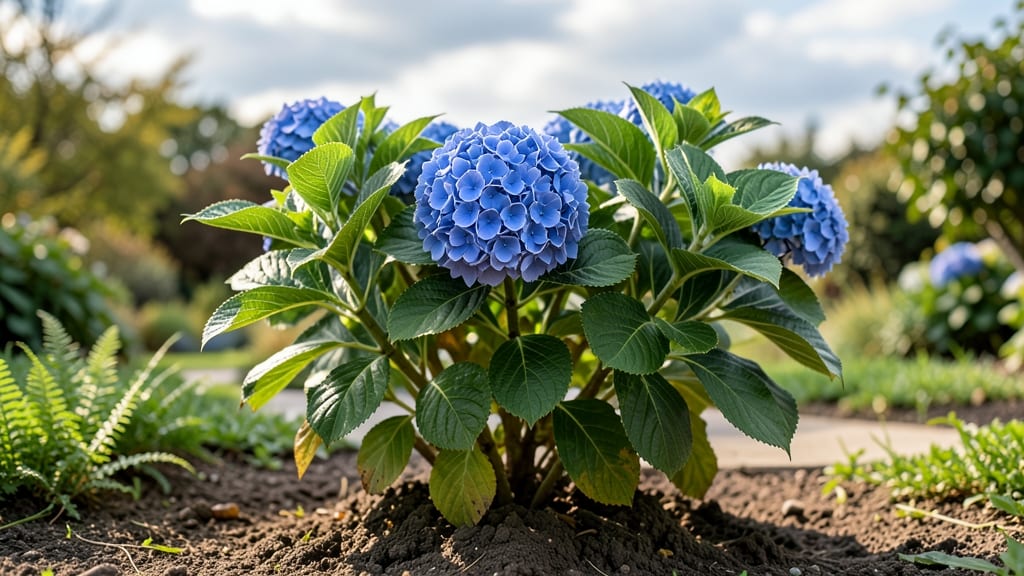
A bigleaf hydrangea plant thrives in USDA zones 5-9 with partial shade, well-draining soil, and consistent moisture. Their vibrant foliage and iconic blooms require annual pruning and seasonal color adjustments through pH-sensitive soil amendments.
These hardy shrubs are prized for their bold, oversized leaves that shift from lush green to fiery burgundy in fall, plus their massive flower clusters that can change color based on your soil's acidity. 🌿 The key to their success lies in understanding their three core needs: climate compatibility (they handle cold winters but need protection in zone 5), root health (amend heavy clay with compost), and watering discipline (drought stress causes leaf scorch).
I've found that mulching with 3-4 inches of organic matter in spring preserves moisture while preventing root rot—a common mistake that kills many hydrangeas.
What sets bigleaf hydrangeas apart is their color-changing ability. The same plant can produce blue blooms in acidic soil (pH 5.5 or lower) or pink blooms in alkaline soil (pH 6.5 or higher). This happens because aluminum availability in the soil affects pigment production.
For consistent results, I recommend testing your soil annually and adjusting with sulfur (for blue) or lime (for pink) in early spring before new growth begins.
💡 In This Article
- Understanding Bigleaf Hydrangea Color Science
- Step-by-Step Bigleaf Hydrangea Pruning Guide
Understanding bigleaf hydrangea color science
The vibrant hues of bigleaf hydrangea blooms aren't just a visual treat—they're a direct response to your soil's chemistry. The color shift from blue to pink happens because of aluminum availability in the root zone. In acidic soil (pH <5.5), aluminum becomes soluble and gets absorbed by the plant, triggering the production of delphinidin pigments that create blue flowers.
When soil is alkaline (pH >6.5), aluminum binds to soil particles and becomes unavailable, allowing cyanidin pigments to dominate, producing pink blooms. 🌈 This chemical process is why hydrangea enthusiasts often joke that their plants have a "mood ring" effect—what you see in the garden is literally a reflection of your soil's pH level.
What's fascinating is how precise this relationship is. A pH shift of just 0.5 units can dramatically alter bloom color intensity. For example, soil at pH 5.2 might produce deep blue flowers, while pH 5.8 could yield lavender blooms.
The aluminum threshold for optimal pigmentation sits around 0.2 parts per million in the root zone. To test this yourself, grab a soil pH meter (they're affordable and accurate) or send a sample to your local extension office—they'll provide a full mineral analysis that includes aluminum levels.
The foliage color transformation adds another layer of complexity. Those stunning burgundy or gold leaves in fall aren't just seasonal—they're a result of anthocyanin and carotenoid pigments that develop as chlorophyll breaks down. The intensity of these colors correlates with temperature fluctuations and daylight hours.
In cooler climates (like zone 5), you'll often see more vibrant fall foliage because the temperature drops trigger earlier pigment changes. Meanwhile, in warmer zones (like 8-9), the transition happens more gradually, sometimes resulting in more muted tones unless you provide afternoon shade.
Here's where most gardeners make a critical mistake: assuming their hydrangea's color is fixed. The reality is that bloom color can shift year to year based on soil amendments.
For example, adding 1 pound of elemental sulfur per 100 square feet in early spring can drop soil pH by 1-2 points over 3-4 months, turning pink flowers blue. Conversely, a light application of lime (5 pounds per 100 square feet) will push the color toward pink.
The key is patience—these amendments take time to work through the soil profile to reach the root zone.
Seasonal maintenance plays a crucial role too. In late summer, when your hydrangea is preparing for next year's blooms, apply a slow-release fertilizer (10-10-10 ratio) to support root development. The roots need to establish strong networks to effectively absorb aluminum and other nutrients that influence color.
I've noticed that plants with 12-18 inches of root depth (measured by gently digging around the base) produce more vibrant blooms because they have better access to soil minerals.
This is why container-grown hydrangeas often struggle—their root systems are restricted, limiting their ability to access the full range of soil nutrients.
For those chasing specific colors, timing matters. To achieve the deepest blues, amend your soil in early spring (March-April) when roots are actively growing. For pinks, make adjustments in late summer (August-September) to allow time for the plant to process the pH change before winter dormancy.
Remember that organic matter like compost also affects pH—each 1% increase in organic content can raise your soil pH by 0.1-0.2 units over time, so factor that into your color planning.
Pro tip: Keep a garden journal tracking your soil pH, amendments, and resulting bloom colors. Over time, you'll notice patterns—like how much sulfur it takes to shift your particular soil from pink to blue, or which mulches preserve moisture best in your climate.
This personalized approach turns hydrangea care from guesswork into an exact science. 🌱