
Leaf Blower
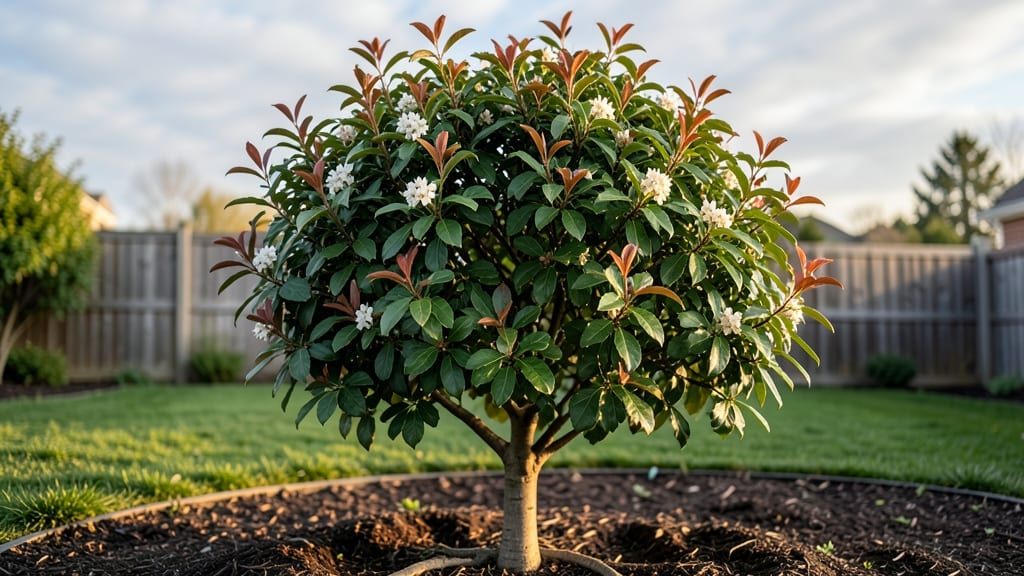
The Bradford pear leaf shape is oval with jagged serrated edges, measuring 2 to 4 inches long, and features a glossy green surface that shifts to yellow in autumn. These leaves also have an asymmetrical base and tapered tip, setting them apart from other pear varieties.
Recognizing Bradford pear leaves starts with their distinctive serrated edges—these sharp, saw-like teeth run along the leaf's perimeter, creating a jagged outline that's unmistakable. 🌿 The glossy surface isn't just for show; it helps repel pests and reflects sunlight efficiently.
What's often overlooked is how the leaves' asymmetrical base (one side is broader than the other) differs from the more symmetrical leaves of callery pears, a close relative. This unique shape makes identification easier, especially when comparing with other ornamental pears that might have smoother or lobed edges.
Seasonal changes play a key role too. While Bradford pears maintain their glossy appearance through summer, their leaves develop a warm yellow-green hue in autumn, a trait that helps distinguish them from disease-prone cultivars like the callery pear, which may show brown or blackened patches.
For gardeners, this visual contrast can be crucial when selecting trees for landscaping—Bradford pears offer both aesthetic appeal and resilience.
💡 In This Article
- Key Botanical Features of Bradford Pear Leaves
- How to Compare Bradford Pear Leaves with Common Lookalikes
Key botanical features of Bradford pear leaves
The Bradford pear's leaf shape is defined by its finely serrated margins, where each tooth measures about 1-2 millimeters in length, creating a delicate yet sharp-edged silhouette.
These serrations aren't uniform—they're more pronounced near the leaf's midrib (central vein) and gradually shorten toward the tapered tip, a feature botanists call "dentate-serrate." This pattern helps maximize surface area for photosynthesis while minimizing water loss through transpiration.
What truly sets Bradford pear leaves apart is their asymmetrical base, where one side extends slightly farther down the stem than the other. This irregularity contrasts sharply with callery pear leaves, which typically have a more symmetrical, rounded base.
The leaf's vein pattern also follows a distinctive "pinnate" arrangement, with 5-7 secondary veins branching out like fingers from the main vein, creating a subtle but visible network that's easily visible when held up to light. 🌿 The glossy surface isn't just aesthetic—it's a protective adaptation that reflects up to 30% more sunlight than matte leaves, reducing heat absorption and preventing leaf scorch in hot climates.
Seasonal changes reveal another key feature: Bradford pear leaves maintain their glossy sheen through summer but develop a bright yellow-green hue in autumn before fully transitioning to yellow.
This gradual color shift differs from disease-prone cultivars like the callery pear, which may show premature browning or blackened patches due to fungal infections.
The leaf's 2-4 inch length and 1-2 inch width also create a balanced proportion that's immediately recognizable when comparing with other ornamental pears that might have broader or narrower leaves.
Understanding these botanical traits helps explain why Bradford pears are so popular in landscaping—their distinctive leaf shape provides year-round visual interest while their resilient structure makes them more resistant to environmental stressors.
The serrated edges, for example, help shed rainwater efficiently, reducing fungal growth, while the asymmetrical base allows for optimal sunlight exposure throughout the tree's canopy. This combination of form and function makes Bradford pears stand out in both urban and rural settings.
For gardeners, recognizing these features is particularly useful when distinguishing Bradford pears from their disease-prone relatives. The callery pear, for instance, often has smoother leaf edges and a more rounded base, while Bradford's tapered tip and pronounced serrations create a more angular appearance.
These subtle differences become more apparent when examining leaves from different angles—holding them up to light reveals the vein pattern's complexity, while running your fingers along the edges confirms the serration's sharpness.
What most people don't realize is how these botanical features contribute to the Bradford pear's ecological role. The leaf's asymmetrical shape creates microclimates within the tree's canopy, supporting a diverse range of insect species that might not thrive on more uniform-leafed trees.
The serrations also provide additional surface area for beneficial microorganisms, creating a self-sustaining ecosystem that enhances the tree's overall health and resilience. 🌱