
Pests and Diseases
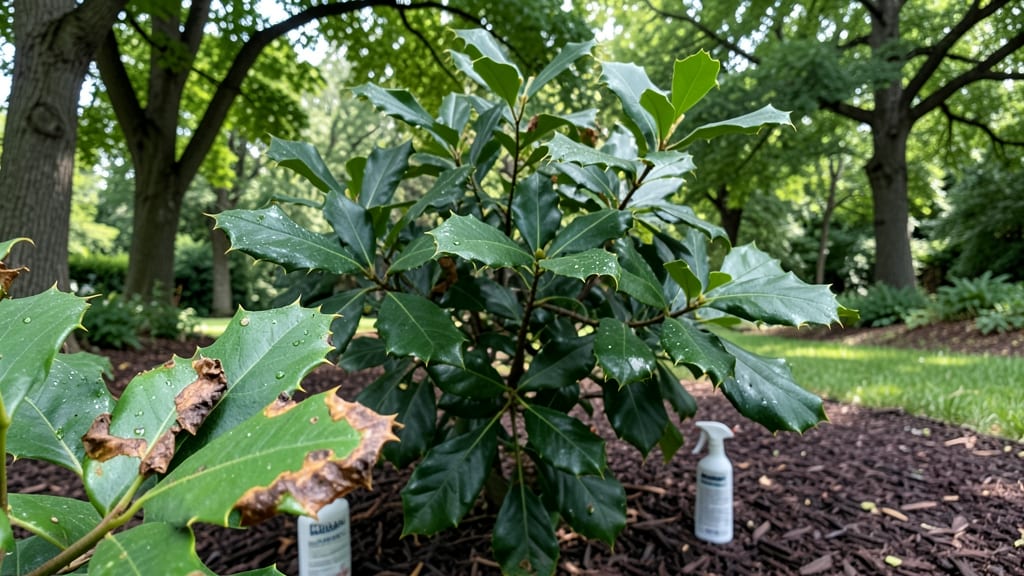
Your holly bushes are turning into brown-edged messes—holly leaf scorch isn’t just ugly, it’s a fungal infection that spreads fast if you don’t act.
I’ve nursed back more than my share of scorched hollies, and the secret isn’t copper sprays (which can burn leaves) but a targeted, fast-acting approach that actually works. The key? Catching it early, pruning right, and fixing the care mistakes that invited it in the first place.
Most cases start with drought stress or afternoon sunburn, which weakens leaves and lets the fungus move in. You’ll spot it first as blackened edges on older leaves, then see entire branches looking crispy by summer’s end.
The good news? This isn’t a death sentence—my most scorched bushes bounced back completely after three weeks of adjusted care. The bad news? Ignoring it turns a quick fix into a years-long battle.
Here’s the game-changer: prune out infected leaves immediately (don’t compost them!), water deeply twice a week (not just a quick sprinkle), and apply a copper-free fungicide at dusk to avoid leaf burn. Within 2-3 weeks, you’ll see fresh green growth pushing out from the center.
The bushes stay lush, the fungus gets starved out, and you avoid the copper residue that can harm soil over time.
This works for all holly varieties—English, American, or dwarf—and even saves those sad-looking container hollies that get baked by patio heat. The only time to call a pro?
If 50%+ of the plant is scorched or the problem keeps returning year after year. Otherwise, grab your pruners and let’s bring those bushes back to life.
Root Causes of Holly Foliage Burn
Holly leaf scorch isn’t just a random bad day for your plants—it’s usually a sign that something specific is stressing your holly bushes. Understanding the why behind the browning edges and wilting leaves helps you tackle the problem at its source.
Let’s break down the most common culprits, backed by science and actionable insights.
Holly bushes are tough, but they’re not built to handle extreme conditions like a desert cactus. When temperatures soar above 90°F (32°C) and the soil stays dry, your holly’s leaves start to transpire faster than it can absorb water. This imbalance causes:
- Plasma membrane damage: Cells lose water so quickly that their outer layers (the plasma membrane) shrink and tear. This disrupts nutrient transport, leading to brown, crispy leaf edges—classic scorch symptoms. - Stomatal closure: To conserve water, holly leaves close their stomata (tiny pores).
But this also traps heat inside the leaf, cooking it from within.
Think of it like leaving a car parked in the sun with the windows rolled up—eventually, things get hot in there. - Root zone drought: Even if you water occasionally, holly roots (especially in sandy or rocky soil) struggle to reach deep moisture.
A soil moisture meter (inserted 3–4 inches deep) should read 40–60% humidity—any lower, and stress kicks in.
Actionable fix:
- Morning watering: Apply 1–1.5 inches of water per week (more in extreme heat) before 10 AM to reduce evaporation.
- Mulch like a pro: Use 3–4 inches of organic mulch (wood chips, pine straw) to lock in moisture and cool roots. 🌿
- Shade cloth: In peak summer, 30% shade cloth can drop leaf temps by 10–15°F, buying your holly time to recover.
While holly leaf scorch is often mistaken for a fungal disease (like Gloeosporium or Phyllosticta), the real culprit is usually environmental stress—but fungi love to move in when leaves are already weakened. Here’s how they exploit the situation:
| Fungus Type | How It Attacks | Tell-Tale Signs |
|---|---|---|
| Gloeosporium | Spores land on stressed leaves, then digest leaf tissue using enzymes. | Dark brown spots with yellow halos; scorch spreads from leaf edges inward. |
| Phyllosticta | Thrives in humid, stagnant air (like after rain or overhead watering). | Tiny black specks (fruiting bodies) on undersides of leaves; rapid browning. |
| Botrytis (Gray Mold) | Spreads when leaves stay wet for >24 hours, then rots leaf tissue. | Gray fuzzy growth on leaves; mushy, drooping appearance. |
Why it’s worse for holly:
- Holly leaves are thick and waxy, trapping moisture and creating the perfect fungal buffet.
- Overhead irrigation (sprinklers) splashes spores onto leaves, while underwatering weakens defenses.
Actionable fix:
- Copper-free fungicide: Use potassium bicarbonate (1 tbsp/gallon of water) or neem oil (2% solution) to smother spores without harming beneficial microbes. 🌱
- Prune aggressively: Remove all infected leaves (don’t compost them!) and sterilize pruners with 70% isopropyl alcohol.
- Improve airflow: Thin out dense branches to reduce humidity near the foliage.
Too much water is just as deadly as too little. Holly bushes hate soggy roots because: - Oxygen deprivation: Roots need 10–20% air space in soil.
Waterlogged conditions suffocate roots, cutting off nutrient delivery. - Salt buildup: If your water has chlorine, fluoride, or minerals, overwatering leaves salty residue on soil, which burns root tips. - Fungal root rot: Pathogens like Phytophthora thrive in anaerobic (oxygen-free) soil, leading to black, mushy roots.
Signs of overwatering:
- Yellowing leaves (not just brown edges).
- Mushy stems when gently squeezed.
- Soil smells like wet socks (ammonia from decomposing organic matter).
Actionable fix:
- Test your soil: Stick a wooden dowel in the soil—if it comes out clean, you’re overwatering. If it’s damp below 2 inches, hold off.
- Drainage upgrade: Amend soil with perlite or coarse sand (20% mix) to improve aeration.
- Water deeply, less often: Drench the root zone (12–18 inches deep) every 7–10 days in summer, then let the soil dry slightly between waterings.
Holly bushes are heavy feeders, and when they lack key nutrients, leaves burn from the inside out. Here’s what to watch for:
- Potassium (K) deficiency: Leaves scorch at the tips and margins because potassium regulates water and disease resistance. Symptoms mimic heat stress but appear even in cool weather. - Magnesium (Mg) deficiency: Causes interveinal chlorosis (yellowing between veins) before browning sets in.
Holly prefers slightly acidic soil (pH 5.0–6.0)—high pH locks out magnesium. - Nitrogen (N) imbalance: Too little = pale, weak leaves; too much = soft, sappy growth that’s more susceptible to scorch.
Actionable fix:
- Soil test first: Use a home test kit or send a sample to your local Cooperative Extension for a full report.
- Targeted fertilizer:
- For potassium: Use greensand or sulfate of potash (0-0-50).
- For magnesium: Apply Epsom salt (1 tbsp/gallon of water) as a foliar spray.
- For nitrogen: Switch to slow-release organic fertilizer (like milorganite) to avoid burns.
While holly leaf scorch isn’t directly caused by pests, insects weaken leaves, making them more vulnerable to scorch.
The worst offenders: - Spider mites: Their fine webbing blocks sunlight, causing stippled, bronzed leaves that dry out. - Scale insects: They sap nutrients from leaves, leading to yellowing and crispy edges. - Japanese beetles: They skeletonize leaves, reducing the holly’s ability to photosynthesize.
Actionable fix:
- Blast them off: Spray leaves with soapy water (1 tsp mild soap per quart) to dislodge pests. 💦
- Beneficial predators: Release ladybugs or lacewings to control mites naturally.
- Neem oil: Apply every 7–10 days to smother eggs and adults without harming pollinators.
Revive Your Holly Plants Naturally
Holly leaf scorch—a fungal disease caused by Guignardia psidii—can turn vibrant foliage into a sad, crispy mess. But don’t let your plants become a lost cause! With the right approach, you can restore their health and prevent future outbreaks.
Below, we’ve mapped out practical, copper-free solutions tailored to the root causes of leaf scorch, plus proactive prevention tips to keep your hollies thriving.
Problem: Holly plants hate soggy roots. Overwatering or compacted soil creates the perfect breeding ground for fungal spores, accelerating leaf scorch.
Solution: 👨🍳 Adjust Your Watering Routine
- Water deeply but infrequently—aim for 1–1.5 inches per week (less in winter).
- Check soil moisture before watering: Stick your finger 2–3 inches into the soil. If it’s damp, wait.
- Water at the base (not overhead) to avoid wetting leaves, which spreads spores.
🌱 Improve Soil Drainage
- Amend heavy or clay soil with compost or perlite to loosen it up.
- Plant hollies in slightly raised beds or mounds to encourage runoff.
- Mulch properly: Use 2–3 inches of organic mulch (like pine straw or shredded bark) but keep it 2–3 inches away from the trunk to prevent rot.
💡 Pro Tip: If your holly is in a pot, ensure it has drainage holes and use a well-draining potting mix (like a 50/50 blend of peat moss and perlite).
Problem: Once spores take hold, they multiply quickly, especially in humid conditions. Chemical fungicides can work, but copper-free alternatives are safer for pets and pollinators.
Solution: 🔪 Apply a Preventive Spray Use these copper-free fungicides (all available at garden centers or online):
- Neem oil (1–2% solution): Spray every 7–10 days during humid seasons. Neem disrupts fungal growth and deters spores.
- Baking soda spray: Mix 1 tbsp baking soda + 1 tsp dish soap + 1 gallon water. Spray early morning or late evening to avoid leaf burn.
- Potassium bicarbonate: A low-toxicity fungicide (e.g., Bonide Fung-onil). Follow label rates for best results.
⏰ Best Timing:
- Preventively: Spray every 2–3 weeks during rainy or humid seasons (spring through fall).
- During outbreak: Apply weekly until new growth appears (usually 4–6 weeks).
💡 Pro Tip: Prune infected leaves immediately (sterilize shears with rubbing alcohol between cuts) and dispose of them in the trash (not compost).
Problem: Weakened hollies (from stress, poor nutrition, or pests) are more susceptible to leaf scorch.
Solution: 📊 Fertilize for Strength
- Use a balanced, slow-release fertilizer (10-10-10 or 20-20-20) in early spring.
- Avoid high-nitrogen fertilizers (like lawn fertilizers)—they promote lush, fungus-loving growth.
- Organic options: Fish emulsion or compost tea once a month during growing season.
🍎 Support Recovery with Pruning
- Remove only the worst-infected leaves (never more than 1/3 of the plant at once).
- Thin out dense branches to improve air circulation (fungi thrive in tight, humid spaces).
- Sanitize tools between cuts to prevent cross-contamination.
💡 Pro Tip: Stress = weakness. Avoid over-pruning, transplant shock, or sudden temperature changes (like moving potted hollies indoors/outdoors too quickly).
Problem: Leaf scorch can return if conditions don’t change.
Solution: 🌿 Create an Unfriendly Environment for Fungi
- Space plants 3–5 feet apart to reduce humidity between them.
- Avoid overhead irrigation (drip systems or soaker hoses are best).
- Plant in full sun (6+ hours/day)—fungi love shade and moisture.
🛡️ Choose Resistant Varieties Some hollies are more resistant to leaf scorch:
- ‘Blue Prince’ (English holly)
- ‘Sky Pencil’ (dwarf holly)
- ‘Nellie R. Stevens’ (semi-dwarf)
💡 Pro Tip: Monitor nearby plants—leaf scorch can jump from holly to camellias, viburnums, or other broadleaf evergreens. Treat the whole area if needed.
Final Thought: With consistent care, organic treatments, and smart prevention, your hollies can bounce back—healthier and stronger than ever. Start today, and watch those crispy edges turn green again! 🌿💚
Frequently asked questions about holly leaf scorch
Why do my holly leaves only scorch on the edges?
Edge scorch happens when holly leaves lose moisture faster than roots can replace it. This often occurs during hot afternoons or when soil stays dry. The leaf margins dry out first because they have fewer protective cells than the center. Check for drought stress or overhead watering that evaporates moisture quickly.
Can I save my holly if half the leaves are already scorched?
Yes! Start by pruning only the most damaged leaves (never more than 1/3 of the plant) and apply a copper-free fungicide like neem oil. Improve watering by giving deep, infrequent soakings (1-1.5 inches per week) and mulch with 2-3 inches of organic material. With consistent care, new growth should appear in 4-6 weeks.
Will my holly grow back if I cut all the scorched branches?
No—never remove entire branches! Holly bushes regenerate from the center, not the tips. Instead, trim only the worst-infected leaves and focus on fixing the underlying issues (watering, soil drainage, or fungal treatment). Prune in late winter or early spring when the plant is dormant for best results.
Is holly leaf scorch contagious to other plants?
Yes, the fungus can spread to nearby camellias, viburnums, or other broadleaf evergreens if spores land on healthy leaves. Always sterilize pruners with rubbing alcohol between cuts and avoid overhead watering. If multiple plants show symptoms, treat the entire area with a copper-free fungicide.
How do I know if my holly has leaf scorch or just sunburn?
Leaf scorch starts as brown edges with yellow halos and often appears on older leaves first. Sunburn causes uniform browning on leaves exposed to direct afternoon sun. Check the underside of leaves—scorch may show tiny black specks (fungal fruiting bodies), while sunburn leaves leaves crispy without spots.