
Leaf Blower
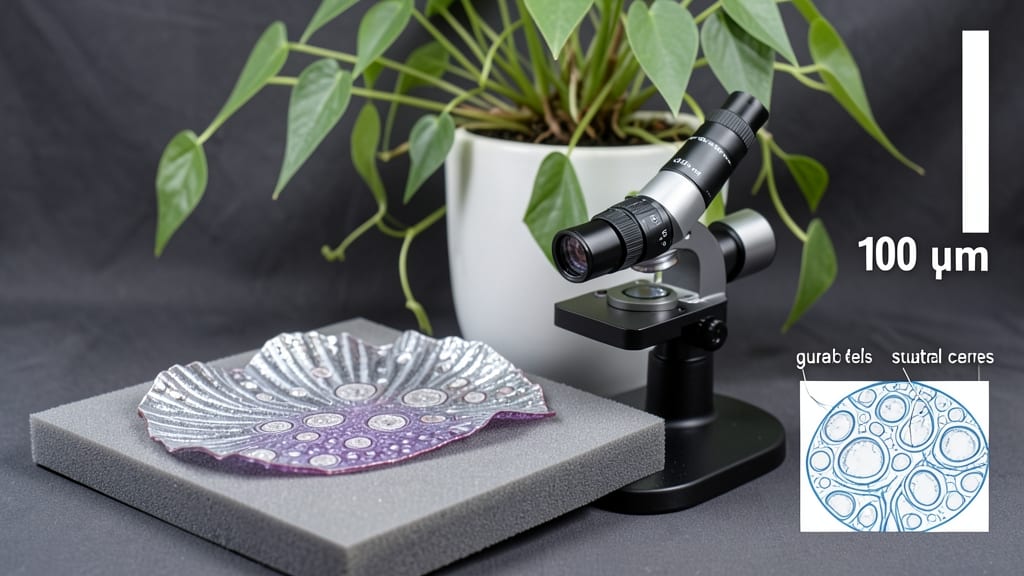
Seeing stomata on a leaf requires a microscope at 40x magnification or higher, since these microscopic pores—measuring just 10-50 micrometers—are completely invisible to the naked eye. For best results, place a fresh leaf's underside on a slide with a drop of water to create a clear viewing sample.
These tiny openings control gas exchange in plants, and their size explains why they're only visible through magnification. 🌿 The underside of leaves typically has more stomata than the top, which is why you'll often see clearer images when examining the leaf's reverse side.
I've found that using a light microscope with a built-in illuminator works best for beginners, as it provides consistent lighting that helps highlight the guard cells surrounding each pore.
When preparing your sample, always use fresh leaves—they maintain better structural integrity under the microscope. For even clearer images, you can add a drop of iodine solution to stain the sample, though this is optional.
If your image appears blurry, try adjusting the focus slowly while observing through the eyepiece, as stomata are often slightly raised from the leaf surface.
💡 In This Article
- Stomata Size and Microscope Magnification Requirements
- Step-by-Step Guide to Viewing Leaf Stomata Under a Microscope
Stomata size and microscope magnification requirements
Stomata—those tiny, kidney-shaped pores—typically measure between 10-50 micrometers in width, which is why they vanish from view without magnification.
To put that into perspective, a human hair averages 70-100 micrometers in diameter, meaning stomata are roughly half the width of a single hair strand. 🌱 This microscopic scale explains why even high-powered magnifying glasses (typically 10x) won't reveal them—they simply lack the resolution needed to distinguish structures smaller than 100 micrometers.
The magnification requirement isn't just about size—it's also about the depth of field needed to resolve the stomata's three-dimensional structure. At 40x magnification, you'll start seeing the guard cells (the specialized cells that flank each pore), but their full detail becomes clearer at 100x or 400x.
Interestingly, the leaf's underside usually contains 2-5 times more stomata than the upper surface, which is why botanists often focus there. This adaptation helps plants balance gas exchange with water conservation, as the lower surface is more sheltered from direct sunlight and wind.
Freshness matters too—dried leaves lose structural integrity, causing stomata to collapse or become obscured by debris. When you place a fresh leaf underside-down on a slide with a drop of water, the moisture helps maintain the stomata's natural shape while creating a clear viewing plane.
Without this preparation, air bubbles or uneven surfaces can distort your view, making it harder to distinguish the 1-3 micrometer-wide pore openings between the guard cells. 🔬 The water also acts as a simple immersion medium, slightly increasing light refraction for sharper images.
Lighting plays a crucial role in visibility. A standard light microscope with a 10-20 watt halogen bulb works well, but for better contrast, consider using a blue filter (around 450-495 nm wavelength).
This enhances the visibility of the stomata's cell walls, which absorb blue light more effectively than other colors.
If you're using a compound microscope, start with the 4x objective to locate the stomata, then switch to 40x for detailed observation—this two-step approach prevents frustration from hunting for features you can't yet see clearly.
For those working with delicate samples, like monocot leaves (e.g., onion or lily), you might notice stomata arranged in parallel rows, while dicot leaves (e.g., bean or sunflower) often show a more scattered distribution.
This variation in arrangement reflects evolutionary adaptations to different environments—monocots frequently grow in drier conditions, where stomatal clustering helps minimize water loss. 🌿 Understanding these patterns can deepen your appreciation for how plants have optimized their physiology over millions of years.
One common misconception is that all stomata look identical under a microscope. In reality, their shape and size can vary significantly between plant species.
For example, aquatic plants like water lilies have stomata that are often larger and more widely spaced to facilitate gas exchange in waterlogged conditions, while desert-adapted plants like cacti may have stomata that open only at night to conserve moisture.
These differences highlight how stomata are more than just pores—they're dynamic structures finely tuned to a plant's environment.