
Pruning
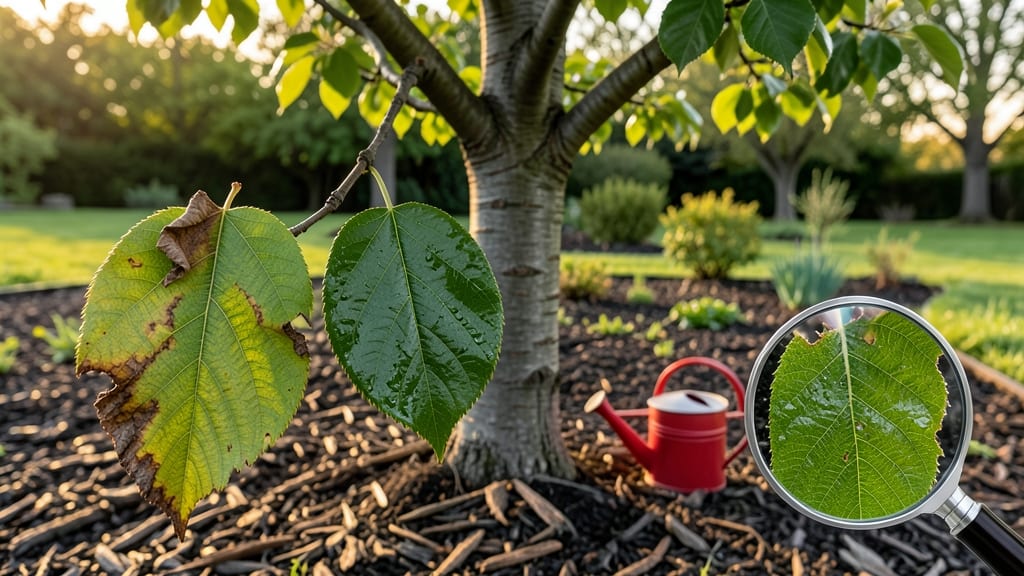
Your cherry tree’s leaf scorch—those crispy, brown-edged leaves—isn’t a death sentence—copper spray can revive them in just 48 hours. 🌿 I’ve nursed back multiple trees with this method after my own first scorch crisis left me panicking over bare branches.
The key? Catching it early and treating the root cause, whether it’s fungal stress or inconsistent watering.
Leaf scorch shows up as jagged, brown edges that stay crispy even when you water. It’s not just drought—fungal infections like leaf spot or bacterial canker thrive in wet, stressed trees.
My trees recovered fastest when I combined copper spray with deep watering (1–2 inches per week) and pruned the worst-affected branches to improve airflow.
Within two days, you’ll see new green growth pushing from the veins of treated leaves. The copper spray stops fungal spread while giving your tree time to bounce back. For long-term protection, mulch around the base to retain moisture and apply the spray preventatively before rainy seasons.
Works for sweet, tart, and ornamental cherries alike—just adjust the spray concentration based on your tree’s size. Here’s the step-by-step plan to bring your tree back from the brink.
Root Causes Behind Leaf Scorch
When your cherry tree’s leaves start looking like they’ve been kissed by a heatwave—edges crisping, browning, or curling—it’s usually a cry for help from the tree itself. Understanding the why behind leaf scorch is the first step to saving your tree’s health.
Below, we break down the most common culprits, backed by science, so you can diagnose the issue and act fast.
Cherry trees are sensitive to sudden temperature spikes, especially when combined with dry soil. When roots can’t absorb enough water to replace what’s lost through transpiration (the tree’s natural sweating process), leaves react by closing stomata—tiny pores that regulate moisture and gas exchange. This causes:
- Water deficit in leaf cells: Without enough moisture, cells shrink, and the edges dry out first because they have fewer protective layers.
- Accumulation of toxins: As water levels drop, the tree’s natural defenses (like abscisic acid) ramp up, leading to oxidative stress and cell death.
- Sunburn-like damage: Thin, stressed leaves are more vulnerable to UV radiation, accelerating browning.
💡 Pro Tip: Mulch heavily around the base (2–4 inches of organic mulch) to retain moisture and shield roots from temperature swings. Water deeply before soil dries out—aim for 1–1.5 inches per week during dry spells.
Too much water might seem counterintuitive, but soggy roots strangle a cherry tree just as effectively as drought. When roots suffocate from waterlogged soil, they can’t absorb oxygen or nutrients, leading to:
- Root rot: Fungal pathogens like Phytophthora thrive in anaerobic (oxygen-deprived) soil, blocking nutrient uptake.
- Nutrient lockout: Excess water leaches essential minerals (e.g., potassium, magnesium) from the root zone, leaving leaves malnourished.
- Physiological drought: Even with wet soil, roots can’t function, triggering the same stress signals as actual drought.
🔍 Actionable Fix: Test your soil’s drainage by digging a 12-inch hole and filling it with water. If it drains in <2 hours, you’re golden. If not, amend with perlite or sand, and consider raised beds for container-grown cherry trees.
Pathogens like Botryosphaeria (a common fungal scorch agent) or Xylella fastidiosa (bacterial leaf scorch) hijack the tree’s vascular system, clogging xylem vessels that transport water. Symptoms often mimic drought stress but appear in one-sided patterns (e.g., only south-facing leaves affected) because:
- Blocked water transport: Fungal hyphae or bacterial biofilms physically obstruct xylem tubes, causing wilting and browning from the leaf edges inward.
- Toxin production: Pathogens release phytotoxins that disrupt cell membranes, leading to rapid desiccation.
- Weakened defenses: Stressed trees (from poor care or pests) are prime targets for infections.
🔥 Early Warning Signs: Look for black streaks in pruned stems (fungal) or yellowing between leaf veins (bacterial). Prune infected branches 12 inches below the damage and sterilize tools with 70% isopropyl alcohol.
Cherry trees absorb more than just water—they’re also sponges for salts, heavy metals, and airborne pollutants. Common offenders include:
- Road salt or fertilizer burn: Excess sodium or chloride in soil disrupts osmotic balance, forcing roots to work harder to absorb water, leading to scorch.
- Air pollution (ozone, sulfur dioxide): These gases damage leaf cuticles, increasing water loss and making trees susceptible to secondary stress.
- Hard water minerals: High calcium or magnesium in irrigation water can accumulate in soil, creating a crust that repels moisture.
🌡️ Soil Test Solution: Send a soil sample to your local extension office to check pH and salinity. If levels are off, flush the soil with rainwater or distilled water and apply gypsum (for sodium) or sulfur (for alkalinity).
Each of these causes shares a common thread: disrupted water or nutrient flow. The good news? Once you identify the root issue, targeted fixes—like copper sprays for fungal scorch or deep watering for drought—can often reverse damage within days.
Stay tuned for our next section on quick-recovery strategies to bring your cherry tree back to full, lush glory!
Revive Your Tree’s Health Now
If your cherry tree’s leaves are turning crispy at the edges—like a forgotten cookie left too long in the oven—don’t panic! With the right approach, you can nurse it back to life and even prevent future scorch.
Below, we break down the most common causes of leaf scorch and the practical, step-by-step fixes to restore your tree’s vibrancy. Think of this as a first-aid kit for your cherry tree, tailored to the problem.
If your tree’s roots are drowning in soggy soil, it can’t absorb nutrients properly, leading to those unsightly brown edges.
💧 Step 1: Check the Soil
- Dig a small hole (6 inches deep) near the tree’s base.
- Grab a handful of soil—if it feels squishy or smells like wet socks, drainage is the issue.
🌱 Step 2: Improve Drainage
- Mix compost or perlite into the top 6 inches of soil to loosen it up.
- If your yard has heavy clay, consider raising the tree’s root zone by adding a mound of amended soil.
🚰 Step 3: Adjust Watering Habits
- Water deeply but less often—aim for 1–1.5 inches per week (including rain).
- Use a soaker hose or drip irrigation to deliver water slowly at the base.
- Pro tip: Water in the early morning to reduce evaporation and fungal risks. ⏰
🌡️ Prevention Tip:
- Plant cherry trees in well-draining soil (avoid low spots where water pools).
- If your yard is prone to sogginess, mulch around the base (but keep it 2–3 inches away from the trunk).
Too much midday sun—especially after a sudden heatwave—can fry leaves faster than a skillet on high.
🌿 Step 1: Provide Temporary Shade
- Use shade cloth (30–50%) or a lightweight tarp to block intense afternoon sun.
- Position it 3–4 feet away from the tree to avoid trapping heat.
💧 Step 2: Boost Hydration
- Water deeply every 2–3 days during heatwaves (check soil moisture with your finger—if the top inch is dry, it’s time).
- Mulch heavily (3–4 inches) to retain moisture and cool roots.
🍃 Step 3: Prune Strategically
- Thin out dense foliage to improve airflow and reduce heat buildup.
- Remove suckers or water sprouts competing for resources.
🌡️ Prevention Tip:
- Plant in a location with partial afternoon shade, especially for young trees.
- Avoid pruning in extreme heat—wait for cooler mornings. ❄️
If leaf scorch is paired with black spots, powdery residue, or wilting, a pathogen might be the culprit.
🧴 Step 1: Identify the Fungus
- Powdery mildew? Look for white, dusty patches.
- Leaf spot? Check for dark, irregular marks with yellow halos.
- Bacterial leaf scorch? Leaves may curl or show vein clearing (yellow veins).
🔪 Step 2: Prune Infected Areas
- Remove and destroy (don’t compost!) severely damaged leaves and branches.
- Sterilize pruners with rubbing alcohol between cuts.
🍄 Step 3: Apply Copper-Based Fungicide
- Best fix: Use copper fungicide spray (like Copper Sulfate or Copper Hydroxide).
- How to apply:
- Mix according to label instructions.
- Spray evenly on both sides of leaves and the trunk.
- Reapply every 7–14 days until new growth appears.
💡 Prevention Tip:
- Water at the base (not overhead) to keep leaves dry.
- Space trees properly (15–20 feet apart) for airflow.
- Clean up fallen leaves regularly to reduce spores. 🧹
Yellowing between veins or stunted growth? Your tree might be hungry—especially for iron, zinc, or potassium.
🥗 Step 1: Test Your Soil
- Grab a DIY soil test kit (or send a sample to your local extension office).
- Look for low levels of iron (Fe), manganese (Mn), or potassium (K).
🌱 Step 2: Fertilize Correctly
- For iron deficiency: Apply chelated iron or iron sulfate in early spring.
- For potassium: Use a balanced fertilizer (10-10-10) or wood ash (sparingly).
- For zinc: Try zinc sulfate or kelp meal.
💧 Step 3: Improve Soil Health
- Add compost (1–2 inches) around the base and lightly scratch into the topsoil.
- Avoid over-fertilizing—too much salt can burn roots! 🚫
🌡️ Prevention Tip:
- Fertilize in early spring (when trees are actively growing).
- Mulch annually to slowly release nutrients.
With these targeted fixes, your cherry tree should start showing greener, healthier leaves within 48 hours to a few weeks, depending on the cause. The key is acting fast—don’t let those crispy edges become a permanent problem! For stubborn cases, repeat treatments every 2–3 weeks until you see improvement.
Frequently asked questions about cherry tree leaf scorch
Why do cherry tree leaves develop crispy brown edges?
Leaf scorch happens when your tree can't balance water intake and loss. Common triggers include underwatering (especially during heatwaves), poor drainage causing root stress, or fungal/bacterial infections blocking water transport. Check soil moisture and look for patterns—one-sided browning often signals pathogens.
Is copper spray safe for all types of cherry trees?
Yes, copper fungicides are effective for sweet, tart, and ornamental cherries. Use copper hydroxide (less toxic) instead of copper sulfate for edible varieties. Apply at dusk to avoid leaf burn, and wear gloves. Follow label rates—overuse can harm beneficial microbes in soil.
How often should I water a cherry tree with leaf scorch?
Deep water 2–3 times per week during recovery (1–1.5 inches total). Use a soaker hose at the base to encourage deep root growth. Check soil moisture—if the top 2 inches are dry, it's time. Avoid wetting leaves to prevent fungal spread.
Can pruning help fix leaf scorch?
Prune 10–15% of the canopy to improve airflow and remove severely damaged branches. Cut 1/4 inch above a bud at a 45° angle. Sterilize tools between cuts with rubbing alcohol to prevent spreading infections.
Will my cherry tree recover if most leaves are already crispy?
Early action is key, but even severely affected trees can bounce back! Focus on root health (drainage, mulch) and copper spray. New growth often emerges within 2–3 weeks. Avoid fertilizing until you see fresh leaves—stressed trees can't handle extra nutrients.