
Pruning
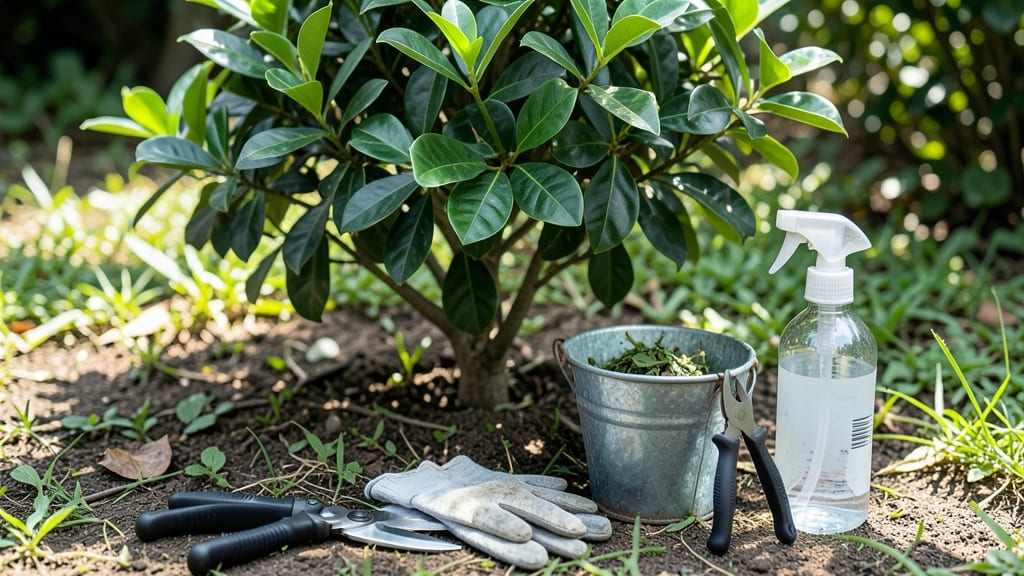
Pruning your curry leaf tree (Murraya koenigii) isn’t just about shaping—it’s about unlocking a healthier, more productive plant year-round. ✂️ I’ve learned the hard way that skipping pruning leads to dense, pest-prone branches that struggle to grow.
The right cuts at the right time transform your tree into a lush, fragrant powerhouse that keeps giving fresh leaves for cooking.
Timing matters most: prune lightly in spring (just after flowering) to encourage new growth, and do heavier shaping in late winter before buds swell. You’ll need sharp pruning shears, gloves, and a clean cutting surface to prevent disease.
The goal is to open the canopy for sunlight and air—this isn’t about aesthetics, it’s about survival. One wrong cut can set your tree back for months, so take your time.
After pruning, watch for new shoots within 2-3 weeks—that’s your tree’s way of saying “thank you.” The leaves you harvest will be more flavorful and abundant, and pests like aphids have fewer hiding spots.
Just avoid cutting into old wood (it won’t regrow), and never prune more than one-third of the tree at once. Patience pays off: a well-pruned curry leaf tree can live for decades and keep producing.
This works for both potted trees and those planted in the ground, whether you’re in a tropical climate or a warm temperate zone. Start small, observe how your tree responds, and adjust next season. Your kitchen—and your tree—will thank you.
📚 In This Guide
- What you need
- Instructions
- Tips and common mistakes
- Wrapping up and next steps
What you need
- ● Pruning shears: Bypass pruners (for clean cuts on small branches, 5–7 inches long, with sharp, stainless-steel blades). Quantity: 1 pair.
- ● Loppers: Bypass or anvil type (for thicker branches, 8–12 inches long, with a comfortable grip). Quantity: 1 pair.
- ● Pruning saw: Curved or folding saw (for branches thicker than 2 inches). Quantity: 1.
- ● Gloves: Heavy-duty, cut-resistant (to protect hands from thorns and sap). Quantity: 1 pair.
- ● Disinfectant: 70% isopropyl alcohol or diluted bleach solution (to sterilize tools between cuts). Quantity: Small spray bottle or wipe.
- ● Rubbing alcohol or hand sanitizer: (for cleaning hands after handling sap). Quantity: Travel-sized bottle.
- ● Trash bag or bucket: (for collecting pruned branches and debris). Quantity: 1–2.
- ○ Pruning sealant: (to coat larger cuts and prevent disease; optional for small cuts).
- ● Ladder or step stool: (if your tree is taller than 6 feet).
- ● Safety glasses: (to shield eyes from debris).
- ● Notebook & pen: (to jot down pruning notes or sketch your tree’s structure).
Step-by-Step instructions for pruning your curry leaf tree
This is how I keep my curry leaf tree thriving year-round—simple, precise cuts that boost growth and flavor.
✂️ Step 1: Prune in the Right Season
Timing matters most. Prune your curry leaf tree in late winter or early spring, just as new growth begins. This is when the tree naturally enters its active growing phase, and it will recover fastest from cuts. Avoid pruning during monsoon season—wet conditions invite fungal infections through fresh cuts.
Look for light green buds along the branches; these signal the tree is ready. If you miss this window, you can do a light maintenance trim in summer, but avoid heavy pruning then. The tree’s energy is focused on leaf production, not recovery.
✂️ Step 2: Use the Right Tools and Technique
Grab clean, sharp pruning shears—dull blades tear tissue, inviting disease. I use bypass shears for smaller branches and a pruning saw for thicker stems. Sterilize your tools with rubbing alcohol before and after pruning to prevent bacterial spread.
Make cuts at a 45-degree angle, about ¼ inch above a leaf node or bud. This encourages new growth in the right direction. Never leave stubs—this stresses the tree and creates entry points for pests. If a branch is too thick to cut cleanly, make two cuts: the first under the branch, the second to remove it completely.
✂️ Step 3: Shape for Airflow and Light
Step back and assess the tree’s structure. Remove dead, diseased, or crossing branches first—these compete for resources and block airflow. Next, thin out the canopy by cutting back overcrowded branches to one-third of their length. This opens the tree up to sunlight, which boosts leaf production and flavor.
Focus on the outer branches to maintain an open center. Curry leaf trees grow dense, so pruning the interior prevents a "broom-like" shape. Aim for a pyramidal form—this mimics their natural growth habit and makes harvesting easier. Never remove more than 25% of the tree’s foliage in one session.
✂️ Step 4: Post-Pruning Care
Water the tree deeply after pruning to help it recover. The roots will need extra moisture to support new growth. Apply a balanced fertilizer (like 10-10-10) two weeks later to replenish nutrients lost during trimming. Avoid heavy fertilizers immediately after pruning—the tree’s energy should go to healing, not feeding.
Monitor the tree for new shoots emerging from the cut areas within 4-6 weeks. These are your signal that the pruning worked. If you notice yellowing leaves or wilting, reduce watering slightly—the tree might be stressed. Mulch the base with 2-3 inches of organic mulch to retain moisture and protect roots.
🌿 Step 5: Year-Round Maintenance
After the main pruning, do light trims every 3-4 months to remove stray branches or leggy growth. Curry leaf trees grow fast, so staying on top of small cuts prevents the need for heavy pruning later. Always prune just above a leaf node to encourage bushier growth.
In fall, do a final check for any weak or diseased branches and remove them before winter. While curry leaf trees are evergreen, a little cleanup now keeps the tree healthy for next year’s harvest. Avoid pruning in winter unless absolutely necessary—the tree is semi-dormant and won’t recover as quickly.
Tips & tricks for perfect curry leaf tree trimming
Here's what nobody tells you—those little details that make all the difference between a healthy curry leaf tree and one that struggles to recover.
Seasonal Timing Secret: In Step 1, when you're checking for those light green buds, don't just look at the branches—run your hand along the bark too. The bark will feel slightly softer near the buds, and you'll notice tiny swelling at the base. This is your real signal that the tree is ready, not just the color. I've learned this the hard way after pruning too early and watching the tree take months to recover.
The Technique That Changed Everything: For Step 2, when making those 45-degree cuts, think about the direction of the branch's growth. Cut just above the bud on the underside of the branch (the side facing the center of the tree). This encourages new growth to follow the tree's natural shape. I used to make cuts randomly and ended up with awkward growth patterns that looked unnatural.
Critical Timing: In Step 4, when you're waiting for those new shoots to appear within 4-6 weeks, don't be impatient! The tree needs this time to redirect its energy. If you see tiny red or pink buds forming but no green leaves, that's normal—they'll develop into leaves soon. I once panicked after 3 weeks when I didn't see green and nearly over-fertilized, which would have stressed the tree even more.
Make-Ahead Strategy: For your year-round maintenance in Step 5, gather all your tools and pruning debris in a single session. You'll be surprised how much faster you work when everything is ready. I keep a small bucket with rubbing alcohol wipes and my pruning shears in a garden shed near the tree. This makes those 3-4 month maintenance trims feel like a quick chore rather than a project.
Pro Tips for Curry Leaf Tree Pruning
- Here's what nobody tells you—those little details that make all the difference between a healthy curry leaf tree and one that struggles to recover.
- Seasonal Timing Secret: In Step 1, when you're checking for those light green buds, don't just look at the branches—run your hand along the bark too.
- The Technique That Changed Everything: For Step 2, when making those 45-degree cuts, think about the direction of the branch's growth.
Frequently asked questions
When is the best time to prune a curry leaf tree?
The ideal time is late winter or early spring (just before new growth starts). Light pruning can also be done after harvest to maintain shape. Avoid heavy pruning during monsoons or extreme heat, as it stresses the tree.
How much can I trim without harming the tree?
Never remove more than 25-30% of the foliage in one go. Over-pruning weakens the tree and reduces leaf yield. Focus on removing dead, diseased, or crossing branches first, then thin out excess growth for airflow.
What should I do if my curry leaves turn yellow after pruning?
Yellowing leaves often signal nutrient deficiency or stress. Apply a balanced fertilizer (like 10-10-10) and ensure the tree gets 6+ hours of sunlight daily. If the issue persists, check for root rot or pests.
Can I prune a young curry leaf tree the same way as a mature one?
No—young trees (under 3 years old) need minimal pruning (just remove dead/damaged branches). Focus on shaping mature trees (3+ years) to encourage dense growth. Avoid heavy cuts near the trunk to prevent disease.
What’s the fastest way to revive a heavily over-pruned curry leaf tree?
Start with hydration (deep watering 2-3x/week) and fertilizer (rich in nitrogen). Prune only essential branches to reduce stress. Mulch the base with compost to retain moisture. Patience is key—new growth may take 1-2 months.
Are there alternatives if my curry leaf tree is too small for pruning?
If your tree is container-grown or dwarf, use selective trimming (e.g., pinching back tips) to control size. For larger trees, consider layering (bending low branches to root) to propagate new plants instead.
Wrapping up and next steps
Pruning your curry leaf tree isn’t just about aesthetics—it’s a year-round ritual that boosts health, productivity, and even flavor! 🌿 With the right tools, timing, and techniques, you’ll keep your tree thriving while harvesting those prized leaves. Remember, consistency is key, whether you’re shaping for sunlight or controlling pests.
Ready to take the next step? Start small—pick one section to prune this weekend, observe how it responds, and build confidence. Before you know it, your curry leaf tree will be the star of your garden (and your kitchen!). Happy trimming! ✂️