
Leaf Blower
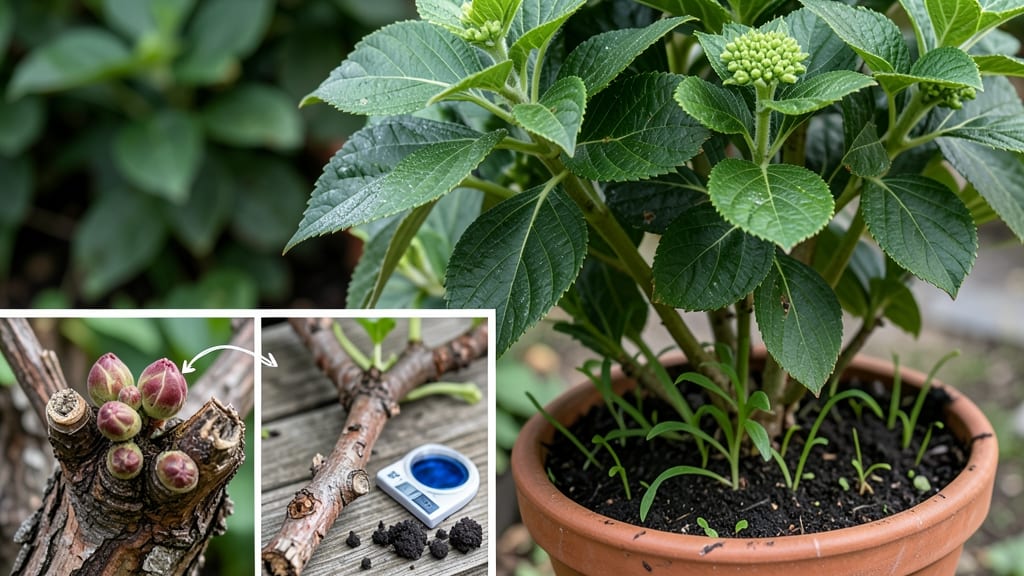
Big leaf hydrangeas do grow on old wood, but blooms form on new growth from previous season’s stems. Prune after flowering to preserve next year’s buds, avoiding drastic cuts that remove last year’s wood entirely.
Big leaf hydrangeas rely on last year's stems to produce flowers, but the buds themselves form during the previous growing season. 🌿 These dormant buds sit on the old wood (last year's growth) and only bloom when the plant experiences cold winter temperatures.
This is why pruning at the wrong time—like in early spring—can mean losing next year's flowers entirely.
The key is to wait until after the plant has finished blooming, typically in late summer or early fall, to trim back only the dead or overgrown stems while leaving the old wood intact.
Understanding this growth pattern helps explain why some gardeners see fewer blooms after aggressive spring pruning. The plant needs those old stems to develop next year's flower buds, so cutting them back too soon removes the potential for future blooms.
Think of it like saving last year's Christmas lights for next year's decorations—you wouldn't toss them out too early!
💡 In This Article
- How Big Leaf Hydrangea Blooms Form on Old Wood
- Best Pruning Timing and Techniques for Big Leaf Hydrangeas
How big leaf hydrangea blooms form on old wood
The magic of big leaf hydrangeas lies in their unique botanical process where flower buds form on the previous year's stems—what gardeners call old wood. These buds develop during late summer and early fall of the prior growing season, triggered by shortening daylight hours and cooler temperatures.
The buds remain dormant through winter, waiting for spring's warmth to break dormancy and bloom. This is why hydrangeas like Hydrangea macrophylla are classified as "old wood bloomers"—their flowers emerge from growth that's already 12-18 months old.
What makes this fascinating is how the plant's growth cycles work: The old wood provides the structural framework where flower buds form, while the new wood (current season's growth) produces the lush green foliage.
The buds themselves are actually tiny flower clusters that develop at the tips of last year's stems. When you see those stunning blooms in summer, they're coming from growth that started forming 6-9 months earlier.
This explains why pruning too early can be disastrous—you might be cutting off next year's flowers before they even have a chance to develop!
The temperature plays a crucial role in this process. Buds typically form when daytime temperatures drop below 75°F and nights dip into the 50s°F range. This temperature shift signals the plant to transition from vegetative growth to reproductive growth (flower formation).
Without this temperature cue, the buds may fail to develop properly, leading to sparse or weak blooms. This is why gardeners in warmer climates sometimes struggle with big leaf hydrangeas—they may not get enough temperature variation to trigger proper bud formation.
Here's what's happening at the cellular level: The plant's apical meristems (growth points) at the tips of last year's stems begin producing flower primordia (early flower structures) in response to hormonal changes triggered by temperature shifts.
These primordia develop into the flower buds we see, while the rest of the stem remains dormant until spring. This dual growth system is what makes big leaf hydrangeas so unique compared to other flowering shrubs that bloom on current season's growth.
Visualizing this helps: Imagine each old stem as a vertical timeline where the top portion (from last year) holds next year's flower buds, while the base produces this year's foliage. When you prune, you're essentially editing this timeline—cutting too much removes potential blooms before they've even formed.
The key is to preserve at least 1/3 of last year's stems when pruning to ensure you're not sacrificing next year's flowers for this year's shape.
This growth pattern also explains why big leaf hydrangeas often produce more blooms in their second or third year—they're building up their old wood framework. In their first year, the plant focuses on establishing roots and basic structure, with minimal flower production.
By year two, when they have more established old wood, you'll typically see the first significant flower displays. This is why patience is crucial when growing these beauties—rushing pruning can set back their flowering potential by years.