
Shrubs
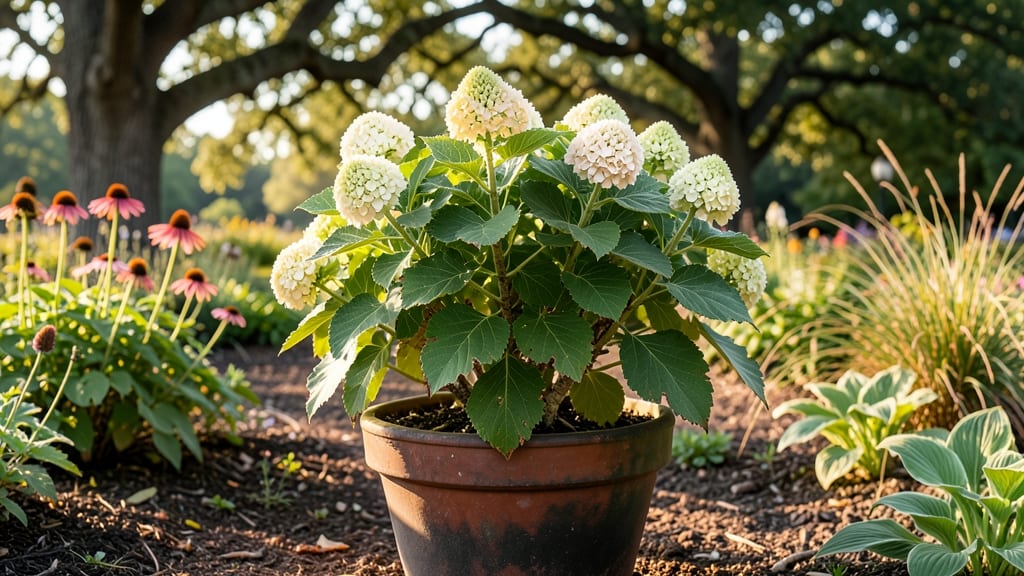
The dwarf oakleaf hydrangea 🌸 brings woodland charm to small gardens with its stunning foliage and compact size, making it a standout for shade lovers.
If you love the stunning foliage and long-lasting blooms of oakleaf hydrangeas but lack space, the dwarf variety is your perfect solution—packing all the drama into a compact, low-maintenance package.
This shrub thrives in partial shade, where its leaves turn fiery red in fall, and its blooms last from summer into early autumn. But getting those vibrant colors and abundant flowers takes the right soil, sunlight, and pruning know-how.
In this guide, I’ll walk you through everything from planting in USDA Zone 6a to seasonal care, so your dwarf oakleaf hydrangea becomes the showstopper of your garden.
Dwarf oakleaf hydrangea sunlight and soil requirements for healthy growth
The dwarf oakleaf hydrangea (Hydrangea quercifolia 'Skeeter') thrives when you balance its love for bright indirect light with protection from harsh afternoon sun. Unlike its larger counterparts, this compact shrub adapts beautifully to partial shade, making it ideal for woodland gardens or understory plantings.
In hotter USDA zones 7-9, prioritize morning sun and afternoon shade to prevent leaf scorch while maintaining vibrant foliage color.
For optimal blooms, aim for 4-6 hours of sunlight daily. In cooler zones (5-6), it can handle more sun, but avoid full sun exposure in southern climates where temperatures often exceed 85°F.
The key is mimicking its natural habitat—dappled light under tall trees. This ensures those stunning oak-shaped leaves stay lush and the cone-shaped blooms last from summer into fall.
| Factor | USDA Zone 5 | USDA Zone 6-7 | USDA Zone 8-9 |
|---|---|---|---|
| Sunlight | 5-6 hours (morning sun) | 4-6 hours (partial shade) | 3-4 hours (afternoon shade) |
| Soil pH | 5.0-6.0 (acidic) | 5.0-6.0 (acidic) | 4.5-5.5 (slightly acidic) |
| Drainage | Well-draining | Well-draining | Moist but not soggy |
| Organic Matter | 30% compost | 25% compost | 20% compost |
| Mulch Depth | 3 inches (pine needles) | 3 inches (wood chips) | 2 inches (mulch + bark) |
Your dwarf oakleaf hydrangea will reward you with richer colors when planted in slightly acidic soil (pH 5.0-6.0).
Test your soil using a home pH kit—if it’s too alkaline, amend with sulfur or peat moss to lower the pH. These shrubs adore organic-rich soil, so mix in compost or aged manure before planting.
Avoid heavy clay soils, which can suffocate roots and lead to root rot.
In USDA zone 5, where winters are harsher, focus on well-draining soil with a thick layer of mulch (3 inches) to insulate roots. For zones 8-9, prioritize moisture retention—add hydrangea-specific fertilizer in early spring to boost bloom production.
The dwarf variety tolerates urban environments well, thriving in containers with acidic potting mix and regular watering.
Watering plays a crucial role in foliage health. Keep soil consistently moist but never waterlogged. In hot climates, water deeply twice weekly during droughts, while in cooler zones, weekly watering suffices.
The secret to those iconic burgundy leaves in fall? Balanced moisture—neither too dry nor soggy. Use a moisture meter to check soil levels at 2-inch depth.
For container gardening, choose pots with drainage holes and use a mix of peat moss, perlite, and compost (ratio 2:1:1). Dwarf oakleaf hydrangeas in pots dry out faster, so monitor soil daily in summer heat.
Elevate containers to prevent water pooling, which can cause fungal diseases. A self-watering planter is a game-changer for busy gardeners!
One common mistake is assuming more sun equals better blooms. While your shrub can handle morning sun, harsh afternoon rays in zones 7-9 will bleach leaves and reduce bloom quality.
Instead, place it near a north-facing wall or under deciduous trees that provide summer shade. In woodland gardens, these hydrangeas shine under filtering canopy light.
To maximize fall foliage color, avoid heavy nitrogen fertilizers in late summer. Nitrogen promotes leafy growth but dulls those vibrant autumn hues. Instead, switch to a low-nitrogen, high-potassium fertilizer in early fall. This trick ensures your dwarf oakleaf hydrangea puts energy into colorful leaves rather than new growth.
Pro tip: If your hydrangea’s leaves turn yellow, it’s likely a
Step-by-step pruning guide for dwarf oakleaf hydrangeas: when, how, and why
Pruning your dwarf oakleaf hydrangea is the secret to unlocking its full potential—think bushier growth, larger blooms, and showstopping fall foliage. Unlike some hydrangeas that bloom on old wood, these varieties bloom on new growth, making pruning less risky but still crucial for shaping and rejuvenation.
The key is timing and technique, which I’ll break down step by step to keep your plant thriving for years.
Many gardeners hesitate to prune hydrangeas, fearing they’ll ruin the blooms. But with dwarf oakleaf hydrangeas, you have flexibility. The best time to prune is late winter or early spring, just as new growth begins. This encourages fresh, vibrant stems and prepares the plant for the growing season.
Fall pruning is also an option, but it’s best reserved for light shaping or removing dead wood to avoid stimulating new growth that won’t harden off before winter.
- Step 1: Gather tools – You’ll need sharp pruning shears, gloves, and disinfectant to prevent disease spread. A hand pruner works best for smaller branches.
- Step 2: Remove dead/diseased wood – Start by cutting out any brown or mushy stems at the base. This improves airflow and plant health.
- Step 3: Shape the shrub – Prune to maintain a rounded shape, cutting back 1/3 of the oldest stems to the ground. This encourages new growth.
- Step 4: Thin out crowded branches – Look for crossing or rubbing branches and remove them to reduce competition for nutrients.
- Step 5: Encourage blooms – Cut back last year’s blooms to the first set of healthy leaves. This redirects energy to new flowers.
- Step 6: Clean up – Dispose of pruned material in the trash (not compost) to prevent pests or diseases from lingering.
One of the most common mistakes I see is pruning too late in spring, which can delay blooming. Another pitfall is over-pruning, which stresses the plant.
Remember, dwarf oakleaf hydrangeas are resilient, but they thrive best when you remove no more than 1/3 of the plant’s growth in a single session. If you’re unsure, it’s always safer to prune lightly and observe the plant’s response.
For fall foliage lovers, pruning in early spring sets the stage for richer fall colors. The oakleaf-shaped leaves of this variety turn stunning shades of red, orange, and purple when given the right care.
To enhance this, avoid heavy pruning in late summer, as it can reduce the plant’s ability to develop vibrant fall hues. Instead, focus on light maintenance pruning to keep the shape tidy.
Pro tip: If your hydrangea isn’t blooming as expected, it might be under-pruned. These plants respond well to annual light pruning, so don’t skip it! For potted dwarf oakleaf hydrangeas, prune similarly but be mindful of root space—overcrowding can limit growth.
After pruning, give your plant a light fertilizer to support new growth, and keep an eye out for aphids or spider mites, which love fresh new shoots.
With the right approach, your dwarf oakleaf hydrangea will reward you with lush foliage, abundant blooms, and a compact form that fits perfectly in small gardens, containers, or woodland edges. Happy pruning—your hydrangea will thank you with a showstopping display! 🌸