
Diseases
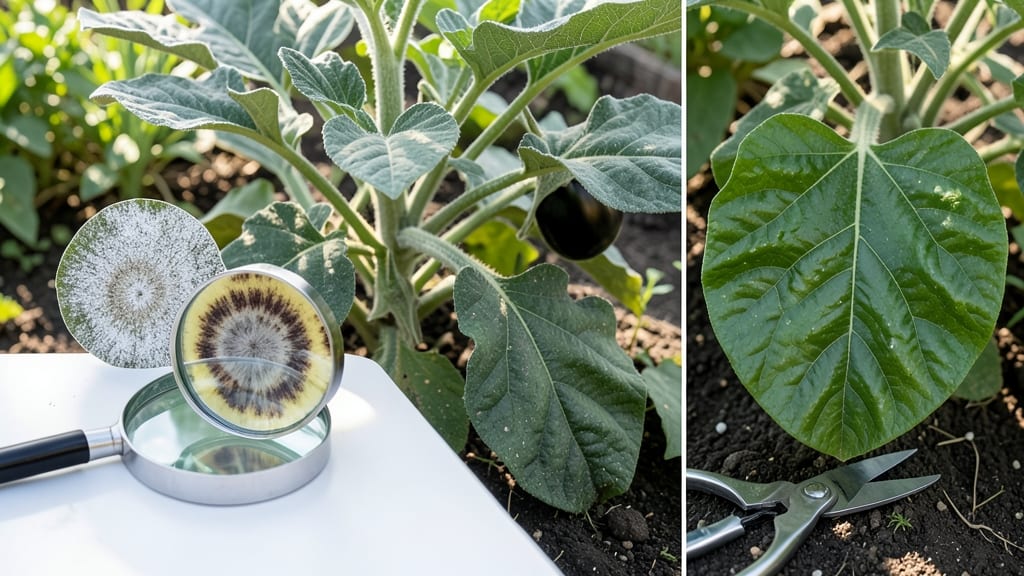
Spotting those mysterious brown spots on the eggplant leaf diseases pictures you’ve just snapped? 🌿 That’s your first warning sign—some look like freckles, others like water damage, but each one tells a different story.
This guide breaks down 12 fungal spots, from powdery mildew’s white dust to bacterial wilt’s yellowing veins, with clear visual cues so you can diagnose fast and act before the plant wilts.
The worst part? Most of these diseases thrive in humid, crowded gardens—exactly where eggplants love to grow. But here’s the good news: early intervention works. Prune infected leaves, space plants for airflow, and use copper sprays or neem oil before the spots spread.
I’ve saved entire plants this way, and you can too.
You’ll learn to spot the difference between target spot’s concentric rings and early blight’s jagged edges, plus when to pull the plant vs. when a fungicide can still save it. Think of this as your visual cheat sheet—no more guessing whether that leaf needs trimming or tossing.
Works for home gardeners and market farmers alike. Whether you’re dealing with a single plant or a full row, this guide keeps your eggplants healthy, productive, and spot-free. Let’s get those leaves looking vibrant again.
What Triggers Leaf Trouble
Understanding why eggplant leaves develop diseases is the first step to preventing them. These issues rarely appear out of nowhere—they’re usually the result of a perfect storm of environmental factors, pathogen presence, or poor growing conditions.
Let’s break down the key culprits behind those unsightly (and often harmful) spots, stains, and lesions on your eggplant foliage.
Fungal pathogens like Alternaria, Septoria, and Phytophthora thrive when temperatures hover between 70–85°F (21–29°C) and humidity stays high—especially at night. Here’s why:
- Stagnant Air: Poor air circulation traps moisture on leaves, creating a damp, warm environment that fungi love.
Think of it like a sauna for pathogens. - Prolonged Leaf Wetness: If leaves stay wet for more than 6–12 hours (from dew, rain, or overhead watering), spores germinate and infect tissues. - Soil-Borne Fungi: Phytophthora and Fusarium spread faster in waterlogged soil, where roots struggle and leaves show stress symptoms (yellowing, wilting).
Actionable Fix: Space plants for airflow, water at the base early in the day, and use a fan in greenhouses to reduce humidity.
Eggplants need consistent moisture, but improper watering is a fast track to disease. Common mistakes include:
- Overhead Watering: Splashing water onto leaves spreads fungal spores (like Early Blight) from soil to foliage. It’s like painting a target on your plants! - Inconsistent Moisture: Drought stress weakens plants, making them vulnerable to infections.
Then, sudden heavy watering can wash spores directly onto leaves. - Salty or Hard Water: High mineral content in water can burn leaf edges, creating entry points for secondary infections.
Actionable Fix: Use drip irrigation or soaker hoses, water at soil level, and keep soil evenly moist (not soggy).
Fungal diseases don’t just appear—they hitchhike on wind, tools, or even contaminated seeds. Key sources:
- Previous Crops: If you grew tomatoes, peppers, or potatoes (all nightshades) in the same spot, soil-borne fungi like Verticillium or Fusarium wilt may linger.
- Infected Plant Debris: Leaving behind diseased leaves or stems provides a food source for fungi to multiply and reinfect.
- Windborne Spores: Alternaria and Septoria spores travel on breezes, landing on healthy leaves and germinating in favorable conditions.
Actionable Fix: Practice crop rotation, sterilize tools with 70% alcohol, and remove all plant debris at season’s end.
A malnourished eggplant is like an open invitation for pests and diseases. Key deficiencies that weaken defenses:
- Low Nitrogen (N): Leads to yellowing leaves (chlorosis), reducing the plant’s ability to fight infections.
Fungi exploit weak tissue. - Excess Phosphorus (P): Can suppress beneficial microbes in the soil, allowing harmful fungi to dominate. - Zinc or Magnesium Deficiency: Causes interveinal yellowing or necrosis, making leaves more susceptible to fungal invasion.
Actionable Fix: Test soil pH (aim for 6.0–6.8) and amend with compost or a balanced fertilizer (e.g., 10-10-10).
Insects and mites don’t just eat leaves—they create wounds that serve as entry points for fungi. Common culprits:
- Aphids & Whiteflies: Their honeydew secretion fosters sooty mold, a black fungal growth that smothers leaves.
- Spider Mites: Feed on leaf cells, causing silvering or stippling, which weakens the plant’s barrier against pathogens.
- Caterpillars & Slugs: Chew holes that expose tissues to bacterial or fungal invaders.
Actionable Fix: Use neem oil or insecticidal soap to control pests before they cause damage.
Eggplants that struggle to establish themselves are prime targets for diseases. Common stress factors:
- Root Disturbance: Rough handling during transplanting damages roots, slowing nutrient uptake and weakening the plant.
- Grafting Failures: If the graft union doesn’t heal properly, the plant may stunt or develop lesions, inviting infections like Phytophthora.
- Temperature Fluctuations: Sudden cold snaps or heatwaves shock plants, reducing their resistance to pathogens.
Actionable Fix: Harden off seedlings gradually, plant at the right time for your climate, and ensure grafts are secure and healthy.
Quick Fixes for Fungal Foes
Now that you’ve identified the problem, let’s tackle it head-on with practical, plant-friendly solutions tailored to each eggplant leaf disease. Prevention is key, but if your plants are already showing signs of distress, these steps will help you revive your crop and keep future outbreaks at bay.
1. Early-Stage Fungal Spots (Powdery Mildew, Downy Mildew, Alternaria)
**🔥 Act Fast—These spread like wildfire!
- 🍳 Remove Infected Leaves Snip off yellowed, spotted, or white powdery leaves (don’t compost them—toss in the trash). Disinfect your pruners with 70% rubbing alcohol or a 1:10 bleach-water mix between cuts to prevent cross-contamination.
- 👨🍳 Spray Fungicide (Organic or Chemical) - Baking Soda Spray (for powdery mildew): Mix 1 tsp baking soda + 1 tbsp vegetable oil + 1 tsp mild soap + 1 gallon water.
Spray every 7–10 days (especially undersides of leaves). - Neem Oil Solution (broad-spectrum): Combine 1 tbsp neem oil + 1 tsp soap + 1 quart water.
Apply in the early morning or evening (avoid direct sun—it burns leaves). - Copper Fungicide (for severe cases): Follow label instructions for Cheshunt Compound or copper sulfate sprays. Reapply after rain.
- 🌡️ Improve Airflow & Light
- Prune crowded branches to let air circulate.
- Avoid overhead watering—use drip irrigation or water at the base.
2. Advanced Fungal Decay (Fusarium Wilt, Verticillium Wilt, Early Blight)
⚠️ No Cure—But You Can Slow It Down
- 🔪 Dig Up & Destroy Infected Plants If wilting, yellowing veins, or stem rot appear, remove the entire plant (roots and all) to stop soil-borne spores from spreading. Solarize the soil by covering it with clear plastic for 4–6 weeks to kill pathogens.
- 🌱 Rotate Crops & Sterilize Soil
- Solarize soil (summer) or use steam sterilization (fall).
- Add compost + mycorrhizal fungi to boost plant immunity.
3. Bacterial Leaf Spot (Xanthomonas, Pseudomonas)
💦 Water Woes—This One’s Tricky!
- ⏰ Adjust Watering Habits
- Use a fan to speed up drying if humidity is high.
- Avoid splashing soil onto leaves—aim water at the base.
Once you’ve treated the current outbreak, lock in these habits to protect future harvests:
- 💡 Pro Tip: Start with Healthy Seedlings Buy from reputable nurseries or grow from sterilized seeds. Avoid infected transplants!
- 🌡️ Monitor Weather & Humidity
- Avoid late-season planting (fall rains = disease prime time).
Final Reminder:** 🚨 The sooner you act, the better! Fungal and bacterial diseases worsen quickly, so don’t wait until half your plants are affected. With these targeted fixes, your eggplants will bounce back—and next season, they’ll stay strong, spot-free, and thriving!
Frequently asked questions
How can I tell if my eggplant leaf spots are fungal or bacterial?
Fungal spots usually appear as powdery, fuzzy, or concentric rings (like powdery mildew’s white dust or target spot’s bullseye pattern). Bacterial spots often look greasy, water-soaked, and yellow-haloed with irregular edges. Check leaf undersides too—fungal spores often gather there.
Are there any eggplant varieties resistant to common leaf diseases?
Yes! Look for ‘Black Beauty’ (tolerates early blight) or ‘Ichiban’ (resistant to Fusarium wilt). Grafting onto resistant rootstocks (like ‘Beaufort’) also helps prevent soil-borne diseases like Verticillium wilt.
Can I still harvest fruit from diseased eggplants?
Only if the fruit itself is healthy—diseases like early blight or bacterial spot rarely spread to the eggplants, but Fusarium or Verticillium wilt can contaminate them. When in doubt, remove affected plants entirely to prevent further spread.
Why do my eggplant leaves get brown edges even when I water regularly?
This could signal overwatering, nutrient burn, or high humidity. Check for soggy soil or white fungal growth—both indicate excess moisture. Try watering at the base in the morning and improving airflow with pruning.
How often should I spray fungicides on my eggplants?
For prevention, spray neem oil or baking soda mixtures every 7–10 days during humid weather. If treating active infections, use copper fungicides every 5–7 days until symptoms disappear. Always apply in the early morning or evening to avoid leaf burn.