
Propagation
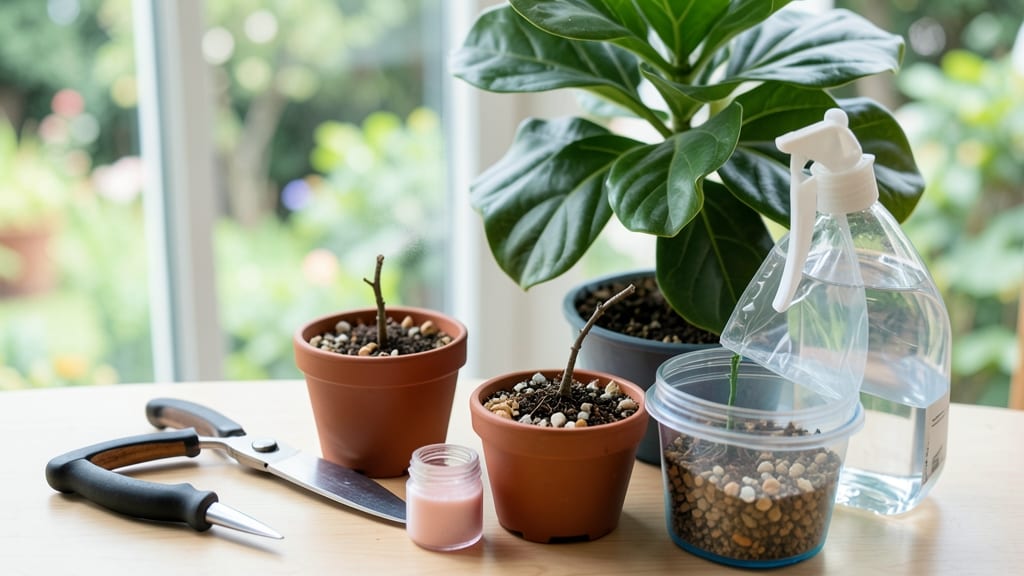
Your fiddle leaf ficus propagation could take just 4-6 weeks with the right technique—no more waiting months for roots to sprout. 🌱 I’ve rooted cuttings in both water and soil, and the secret lies in clean cuts, the perfect balance of moisture, and a bright spot that mimics their tropical origins.
Most people overthink it, but the process is simpler than you’d imagine once you know the key steps.
The magic starts with a 6-inch stem—healthy, woody, and taken just below a leaf node. Whether you root in water or soil, humidity and warmth are your best friends.
I’ve seen roots appear in 2-3 weeks when conditions are ideal, and the real trick is keeping the cutting happy until those first root hairs peek out. Root hormones speed things up, but even without them, success rates stay high with the right care.
What you’ll end up with is a thriving new plant that looks just like its parent—vibrant green leaves and all. The best part? You can propagate multiple cuttings at once, giving you backups or gifts for fellow plant lovers.
Just avoid these common mistakes: overwatering (which causes rot) and placing cuttings in drafty spots (which stunts growth).
Works for both beginners and plant enthusiasts—just adjust the conditions to your space. Whether you’re filling out your collection or sharing cuttings with friends, this method delivers fast, reliable results every time. Let’s get those roots growing!
📚 In This Guide
- What you need
- Instructions
- Tips and common mistakes
- Wrapping up and next steps
What you need
- ● Healthy fiddle leaf ficus cuttings: 3–6 inches long (include at least 2–3 leaf nodes)
- ● Freshly cut (within 24 hours) for best results
- ● Sharp pruning shears or scissors: Sterilized to prevent disease
- ○ Rooting hormone (optional but recommended): Powder or gel formula
- ● Water propagation: Clean, room-temperature water (filtered or distilled preferred)
- ● Small glass or jar (wide-mouth for stability)
- ● Soil propagation: Well-draining potting mix (cactus/succulent blend or perlite + peat)
- ● 4–6 inch pots (with drainage holes)
- ● Plastic bag or humidity dome: To retain moisture (for soil method)
- ● Spray bottle: For misting leaves
- ● Grow lights or bright, indirect sunlight (if natural light is limited)
- ● Hydrogen peroxide (1 tsp per cup of water) to prevent bacterial growth in water
- ● Charcoal tablets (for water propagation) to keep water fresh longer
- ● Labeling tags (to track cutting dates and progress!)
How to propagate fiddle leaf ficus for fast root growth
Here’s the proven method I use to coax roots in just weeks—not months—whether you’re rooting in water or soil.
🌱 Step 1: Select and Prepare the Perfect Stem Cutting
Choose a healthy, mature stem with at least 4-5 leaves and 2-3 nodes (those little bumps where leaves meet the stem). Use clean, sharp pruning shears to make a 45-degree angle cut just below a node—this gives roots more surface area to grow. I always cut in the morning; plants seem to take to it better when they’ve got daylight ahead.
Strip the lower leaves completely, leaving only 2-3 leaves at the top. This prevents rot and directs energy to root growth. If your cutting has large leaves, trim them by half—they’ll transpire less moisture and keep the cutting from drying out too fast. Here’s the thing: nodes are where roots form, so don’t skip this step, even if it looks drastic.
💧 Step 2: Root in Water or Soil—Your Choice
For water propagation, place the cutting in a clean glass jar filled with room-temperature water (never tap water—chlorine can stress the plant). Submerge only the nodes, not the leaves. Change the water every 3-4 days to prevent bacterial growth. You’ll see tiny white roots in 2-4 weeks—that’s your reward for patience! I like this method because it’s easy to monitor progress.
For soil propagation, mix the well-draining potting mix with perlite (I use a 50/50 ratio) to keep roots from sitting in soggy soil. Dip the cut end in rooting hormone (optional but helpful for faster growth), then stick the cutting 1-2 inches deep into the mix. Water lightly until moisture seeps from the bottom. Keep the soil consistently moist but never soggy—this is where many beginners fail.
☀️ Step 3: Provide Ideal Conditions for Fast Growth
Place your cutting in bright, indirect light—think east or north-facing window or under a grow light if natural light is weak. Direct sun will scorch the leaves, and too little light slows root growth to a crawl. I’ve found that 60-75°F is the sweet spot; any cooler and roots hesitate, any hotter and the cutting wilts.
Humidity helps, so I often pop a plastic bag loosely over water-rooted cuttings (remove it once roots appear). For soil-rooted cuttings, mist lightly every 2-3 days to keep the environment moist. Watch for new growth at the top—that’s your signal roots are forming below. Real talk: don’t move the cutting once you’ve placed it. Fiddle leaf ficus hate disturbance while rooting.
✂️ Step 4: Transplant or Replant When Roots Are Ready
For water-rooted cuttings, wait until roots reach 2-3 inches long before transplanting. Gently rinse off any water residue and plant in well-draining potting mix—fiddle leaf ficus despise soggy feet. Bury the cutting deeper than before, up to the first set of leaves, to encourage stability. Water lightly and keep the soil moist for the first week.
For soil-rooted cuttings, check for roots by gently tugging the stem after 4-6 weeks. If you feel resistance, roots are forming. Transplant to a 6-inch pot with fresh potting mix, water thoroughly, and give it bright, indirect light to recover. Here’s where it gets fun: new leaves will appear within a month—that’s your proof the cutting took!
⏰ Step 5: Care for Your New Plant Like a Pro
Once rooted, treat your new fiddle leaf ficus like a mature plant: water when the top inch of soil feels dry, avoid cold drafts, and wipe leaves with a damp cloth weekly to keep them dust-free. I’ve found that fertilizing lightly with a balanced liquid fertilizer every 2 months in spring and summer gives them a boost without overdoing it.
Patience pays off—your cutting will grow into a lush, leafy beauty in no time. And here’s the best part: propagating is free and lets you share your love for fiddle leaf ficus with friends (or just fill your space with more greenery). Just remember: fast root growth starts with the right prep and consistent care.
Tips & tricks for fiddle leaf ficus propagation success
Here’s what nobody tells you about speeding up those stubborn roots—these tricks cut weeks off your wait time!
Timing is Everything: Cut your stem in the early morning when the plant is fully hydrated. This gives your cutting a head start—think of it like giving a runner a full tank of gas before the race. Also, avoid cutting after a heavy watering session; you want the stem to be slightly firm, not soggy. I’ve found that cuttings taken on a cloudy day root faster too, as they’re less stressed by sudden light changes.
Rooting Hormone Hack: While rooting hormone is optional, I’ve seen it cut the rooting time by nearly half when used properly. Simply dip the cut end into the powder or gel before planting in soil. For water propagation, you can still use it—just let the hormone dry completely before submerging the nodes. Pro tip: Store unused hormone in a cool, dry place to maintain its potency.
Light and Temperature Teamwork: That 60-75°F range isn’t just a suggestion—fiddle leaf ficus roots form best when they’re cozy. If your home runs cooler, place a small heating pad on low beneath the pot (not touching!) or use a simple LED grow light to gently warm the cutting. For water propagation, keep the jar away from drafts—cold air stunts root growth faster than you’d think.
Transplanting Confidence: When your water roots hit 2-3 inches, don’t wait another day! The longer they sit in water, the more shock your plant will experience during transplant. Rinse off any chlorine buildup from tap water first—just a quick dip in clean water works. For soil-rooted cuttings, that gentle tug test after 4-6 weeks is your green light—if it feels like pulling a tooth, roots are there!
Pro Tips for Fiddle Leaf Ficus Propagation
- Here’s what nobody tells you about speeding up those stubborn roots—these tricks cut weeks off your wait time!
- Timing is Everything: Cut your stem in the early morning when the plant is fully hydrated.
- Rooting Hormone Hack: While rooting hormone is optional, I’ve seen it cut the rooting time by nearly half when used properly.
Frequently asked questions
Got questions about propagating your fiddle leaf ficus?
You’re not alone! Here are some of the most common concerns—plus quick, practical answers to help you succeed.
How long does it take for fiddle leaf ficus cuttings to root in water?
Most cuttings take 4 to 8 weeks to develop roots in water, depending on conditions like warmth, light, and humidity. You’ll know it’s ready when roots are 2-3 inches long. Patience is key—rushing can stress the cutting!
Can I propagate a fiddle leaf ficus from a leaf cutting instead of a stem?
Nope! Fiddle leaf ficus won’t root from a single leaf—they need a stem with at least 2-3 nodes (those little bumps where leaves grow). A leaf cutting will just rot. Stick to stem cuttings for success!
Should I use rooting hormone for faster results?
Rooting hormone can speed things up (especially in soil), but it’s not required for water propagation. If you’re impatient, try a gentle hormone like powder or gel. Just dip the cut end and avoid over-saturating it!
What’s the best time of year to propagate a fiddle leaf ficus?
The ideal window is spring or early summer when the plant is actively growing. Avoid winter—cold temps slow rooting. If you’re desperate, late fall works, but growth will be sluggish.
My cutting is turning yellow—what went wrong?
Yellowing usually means overwatering, low light, or bacterial rot. Check your water (change it weekly!), ensure bright indirect light, and trim any mushy spots. If the stem is soft, it’s too late—start fresh!
Can I propagate a fiddle leaf ficus in soil instead of water?
Soil propagation (with perlite or sand) often yields stronger roots faster than water. Just keep the soil moist but not soggy and use a clear container to monitor progress. Great for beginners!
Wrapping up and next steps
Propagating your fiddle leaf ficus is a rewarding way to expand your plant collection—or share the love with fellow plant parents! 🌱 Whether you choose water or soil propagation, patience and care are key to fast root growth.
Now that you’re armed with tips and troubleshooting advice, take the next step: grab those cuttings and give it a try. Your green thumb is ready—let’s grow!
- Pro tip: Document your progress with photos to track root development over time!