
Propagation
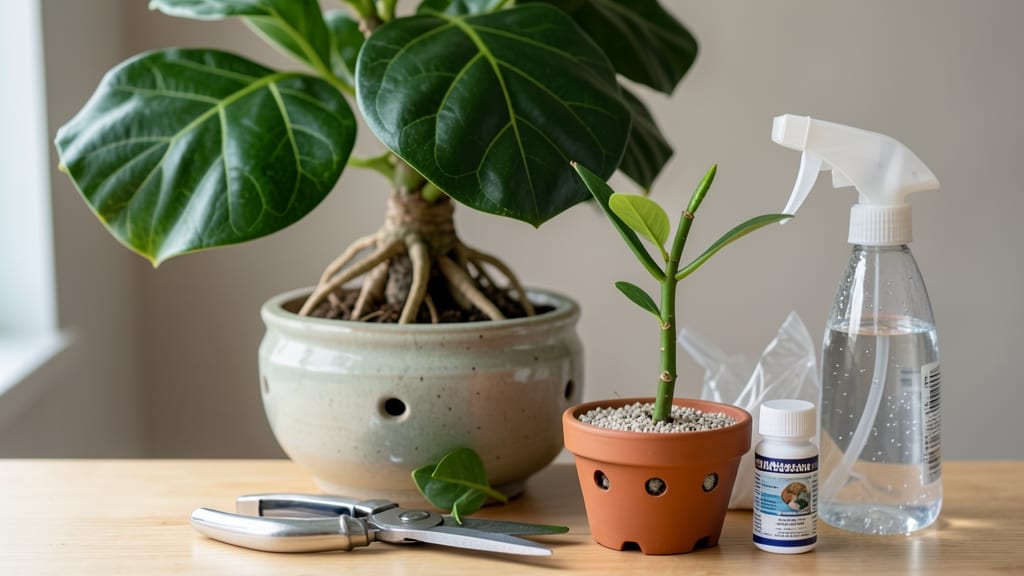
Fiddle leaf propagation from cuttings is the easiest way to grow a second plant—no nursery needed. 🌱 I’ve rooted dozens of cuttings, and the secret isn’t complicated: timing, sharp tools, and patience. Whether you choose water or soil, you’ll see roots in 4 weeks if you follow these steps. The best time is spring or early summer, when the plant is actively growing. You’ll need 6-inch cuttings with at least two leaves, a clean pair of pruners, and either water or well-draining soil mix. Skip the rooting hormone—it’s optional but helps speed things up for beginners. In water, roots appear in 2-3 weeks if you keep the cutting in bright, indirect light and change the water every 3-4 days. For soil, plant the cutting in a pot with drainage, keep it moist (not soggy), and expect roots in 3-4 weeks. Both methods work, but soil often produces stronger plants faster. Once rooted, your new fiddle leaf will need bright, indirect light and occasional misting to thrive. Avoid overwatering—the most common mistake is drowning the cutting before roots even form. With this method, you’ll have a second plant in no time!
📚 In This Guide
- What you need
- Instructions
- Tips and common mistakes
- Wrapping up and next steps
What you need
- ● Healthy fiddle leaf fig (Ficus lyrata) – Choose a mature plant with at least 3-4 leaves and a sturdy stem.
- ● Clean, sharp pruning shears – Sterilize with rubbing alcohol to prevent infection.
- ● Propagating cuttings – 4-6 inches long, with at least 1-2 nodes (where leaves grow).
- ○ Rooting hormone (optional but recommended) – Speeds up root growth (e.g., Clonex or Rootone).
- ● Clean glass or jar – Wide-mouth for easy access (e.g., mason jar or vase).
- ● Filtered or distilled water – Tap water can introduce chlorine or bacteria.
- ● Small pebbles or charcoal tablets – 1-2 tablets to keep water fresh and prevent algae.
- ● Well-draining potting mix – Use a blend of 50% perlite and 50% peat or coconut coir.
- ● Small pots or trays – 4-6 inch diameter with drainage holes.
- ○ Plastic bag or humidity dome – To maintain moisture (optional but helpful for tropical plants).
- ● Heat mat – Helps speed up rooting (70-75°F ideal).
- ● Spray bottle – For misting soil-propagated cuttings.
- ● Grow lights – If natural light is insufficient (12+ hours/day).
Step-by-Step instructions for fiddle leaf fig propagation
Here's how I've successfully rooted fiddle leaf fig cuttings—both in water and soil—using just what you have at home.
🌱 Step 1: Take Healthy Cuttings at the Right Time
Choose a 6-12 inch stem with at least 4-5 leaves and 1-2 nodes (those little bumps where leaves grow). I always cut just below a node at a 45-degree angle using clean, sharp pruners. This gives the cutting more surface area to absorb water or soil, which speeds up rooting.
Timing matters too—spring and early summer are ideal because the plant is actively growing. Avoid cutting during winter dormancy, or your cutting will struggle to root. If you're propagating indoors, any time of year works as long as your fiddle leaf fig is healthy and well-lit.
💧 Step 2: Prepare for Water or Soil Propagation
For water propagation, place the cutting in a clean glass or jar with room-temperature water—just enough to cover the bottom 1-2 inches of the stem. I like to use filtered or distilled water because tap water can introduce chlorine or minerals that slow root growth. Change the water every 3-5 days to prevent bacteria buildup.
For soil propagation, fill a small pot with well-draining potting mix (I mix equal parts potting soil and perlite). Dip the cut end of the stem in rooting hormone (optional but helpful) and insert it 1-2 inches deep into the soil. Gently pat the soil around the stem to secure it without compacting it too tightly.
☀️ Step 3: Provide Ideal Conditions for Rooting
Place your cuttings in bright, indirect light—think 6-8 hours of filtered sunlight daily. Direct sun can scorch the leaves, while too little light slows rooting. If you're using water propagation, keep the jar in a warm spot (70-75°F) and watch for tiny white roots in 2-4 weeks.
For soil propagation, maintain 60-70% humidity by covering the pot with a clear plastic bag (secure it loosely with a rubber band). Mist the soil lightly every 2-3 days to keep it moist but not soggy. You'll know it's working when new leaves appear—usually after 4-6 weeks.
✂️ Step 4: Transplant or Adjust Care After Roots Form
Once your water-propagated cutting develops 2-3 inches of roots, it's ready to move to soil. Gently plant it in a small pot with well-draining potting mix and water lightly. Avoid overwatering for the first week—let the top 1 inch of soil dry out between waterings.
For soil-propagated cuttings, wait until you see new growth (usually 6-8 weeks) before treating it like a mature plant. Reduce humidity gradually by removing the plastic bag over 3-5 days to avoid shocking the plant. Both methods should yield a thriving fiddle leaf fig in 4 weeks or less if done correctly!
Tips & tricks for fiddle leaf fig propagation success
These little details make all the difference between a thriving new plant and a cutting that just won't take.
Cutting Precision: When making your 45-degree cut just below a node in Step 1, I can't stress enough how important this is. Use a clean, sharp pair of pruners to avoid crushing the stem—crushed stems take forever to root. The larger surface area from the angled cut actually helps the plant absorb moisture faster, which is why this method works so well. If you're nervous about making clean cuts, practice on a few stems first.
Water Quality Matters: For water propagation, don't just use whatever's in your tap—especially if you have hard water. The minerals and chlorine can actually stunt root growth. If you don't have filtered water, let tap water sit out for 24 hours before using it. And remember, those 3-5 days between water changes are critical—don't skip them, or you risk bacterial growth that can rot your cuttings before they even root.
Light Positioning: That 6-8 hours of bright, indirect light in Step 3 is non-negotiable. I've seen people place their cuttings too close to windows and end up with crispy leaves from direct sun. Try placing them near an east-facing window where they'll get gentle morning light. For indoor grow lights, keep them about 6 inches away from the cuttings—closer than that can burn the leaves while you're waiting for roots.
Humidity Hack: If maintaining 60-70% humidity feels tricky, try this: Place your soil-propagated cuttings on a tray filled with pebbles and water. The evaporation creates natural humidity around your plant without you having to mist constantly. Just make sure the pot isn't sitting directly in the water—that can cause root rot. This method works especially well if your home tends to be dry.
Pro Tips for Fiddle Leaf Propagation
- These little details make all the difference between a thriving new plant and a cutting that just won't take.
- Cutting Precision: When making your 45-degree cut just below a node in Step 1, I can't stress enough how important this is.
- Water Quality Matters: For water propagation, don't just use whatever's in your tap—especially if you have hard water.
Frequently asked questions
Fiddle leaf propagation
can feel intimidating, but with the right approach, you can grow new plants in just four weeks! Here are answers to the most common questions to help you succeed:
Can I propagate a fiddle leaf fig from a single leaf?
A single leaf won’t root—you’ll need a stem cutting with at least one node (where leaves grow). Nodes contain the growth hormones needed for roots to form. If you only have a leaf, try leaf-cutting propagation in water first, but success rates are much lower.
How long does it take for roots to appear?
Roots typically emerge in 2–4 weeks if conditions are ideal. Keep cuttings in warm, bright, indirect light and change the water every 3–5 days. Patience is key—some stubborn cuttings take up to 6 weeks.
Water or soil propagation—what’s better for fiddle leaf figs?
Both work, but water propagation lets you monitor root growth, while soil propagation reduces transplant shock. Water is easier for beginners, but soil mimics natural conditions better. Try both methods to see which your plant prefers!
Why is my cutting rotting instead of rooting?
Overwatering or poor drainage is usually the culprit. Ensure your cutting has 1–2 nodes submerged in water (or planted in moist soil) and avoid soggy conditions. Let the soil dry slightly between waterings, and use a well-draining mix.
Can I propagate a fiddle leaf fig from a branch without leaves?
Yes! A leafless stem with nodes can still root—just place it in water or soil. The nodes will eventually sprout new leaves. Keep it in bright, indirect light and maintain humidity to encourage growth.
Wrapping up and next steps
Mastering fiddle leaf propagation—whether through water or soil—is totally within your reach! With patience, the right tools, and a little care, you’ll soon be watching those roots grow and thriving new plants emerge in just four weeks. 🌱
Now that you’re armed with the know-how, why not put it into action? Start with a single cutting, experiment with both methods, and soon you’ll have a whole collection of lush fiddle leaf figs to share or enjoy. Happy propagating!