
Leaf Blower
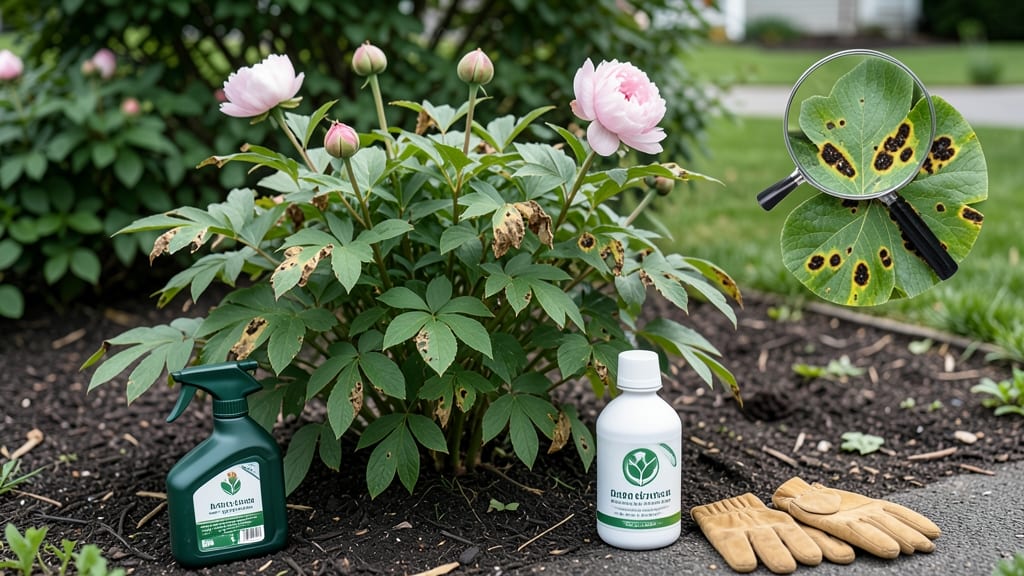
A fungicide for peony leaf blotch stops those ugly brown spots with yellow halos faster than anything else I’ve tried. 🌿 The moment you see them on your peony leaves, you need to act—this fungus spreads like wildfire if you wait.
My peonies went from looking like they’d been attacked by a lawnmower to fully recovered in just two weeks after I started this spot-treatment routine.
Here’s the secret: copper-based fungicides work because they’re contact killers—they stop the fungus from spreading when you spray it directly on the spots. You don’t need fancy equipment, just a simple spray bottle, a little copper fungicide, and a clear afternoon when the leaves are dry.
The key is catching it early—before more than 20% of the leaves show symptoms.
📚 In This Guide
- What you need
- Instructions
- Tips and common mistakes
- Wrapping up and next steps
What you need
- ● Copper-based fungicide: Choose a fixed copper (e.g., copper hydroxide or copper sulfate) labeled for ornamental plants. Recommended brands: Bonide Copper Fungicide or Copper Soap. Quantity: 1–2 gallons (or enough to cover your peonies with a light spray).
- ○ Spray bottle or pump sprayer: A 1–2 gallon handheld sprayer (e.g., Chapin 62500) for even coverage. Optional: Add a nozzle with a fine mist setting to avoid runoff.
- ● Protective gear: Nitrile gloves (to avoid skin irritation from copper)
- ● Long sleeves & pants (for skin protection)
- ● Safety goggles (if spraying near eyes)
- ● Water source: Clean, lukewarm water (avoid hot/cold extremes).
- ● Pruners (sterilized): Sharp, clean pruners to remove severely infected leaves before treatment.
- ● Measuring cup & mixing container: For diluting fungicide (if required by label).
- ● Fungicide adjuvant: A spreader-sticker (e.g., Silwet L-77) to improve coverage on waxy peony leaves.
- ● Weather check: A forecast app to ensure you spray early morning or late afternoon (avoid windy/hot days).
- ● Compost bin: For disposing of infected plant debris (do not compost it!).
- ● Second sprayer: If treating multiple plants, a 3–5 gallon backpack sprayer saves time.
Step-by-Step instructions for treating peony leaf blotch with copper fungicide
Here’s my go-to method for stopping peony leaf blotch in its tracks—fast and without harsh chemicals.
🌿 Step 1: Identify and Prepare for Treatment
First, confirm you’re dealing with leaf blotch by looking for dark, irregular spots with yellow halos on peony leaves. This disease thrives in wet conditions, so work on a dry, calm day when leaves are fully dry. Avoid treating if rain is forecasted within 24 hours—copper fungicide works best when it can stick to the foliage.
Gather your tools: a pair of clean pruning shears, a spray bottle or pump sprayer, and a ladder if your peonies are tall. I always wear gloves and long sleeves to protect my skin from copper residue. Remove any severely infected leaves with your pruning shears and dispose of them in the trash—not the compost—since the fungus can survive there.
💧 Step 2: Apply Copper Fungicide Correctly
Fill your sprayer with a copper-based fungicide (like copper sulfate or copper hydroxide) mixed according to the label instructions. I prefer using it in the late afternoon when the sun isn’t intense—this reduces the risk of leaf burn. Shake the sprayer well to ensure the copper particles are fully dissolved or suspended.
Start spraying the undersides of the leaves first, since that’s where the fungus often hides. Apply until the leaves are glistening but not dripping. Focus on the new growth and the centers of the plants, where the disease tends to spread. For large peony bushes, work in sections so you don’t miss any spots. Reapply every 7-10 days until new leaves emerge without signs of blotch.
✂️ Step 3: Prevent Re-Infection and Monitor Progress
After treatment, improve airflow around your peonies by pruning back any overcrowded stems or nearby plants. I also mulch around the base with 2-3 inches of organic mulch (like straw or shredded bark) to keep the soil moist but not soggy—this discourages the fungus from returning. Water at the base in the morning so the leaves stay dry throughout the day.
Check your peonies every 3-4 days for new spots. If you see yellowing or wilting despite treatment, the fungus might be systemic—this means it’s deeper in the plant, and you may need to consult a local extension service for stronger options. Keep a record of treatments and weather conditions to spot patterns that trigger outbreaks.
☀️ Step 4: Maintain Long-Term Protection
Once your peonies are healthy, don’t stop there. In early spring, apply a preventative copper spray before new growth appears. I also rotate between copper and a biological fungicide (like neem oil) to avoid resistance. Avoid overhead watering—use drip irrigation or soaker hoses instead to keep foliage dry.
If you notice the disease returning year after year, consider replacing heavily infected plants. Peonies are long-lived, but some varieties are more resistant to leaf blotch than others. Look for hybrids labeled as disease-resistant when replanting. With consistent care, your peonies should stay vibrant and blotch-free for years.
Tips & tricks for effective peony leaf blotch control
Here's what I've learned to make copper fungicide treatments work faster and more reliably.
Timing is Everything: The 24-hour rain-free window before and after treatment is non-negotiable. I've seen treatments fail when rain came within 12 hours—copper needs that full day to bond with the leaves. Check your weather forecast and schedule your treatment for the late afternoon of a dry day to maximize effectiveness.
Application Technique: When spraying in Step 2, work in overlapping passes to ensure complete coverage. The undersides of leaves are where the fungus hides, so don't skip this step. I use a fan spray pattern to distribute the fungicide evenly without creating drips. Remember, "glistening but not dripping" means you've applied enough without wasting product.
Monitoring Strategy: The 3-4 day check-ins between treatments are crucial for catching early signs of recurrence. I keep a small notebook by my peonies to record treatment dates and weather conditions. This helps me spot patterns—like after heavy rain or when humidity spikes—which triggers me to increase treatment frequency temporarily.
Long-Term Prevention: For that early spring preventative spray mentioned in Step 4, I combine copper with a tablespoon of neem oil per gallon of mix. This dual-action approach gives me extra protection while rotating fungicides to prevent resistance. The neem oil also acts as a natural leaf protector against other pests.
Pro Tips for Fungicide For Peony Leaf Blotch
- Here's what I've learned to make copper fungicide treatments work faster and more reliably.
- Timing is Everything: The 24-hour rain-free window before and after treatment is non-negotiable.
- Application Technique: When spraying in Step 2, work in overlapping passes to ensure complete coverage.
Frequently asked questions
Got questions about tackling peony leaf blotch? You’re not alone! Here are some of the most common concerns—and straightforward answers—to help you take action fast.
What’s the best fungicide for peony leaf blotch?
Copper-based fungicides (like copper hydroxide or copper sulfate) are the gold standard for leaf blotch. They’re effective, organic-friendly, and work well as a spot treatment or preventive spray. For severe cases, a fixed copper formulation (like Cueva) is highly recommended.
When should I apply fungicide for peony leaf blotch?
Start at the first sign of symptoms (dark, irregular spots on leaves) and reapply every 7–14 days during wet or humid conditions. For prevention, apply fungicide before blooming and after heavy rain. Timing is key—don’t wait until the problem spreads!
Are there cheaper alternatives to copper fungicides?
Yes! A homemade mix of 1 tsp baking soda + 1 tbsp vegetable oil + 1 quart water + a drop of dish soap can help mild cases. However, for serious infections, copper-based treatments are more reliable. If cost is a concern, prioritize spot-treating affected leaves instead of full coverage.
How do I prevent peony leaf blotch from coming back?
Focus on good garden hygiene: remove and destroy infected leaves, space plants for airflow, and water at the base (not overhead). Mulch with straw to reduce soil splashing. After the growing season, apply a preventive copper spray to dormant plants for next year’s protection.
My peony leaves are brown and crispy—is it too late to save them?
If leaves are already crispy and dry, they won’t recover, but you can still treat the plant to stop further spread. Prune affected foliage below the damage, apply fungicide, and monitor for new growth. Healthy new leaves should emerge if the roots are still strong!
Wrapping up and next steps
Peony leaf blotch doesn’t have to ruin your garden’s beauty—with the right copper-based fungicide and proactive care, you can keep your peonies thriving! 🌸 By acting quickly, monitoring conditions, and applying targeted treatments, you’ll protect your plants and enjoy stunning blooms season after season.
Ready to take action? Start by inspecting your peonies this week—catch early signs of leaf blotch, and treat with confidence. Your future peony patches will thank you!