
Pests
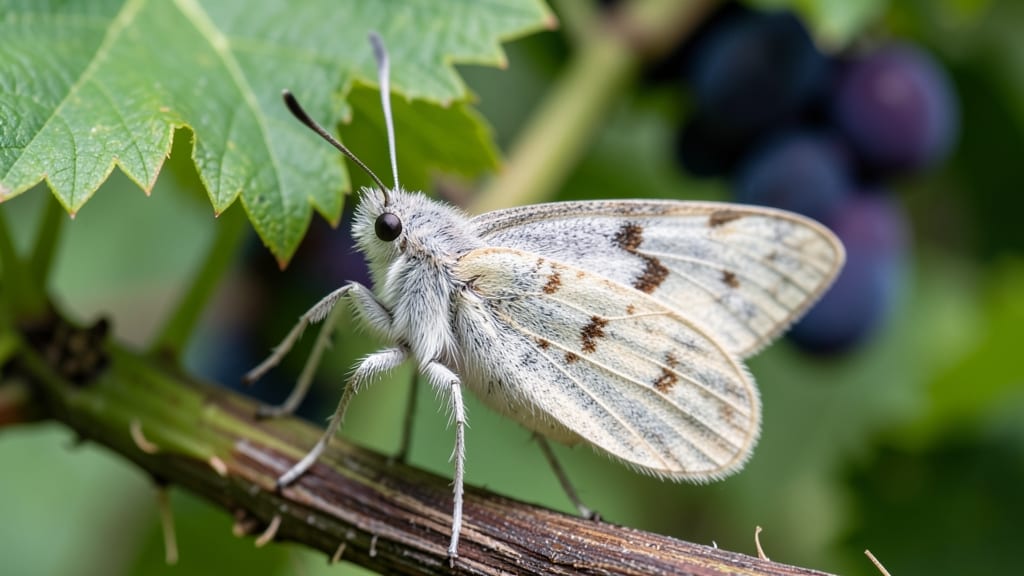
The dangerous grape leaffolder moth can turn your vines into a skeleton of webbing and folded leaves faster than you can say "harvest season." 🌿 I learned the hard way when my prize Cabernet plants looked like they'd been hit by a defoliator storm—until I finally identified the real culprit lurking in the folds.
The moth's larvae chew through grape leaves like a buffet, leaving behind telltale signs: rolled leaves, silk webbing, and skeletonized foliage that weakens your vines. Most gardeners spot the damage too late because these pests hide during the day.
But here's the good news: with the right organic sprays and timing, you can stop them within 7-10 days without harming bees or ladybugs.
You'll start with a simple 3-step approach: early morning sprays of neem oil or insecticidal soap, physical removal of egg masses, and setting up pheromone traps to monitor their activity.
The key is acting before the larvae reach the third instar stage—once they do, they're nearly impossible to control without synthetic pesticides.
This method works for backyard vines, commercial trellises, and even container-grown grapes. The secret weapon? Consistency. I've seen entire infestations vanish after just two weeks of targeted treatment, and the vines bounce back stronger than before. Let's get those grapes back on track!
Root Causes of Grape Leaf Damage
The grape leaffolder moth (Desmia funeralis) isn’t just a nuisance—it’s a stealthy destroyer that thrives in specific conditions. Understanding why these moths target your vines is the first step to stopping them.
Below, we break down the key factors that turn your grapevine into an all-you-can-eat buffet for these pests.
Grape leaffolder moths love weak, stressed, or overcrowded plants because they’re easier to exploit. Here’s why:
- Poor air circulation: Dense foliage traps moisture, creating a humid microclimate that moths adore. Stagnant air also makes it harder for natural predators (like birds or parasitic wasps) to patrol your vines.
- Nutrient deficiency: Vines starved for nitrogen, phosphorus, or potassium produce softer, more tender leaves—perfect for leaffolder larvae to chew through. Look for yellowing leaves or stunted growth as red flags.
- Waterlogged soil: Overwatering or poor drainage stresses roots, weakening the vine’s defenses. Moths detect these stressed plants from a distance via volatile organic compounds (VOCs) released by the vine.
Actionable fix: Prune aggressively to open up the canopy, amend soil with compost, and ensure proper drainage. A balanced fertilizer (like 10-10-10) can help vines bounce back faster.
These moths aren’t picky—they’ll infest your grapes anywhere, but they thrive in warm, humid environments. Here’s the science:
- Temperature sweet spot: Larvae hatch and feed most aggressively between 70–85°F (21–29°C). Below 60°F (15°C), their growth slows, but they’ll still survive. Above 90°F (32°C), they seek shade in dense foliage.
- Humidity’s role: Moths need 60%+ humidity to lay eggs successfully. High moisture keeps their eggs from drying out and helps larvae retain water through molting.
- Rainy seasons: Spring and early summer rains create the perfect storm (literally). Wet leaves provide moisture for egg-laying, and rain washes away natural predators like ladybugs.
Actionable fix: Monitor your local weather and apply organic sprays (like neem oil or kaolin clay) before heatwaves or rain events. Drip irrigation (instead of overhead watering) can also reduce humidity on leaves.
Grape leaffolder moths don’t have many enemies—but when they do, those predators often get crowded out. Here’s how:
- Pesticide overuse: Broad-spectrum chemicals (even some "organic" sprays) kill beneficial insects like parasitic wasps (Apanteles spp.), lacewings, and ground beetles that hunt leaffolder eggs and larvae.
- Monoculture farming: Planting only grapes (or other hosts like blackberries) eliminates habitat diversity. Predators need a mix of plants to survive—without it, they vanish.
- Late-season harvests: If you leave old leaves or debris on the ground, predators like Trichogramma wasps (tiny egg parasites) get fewer resources, reducing their numbers.
Actionable fix: Introduce beneficial insects like Trichogramma or Macrocentrus wasps (available at garden centers). Plant companion crops like dill, fennel, or alyssum to attract predators. And never use synthetic pyrethroids—they’re a death sentence for helpful bugs.
Leaffolder moths are opportunists. If your vineyard looks like a buffet left out overnight, they’ll feast. Here’s how sloppy habits invite them:
- Last year’s leaves and fruit: Moths overwinter as pupae in fallen leaves, mummified fruit, or pruning debris. A single pupa can emerge as an adult in spring, ready to lay 100+ eggs.
- Unpruned canes: Dead or dying wood provides shelter for pupating larvae. Thick, tangled canes also trap moisture and eggs.
- Weeds and alternative hosts: Plants like blackberry, raspberry, or even wild grapes nearby act as moth magnets. They distract predators and give moths a "training ground" before attacking your crop.
Actionable fix: Clean up ruthlessly: Remove all leaf litter, prune canes to open the vine, and mow down weeds within a 50-foot radius of your grapes. Solarize soil (covering debris with clear plastic for 4–6 weeks) can kill overwintering pupae.
By addressing these root causes, you’re not just treating the symptom (the moths)—you’re starving their survival strategy. Next, we’ll dive into organic sprays and traps to hit them where it hurts.
Effective Organic Sprays & Tactics
Now that you understand how grape leaffolder moths wreak havoc on your vines, it’s time to take action—without relying on harsh chemicals. The good news? Organic solutions are not only safer for your plants and the environment but can also be just as effective when applied strategically.
Below, we’ve mapped out practical fixes based on the root causes of infestations, along with prevention tips to keep these pests at bay for good.
If you prefer a hands-off approach, harness the power of beneficial predators and microbes to outsmart the grape leaffolder moth.
🐞 Introduce Predatory Insects
- Trichogramma wasps 🪰: These tiny parasites lay their eggs inside grape leaffolder moth eggs, killing them before they hatch. Release them during the egg-laying peak (early spring).
- Ladybugs & lacewings 🐞: Both devour moth larvae.
Purchase them from garden centers or attract them with neem oil sprays (which also repel moths). - Ground beetles 🪲: These nocturnal hunters feed on larvae. Encourage them by leaving leaf litter near vines or planting clover as ground cover.
🍄 Use Microbial Pesticides
- Bacillus thuringiensis (Bt) 🦠: A naturally occurring soil bacterium that targets caterpillars (including leaffolder moth larvae).
Spray Bt kurstaki (for above-ground pests) every 7–10 days during outbreaks. Best applied in the evening to avoid harming bees. - Beauveria bassiana 🍄: A fungal pathogen that infects and kills larvae. Mix with water and spray directly on leaves where moths feed.
Sometimes, the simplest solutions work best. Block access and monitor populations with these low-tech methods.
🧶 Protect Young Vines with Row Covers
- Floating row covers (lightweight fabric) 🛡️: Drape them over vines before moths emerge in spring. Secure edges tightly to prevent moths from laying eggs.
Remove covers after flowering to allow pollination. - Pest-proof netting 🪝: Use fine mesh (0.6mm or smaller) to keep adults out while allowing sunlight and water through.
🕵️ Set Up Pheromone Traps
- Moth traps with sex pheromones 🌙: These lure male moths away from females, reducing mating and egg-laying.
Place traps 10–15 feet apart in vineyards and check them weekly during peak season (May–July). - Sticky traps with UV light ⚡: Moths are attracted to light. Hang yellow or blue sticky traps near vines to catch adults.
When biological controls aren’t enough, organic sprays can provide quick relief. The key is timing and consistency.
🍃 Neem Oil: The All-Purpose Repellent
- How to use: Mix 1–2 tbsp neem oil + 1 tsp mild soap (as an emulsifier) per gallon of water.
Spray evenly on both sides of leaves in the early morning or late evening (avoid direct sunlight to prevent leaf burn). - Why it works: - Disrupts moths’ feeding and mating behaviors. - Kills eggs and young larvae on contact. - Frequency: Apply every 5–7 days during active infestations.
🌿 Kaolin Clay: A Physical Shield
- How to use: Mix 2–4 lbs of kaolin clay per gallon of water, stir well, and spray directly on leaves.
The clay forms a white, sticky film that moths avoid landing on. - Why it works: - Confuses moths’ senses, reducing egg-laying. - Protects new growth from larval feeding. - Bonus: Also deters birds and deer from nibbling on vines!
🍋 Horticultural Oil: Smother the Pests
- How to use: Apply dormant-season oil (like horticultural oil) in early spring to suffocate overwintering eggs. For active larvae, use summer oil (less concentrated) every 7–10 days.
- Pro tip: Shake well before use—oil settles over time!
Prevention starts with healthy vines and clean surroundings. Small changes can drastically reduce moth populations.
🪓 Prune Strategically
- Remove infested leaves 🪴: Burn or compost in a sealed bin (not open piles) to destroy eggs and larvae.
- Thin canes 🌱: Overgrown vines create shady, humid microclimates—ideal for moths.
Prune for good airflow. - Train vines upward 🪜: This makes it harder for moths to hide and lay eggs in dense foliage.
🌱 Rotate Plantings & Trap Crops
- Plant marigolds or basil 🌼 near vines to repel moths with their strong scents.
- Use trap crops (like nasturtiums) to distract moths away from grapes.
🕯️ Light Management
- Avoid bright lights near vines at night 💡: Moths are attracted to light, so use motion-sensor or warm-toned bulbs instead.
| Life Stage | Best Organic Solution | Application Time |
|---|---|---|
| Eggs | Neem oil, Bt, kaolin clay | Early spring (before hatching) |
| Larvae (small) | Bt, horticultural oil, biological controls | Late spring to early summer |
| Larvae (large) | Kaolin clay, neem oil, handpicking | Mid-summer (before pupation) |
| Adult Moths | Pheromone traps, row covers, light traps | Evening (peak flight time) |
✅ Monitor weekly 🔍: Check undersides of leaves and new shoots for eggs or larvae. ✅ Rotate sprays 🔄: Moths can build resistance—switch between neem, Bt, and kaolin clay. ✅ Encourage biodiversity 🌍: A healthy ecosystem with birds, bats, and beneficial insects keeps moths in check. ✅ Act fast ⏳: The first sign of damage is your cue to spray or trap immediately.
By combining biological controls, physical barriers, and targeted sprays, you can effectively manage grape leaffolder moths without chemicals. Stay vigilant, and your vines will thrive—pest-free and productive! 🍇✨
Frequently asked questions
Are grape leaffolder moths harmful to humans?
No, these moths pose no direct danger to humans. They don't bite, sting, or transmit diseases. The real concern is their larvae, which can defoliate grapevines and reduce fruit quality. The moths themselves are harmless—just annoying to watch fluttering around your plants!
How quickly can grape leaffolder moths destroy a vineyard?
Surprisingly fast! A single female can lay 100+ eggs, and larvae can skeletonize leaves within 7-10 days of hatching. Without intervention, severe infestations can weaken vines enough to reduce yields by 30-50% in just one growing season. Early detection is critical!
Can I use store-bought neem oil on grape leaffolder moths?
Yes, but with proper preparation! Regular neem oil needs an emulsifier (like mild soap) to mix with water. Use 1-2 tbsp per gallon and apply in early morning or evening to avoid leaf burn. Reapply every 5-7 days during outbreaks for best results.
What's the best time of year to treat for grape leaffolder moths?
Start treatments in early spring before eggs hatch, then continue through summer when larvae are active. Focus on May-July when temperatures are between 70-85°F (21-29°C)—the moths' ideal range. Fall treatments help target overwintering pupae.
Will my grapes still be safe to eat if infested?
Yes, but quality may suffer. The larvae primarily feed on leaves, not fruit. However, severe defoliation can stress vines, reducing sugar content. Always wash grapes thoroughly before eating, and harvest promptly once you see signs of infestation to minimize damage.