
Pests and Diseases
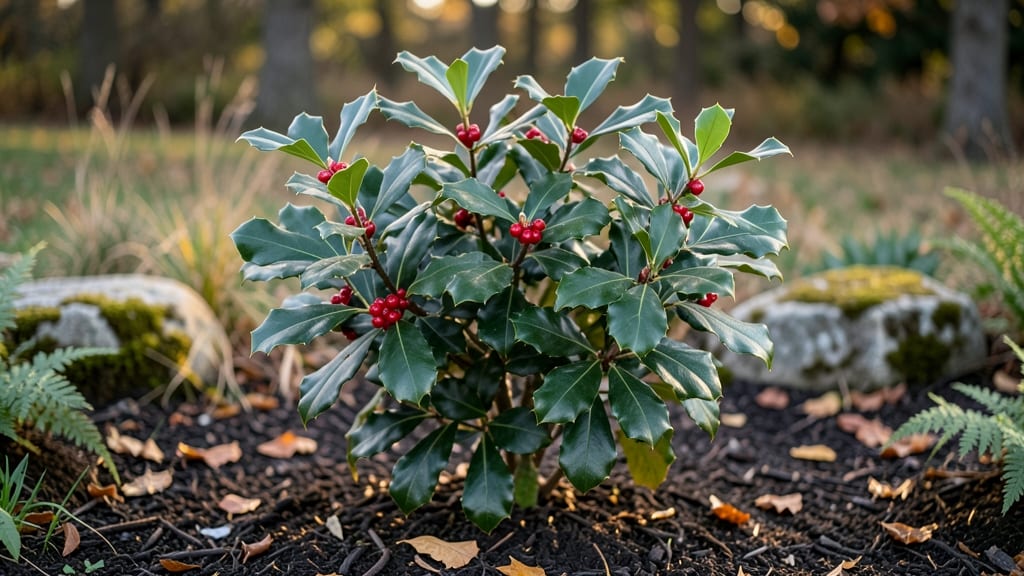
Identifying holly leaf shapes helps distinguish species, as they range from broad, oval leaves with sharp spines (like American holly) to narrow, elongated leaves with softer edges (such as English holly). Leaf size, spine sharpness, and base symmetry are key distinguishing factors.
Holly leaves aren't just pretty—they're nature's ID tags for these evergreen shrubs. 🌿 The spine density and leaf texture can tell you whether you're looking at a prickly American holly or a more delicate dwarf variety.
For example, Ilex verticillata (winterberry) has smooth-edged leaves, while Ilex glabra (inkberry) features tiny, rounded leaves that look almost scale-like. Seasonal color shifts—like the deep red of Ilex aquifolium (English holly) in fall—add another layer of identification clues.
Pro tip: Check the leaf base shape—some holly varieties have symmetrical bases, while others taper unevenly. This subtle detail can help narrow down species in mixed landscapes or nurseries. 💫
💡 In This Article
- Key Features of Holly Leaf Morphology
- Identifying Holly Varieties by Leaf Characteristics
Key features of holly leaf morphology
The spine-edged margins of holly leaves aren't just for show—they're an evolutionary adaptation to deter herbivores. These serrations, called marginal spines, are extensions of the leaf's vascular tissue, making them tougher than regular leaf edges.
In evergreen holly species like American holly (Ilex opaca), spines can reach 0.5-1 inch long, while dwarf varieties like Ilex 'Blue Princess' have much finer, hair-like spines. 🌿 The density of these spines varies too: some species have 3-5 spines per leaf edge, while others like Ilex aquifolium (English holly) can have up to 8-10 spines on a single leaf.
Holly leaves also showcase fascinating vein patterns that serve as species identifiers. Most holly leaves have prominent midribs with secondary veins branching out at 45-60 degree angles, creating a web-like pattern.
Deciduous holly varieties like winterberry (Ilex verticillata) often have more pronounced veins that appear almost parallel when viewed from above. The leaf texture varies too—evergreen holly leaves tend to be thick and leathery, while deciduous types are thinner and more papery, especially when dry.
One often-overlooked feature is the leaf base shape, which can be either asymmetrical (uneven) or symmetrical (even). American holly typically has asymmetrical bases, while English holly often features symmetrical bases with a more rounded appearance.
This subtle detail becomes crucial when distinguishing between similar-looking species in mixed plantings. The leaf apex (tip) also varies—some holly varieties have pointed tips, while others like Ilex glabra (inkberry) have blunt or rounded tips.
Color plays a role too, though it's often seasonal. Evergreen holly leaves maintain their deep green hue year-round, while deciduous varieties may turn bright red, orange, or yellow in fall. For example, Ilex verticillata leaves shift from green to vibrant red, while Ilex aquifolium develops a glossy red-purple tint.
These color changes occur due to anthocyanin pigmentation, which protects leaves from photooxidative damage during colder months.
Here's how to examine holly leaves like a botanist:
- Spine sharpness: Run your finger along the leaf edge—evergreen holly spines feel sharp and rigid, while deciduous types are softer.
- Leaf thickness: Hold between fingers—evergreen leaves feel stiff and rubbery, while deciduous leaves are flexible and paper-thin.
- Vein visibility: Hold up to light—thicker veins indicate evergreen species, while thinner veins suggest deciduous types.
The spine arrangement also differs by species. Some holly leaves have alternate spines (spaced evenly along the edge), while others like Ilex crenata (Japanese holly) feature crenate (rounded) edges with tiny, almost invisible spines. This variation is why holly leaves can look so different even within the same genus! 🌱