
Pests and Diseases
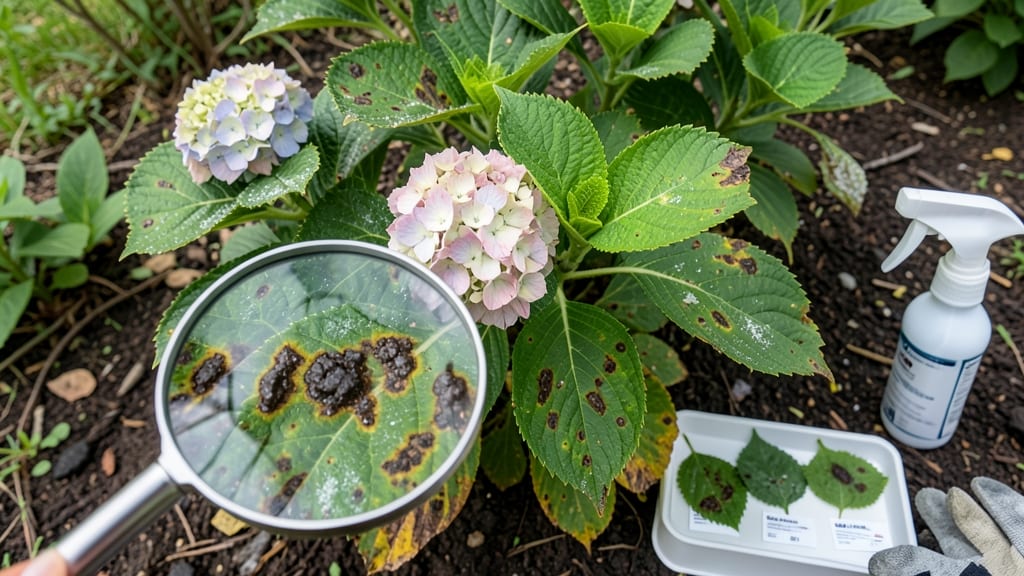
Hydrangea leaf disease turns those lush green canopies into sad, spotted messes faster than you’d think. 🌿 I’ve watched powdery mildew and leaf spots creep across my bushes, and the key to saving them is catching the problem early—before the leaves turn to confetti.
The moment you spot those telltale brown spots or white dusting, your hydrangeas are basically sending up a silent SOS.
Most of these diseases thrive when hydrangeas get too wet or crowded, and the wrong fungicide makes things worse. I’ve tried everything from baking soda sprays to copper-based treatments, and the right mix stops the spread in its tracks.
The goal? Keep your bushes looking like the showstopper they are, not like they’ve been through a leaf blower.
You’ll learn to identify the three most common culprits—powdery mildew, leaf spot, and bacterial blight—by their symptoms alone. Once you know what you’re dealing with, the fixes are straightforward: prune the worst spots, adjust watering habits, and apply the right treatment.
No more guessing games or watching your hydrangeas fade into the background.
Even better, these solutions work for any hydrangea variety, whether you’re growing bigleaf, oakleaf, or panicle types. The secret? Prevention is easier than cleanup, and a few simple tweaks now mean fewer headaches later. Let’s get those leaves back to their best.
Root Causes Of Leaf Trouble
Hydrangeas are stunning, but their leaves can quickly become a battleground for fungal invaders, bacterial pathogens, and environmental stressors. Understanding the why behind leaf disease is the first step to stopping it in its tracks.
Here’s a breakdown of the most common culprits and how they wreak havoc on your plants.
Fungi like Botrytis and Pythium thrive in moisture-rich environments. When hydrangeas are planted in poorly draining soil or left with soggy foliage (from overhead watering or rain), spores germinate and infect leaves. Why it happens:
- Stagnant water: Hydrangeas hate "wet feet." If their roots sit in waterlogged soil for more than 24 hours, fungal spores multiply rapidly.
- Fungal spores in the air: Humid weather (above 75°F with high humidity) creates the perfect breeding ground for airborne pathogens like Phytophthora.
- Poor airflow: Dense foliage traps moisture, giving fungi a cozy hideout between leaves.
Pro tip: 💡 Space plants 3–4 feet apart to improve airflow, and water at the base (not overhead) to keep leaves dry.
Stressed hydrangeas are like open invitations to pests and diseases. When plants are nutrient-deficient, overcrowded, or recovering from transplant shock, their natural defenses drop. Why it happens:
- Nutrient deficiencies: Lack of nitrogen, phosphorus, or micronutrients (like magnesium) weakens cell walls, making leaves susceptible to infections.
- Improper pruning: Cutting too late in the season or removing too much foliage disrupts the plant’s energy balance, leaving it vulnerable.
- Transplant shock: Newly planted hydrangeas with damaged roots struggle to fight off pathogens until their root systems reestablish.
Pro tip: 🌱 Before planting, amend soil with compost and use a balanced fertilizer (10-10-10) to boost resilience.
Some diseases are spread by existing infections in your garden or even on tools. If you’ve had leaf spot issues before, the pathogens likely linger in the soil or on pruners. Why it happens:
- Reinfection from old debris: Leaving infected leaves on the ground or in compost spreads spores to healthy plants.
- Contaminated tools: Pruners, shears, or even gloves can transfer Septoria or Anthracnose from one plant to another.
- Wildlife vectors: Splashing rain or insects (like aphids) can carry fungal spores from diseased to healthy leaves.
Pro tip: ✨ Sterilize tools with 70% isopropyl alcohol between uses, and remove all plant debris after pruning.
Extreme heat, cold snaps, or sudden changes in sunlight can shock hydrangeas, making them more prone to infections. Why it happens:
- Temperature swings: Rapid shifts (e.g., hot days followed by cold nights) create condensation on leaves, ideal for fungal growth.
- Sunburn or shade stress: Too much direct sun (especially in hot climates) weakens leaves, while sudden shade can disrupt photosynthesis, leaving plants vulnerable.
- Poor soil pH: Hydrangeas prefer slightly acidic soil (pH 5.2–6.2). Alkaline soil (pH >7) locks out essential nutrients, stressing the plant.
Pro tip: 🎯 Monitor soil pH with a test kit and adjust with sulfur (to lower pH) or lime (to raise it) as needed.
Most leaf diseases in hydrangeas boil down to one thing: the perfect storm of moisture, stress, and opportunity for pathogens. The good news? Once you identify the trigger, you can prevent or treat it before it spreads. Stay vigilant—your hydrangeas will thank you with lush, disease-free foliage!
Practical steps to revive your hydrangeas
Reviving your hydrangeas starts with identifying the root cause of their leaf woes—and then taking action. Whether your plants are battling powdery mildew, leaf spot, or bacterial blight, these targeted solutions will help you nurse them back to health.
Below, we’ve mapped out the best fixes for each common issue, along with prevention tips to keep future outbreaks at bay.
Fungal diseases like powdery mildew (white, powdery patches) and leaf spot (brown, crinkled spots) thrive in damp, shaded conditions. Here’s how to tackle them:
🔥 Remove Infected Foliage Immediately
- Why? Fungi spread through spores, and leaving infected leaves on the plant only fuels the problem.
- How?
- Snip off all affected leaves with clean pruners (sterilize with rubbing alcohol between cuts).
- Avoid composting—toss them in the trash instead.
- Pro Tip: 💡 If the disease is severe, prune back 1/3 of the plant to improve airflow and sunlight exposure.
🌿 Improve Air Circulation & Sunlight - Why? Fungi love stagnant, humid air.
Better airflow = fewer spores landing on healthy leaves. - How? - Space plants at least 2–3 feet apart (hydrangeas often get crowded). - Thin out dense foliage to let light and air reach the center. - Prune overgrown branches to open up the plant’s structure. - Move pots (if potted) to a sunnier spot—hydrangeas need 4–6 hours of sunlight daily to stay strong.
💦 Adjust Watering Habits - Why? Wet leaves = fungal paradise.
Watering at the wrong time encourages spores to spread. - How? - Water at the base (not overhead) using a soaker hose or drip irrigation. - Water early in the day (before 10 AM) so leaves dry quickly. - Avoid late watering—damp leaves overnight invite fungal growth. - Pro Tip: 🌡️ If humidity is high, consider a fan on low near the plants to improve airflow.
🧴 Apply Fungicidal Treatments
- Why? For stubborn infections, a targeted treatment speeds up recovery.
- Options:
- Neem oil (natural, organic fungicide) – Mix 1 tbsp per quart of water, spray every 7–10 days until symptoms fade.
- Baking soda spray (for powdery mildew) – Combine 1 tsp baking soda + 1 tsp oil + 1 tsp mild soap per gallon of water.
Spray every 2 weeks. - Copper fungicide (for leaf spot) – Follow label instructions for preventative sprays during wet seasons.
Bacterial blight causes dark, water-soaked spots that ooze when touched. Unlike fungi, bacteria spread via water splashes and contaminated tools. Here’s how to stop it:
🔪 Prune & Sterilize Aggressively
- Why? Bacteria multiply in infected tissue, and contaminated tools spread it to healthy plants.
- How?
- Cut out infected stems at least 6 inches below the last visible symptom.
- Dip pruners in rubbing alcohol or bleach solution (1 part bleach : 10 parts water) between cuts.
- Burn or trash severely infected plant parts—do not compost.
🚰 Use Clean Water & Tools
- Why? Bacteria hitch rides on dirty water and tools, reinfecting your plants.
- How?
- Use filtered or rainwater (tap water can carry bacteria).
- Rinse pruners with soapy water after each use.
- Disinfect pots if repotting—scrub with 10% bleach solution, then rinse well.
🛡️ Preventative Copper Sprays
- Why? Copper is one of the few chemicals that kills bacterial cells on contact.
- How?
- Apply a copper fungicide/bactericide (like Copper Sulfate) every 7–14 days during rainy seasons.
- Best time: Early morning or late evening to avoid leaf burn from sunlight.
🌱 Boost Plant Immunity
- Why? Healthy hydrangeas resist bacterial infections better.
- How?
- Fertilize with balanced, slow-release fertilizer (e.g., 10-10-10) in early spring.
- Add compost to improve soil drainage and nutrient uptake.
- Avoid overwatering—bacteria thrive in soggy soil.
Once your hydrangeas are back in shape, prevent future outbreaks with these habits:
- 🌞 Plant in the right spot: Hydrangeas need partial shade (morning sun, afternoon shade) to avoid stress from too much heat.
- 🌧️ Space for airflow: Crowded plants = fungal hotspots. 2–3 feet between bushes is ideal.
- 🍂 Clean up in fall: Remove all dead leaves and stems before winter to eliminate fungal spores.
- 🔄 Rotate fungicides: If you use chemical treatments, switch types seasonally to prevent resistance.
- 🌱 Choose resistant varieties: Some hydrangeas (like ‘Endless Summer’ or ‘Nikko Blue’) are less prone to disease.
Final Thought: 🎯 With consistent care, your hydrangeas can bounce back stronger than ever. The key is acting fast—remove infected parts, improve growing conditions, and use preventative sprays before problems escalate. Happy gardening!
Frequently asked questions
How do I tell if my hydrangea has powdery mildew vs. leaf spot?
Powdery mildew appears as a white, powdery coating on leaves, often on the upper surfaces. Leaf spot shows as brown or black spots with yellow halos, sometimes with crinkled or dead centers. Check the undersides of leaves—powdery mildew is more visible there, while leaf spot often has spots on both sides.
Can I save my hydrangea if most of the leaves are already infected?
Yes, but act fast! Prune out 90% of infected leaves immediately and apply neem oil or copper fungicide. If the disease is severe, thin the plant to improve airflow. For bacterial blight, remove infected stems 6 inches below the last symptom—don’t wait, or the whole plant may die.
Why does my hydrangea keep getting diseases even after treatment?
Common reasons include repeated overhead watering, crowded planting, or not sterilizing tools between cuts. Fungal spores can also linger in soil or old plant debris. Water at the base, space plants 3–4 feet apart, and sterilize pruners with rubbing alcohol.
Is it safe to use baking soda spray on hydrangeas?
Yes! Mix 1 tsp baking soda + 1 tsp oil + 1 tsp mild soap per gallon of water for powdery mildew. Spray every 2 weeks during humid weather. Avoid using it if your soil is alkaline (pH >7)—baking soda can raise pH further, stressing the plant.
How long does it take for hydrangeas to recover from leaf disease?
With proper care, you’ll see improvement in 2–4 weeks. New leaves should emerge healthy if you’ve removed infected foliage, adjusted watering, and applied fungicides. Severe cases may take 6–8 weeks—be patient and keep up treatments until all old leaves drop naturally.