
Pruning
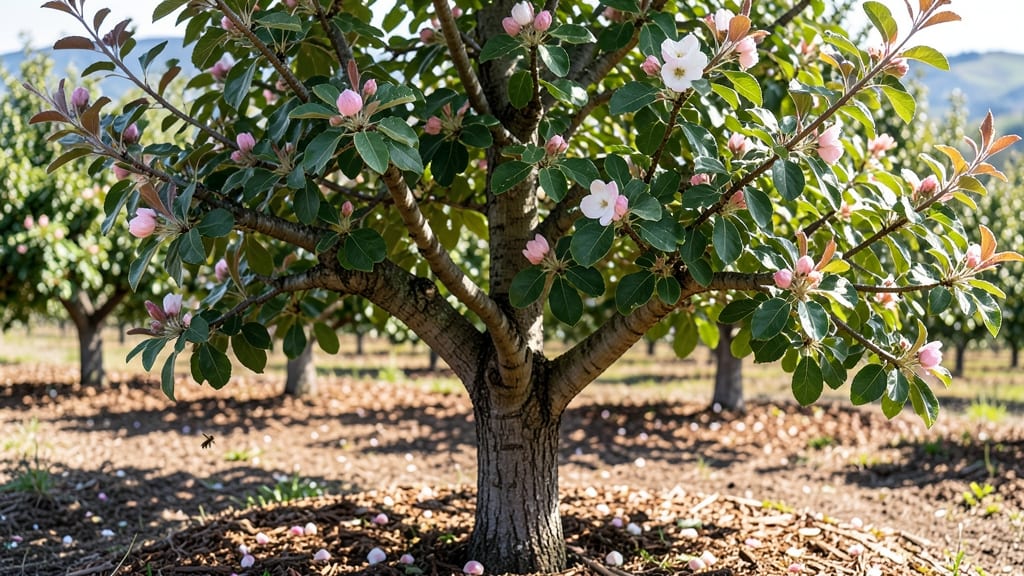
Identifying an apple tree by its leaf saves you from guessing—and my first mistake was ignoring the simple clues right in front of me. 🌿 The shape, edges, and even the underside tell you more than the fruit ever could, especially when comparing crabapples or hawthorns that look similar at first glance.
Start with the leaf’s outline: most apple varieties have elliptical to oval leaves with sharp, saw-tooth edges (called serrations). Hold it up to light—you’ll notice the veins fan out from the center stem, and the underside often has a fuzzy or slightly red tint that’s rare in lookalikes.
Measure one: true apple leaves usually run 2 to 4 inches long, while crabapples tend to be smaller.
Timing matters—check leaves in late spring or early summer when they’re fully grown but before pests or disease distort them. A healthy apple leaf feels firm but flexible, not brittle like stressed hawthorn foliage.
Snap a photo and compare it to your notes: the combination of shape, edge, and vein pattern is your fastest ID tool.
Pro tip: Rub a leaf between your fingers—apple leaves often release a mild, sweetish scent when crushed, while hawthorns smell bitter. Now you’ve got the clues to spot them anywhere, from urban streets to wild orchards.
Nature’s Leaf Confusion Explained
Understanding why apple tree leaves can be tricky to identify at first glance starts with recognizing the biological and environmental factors at play. Here’s a breakdown of the key reasons why distinguishing apple tree species by leaf alone might feel like solving a puzzle—plus how to decode it.
Apple trees (Malus domestica) come in hundreds of cultivated varieties, each bred for unique traits like fruit flavor, size, or cold hardiness. While they share a common ancestor, selective breeding has led to subtle yet critical differences in leaf shape, serration, and texture.
- Leaf serrations (teeth): Some varieties have fine, saw-like edges (e.g., 'Granny Smith'), while others sport broader, rounded lobes (e.g., 'Honeycrisp').
These variations arise from genetic mutations passed down through grafting or cross-pollination. - Leaf color: Pigment differences (e.g., purplish-red undersides in 'McIntosh' vs. lighter green in 'Fuji') stem from anthocyanin levels, influenced by sunlight exposure and soil pH. - Size and shape: Smaller, elliptical leaves (common in dwarf varieties) vs. larger, ovate leaves (found in standard trees) reflect growth hormone variations tied to rootstock.
Pro Tip: 🔍 Compare leaves from the same tree over multiple seasons—some traits (like serration sharpness) can shift slightly with age or stress.
Leaves aren’t static—they react to their surroundings, which can make identification harder. Common culprits include:
| Factor | Effect on Leaves | How to Adjust |
|---|---|---|
| Water stress | Wilting, yellowing (chlorosis), or curling edges due to drought or overwatering. | Monitor soil moisture; mulch to retain humidity. |
| Nutrient deficiency | Pale green or yellow leaves (lack of nitrogen), purple stems (phosphorus deficiency). | Test soil; amend with compost or fertilizer. |
| Pests/disease | Holes, spots, or distorted shapes from mites, aphids, or fungal infections (e.g., apple scab). | Prune infected branches; use organic sprays if needed. |
| Sunlight exposure | Darker, thicker leaves in full sun vs. lighter, larger leaves in shade. | Note the tree’s location—shade-loving varieties (like 'Arkansas Black') may look different in sun. |
⚠️ Warning: A single stressed leaf doesn’t define the species—always examine multiple healthy leaves from different branches for accuracy.
Young apple trees and mature ones can look radically different due to:
- Juvenile vs. mature leaves:
- Seedlings (grown from pits) often have smaller, simpler leaves with fewer serrations.
- Grafted trees (most commercial varieties) develop larger, more complex leaves as they mature.
- Seasonal changes:
- Spring: New leaves may be reddish or fuzzy (a trait of some wild apple relatives).
- Fall: Leaves darken and serrations may appear more pronounced before dropping.
💡 Quick Fix: Check the tree’s bark or fruit (if present) for clues—some varieties have distinctive lenticels (pores) or fruit stem shapes that align with leaf traits.
Not all apple-like leaves belong to Malus domestica. Wild crabapples (Malus sylvestris or Malus coronaria) and hybrids (like Siberian crabapple) can mimic domesticated apple leaves but with key differences:
- Crabapple leaves often have:
- More pronounced serrations (almost thorn-like).
- Glaucous (waxy) undersides or hairy stems.
- Smaller fruit (if present) that’s tart and inedible.
- Hybrids (e.g., ornamental crabapples) may combine traits from multiple species, leading to unpredictable leaf shapes.
🎯 Action Step: If unsure, snap a photo and compare it to a leaf key (like the one from the [USDA Plants Database](https://plants.usda.gov/)) or consult a local master gardener.
Even experienced gardeners can mix up apple trees because of:
- Grafting confusion: A single tree might have multiple scions (varieties) grafted together, leading to patchy leaf traits.
- Rootstock influence: Dwarfing rootstock (like M.9 or B.9) can stunt leaf growth, making identification harder.
- Cultural practices: Heavy pruning or chemical treatments (e.g., growth regulators) can alter leaf development.
🔥 Pro Move: When in doubt, trace the tree’s lineage—ask the seller or check old garden records if it’s an established tree.
Quick Fixes for Leaf Confusion
When you’re staring at an apple tree and its leaves look like a puzzle, don’t panic—there’s a method to the madness! Below are practical, step-by-step solutions to help you decode the leaf clues and confidently identify your apple tree species.
Each fix tackles a common stumbling block, from shape to texture to arrangement, with prevention tips to keep your detective skills sharp for next time.
If the leaf’s outline is your first clue, visual comparison is key. Grab a reference guide (or use your phone’s notes app) and overlay the tree’s leaves with known apple varieties.
- **🍎 Cause: Too many similar-looking leaves 🔨 Fix: 1. Measure the leaf: Use a ruler to note the length and width ratio.
For example, a McIntosh leaf is typically 3–5 inches long with a wavy, serrated edge, while a Granny Smith leaf is smoother and more elongated. 2. Sketch it out: Draw a quick outline of the leaf’s shape, including any lobes, teeth, or points.
A Honeycrisp leaf has deep, jagged serrations, while a Fuji leaf is broader with shallower teeth. 3. Check the base: The leaf stem attachment (petiole) can vary—some apple leaves have a slightly asymmetrical base, while others are nearly symmetrical.
💡 Prevention Tip: Take photos of leaves from different angles (top, bottom, side) during different seasons. Lighting changes can distort colors, but shape stays consistent!
Most gardeners overlook the leaf’s reverse side, but it’s packed with clues!
- 🍂 Cause: Leaves look identical from both sides 🔨 Fix: 1. Feel the texture: Run your fingers along the underside. Some apple varieties (like Golden Delicious) have fuzzy or downy undersides, while others (like Gala) are smooth.
- Look for hairs or glands: Tiny glandular dots or fine hairs near the stem can help distinguish wild apple varieties from cultivated ones.
- Check for discoloration: A yellowish or rust-colored underside might indicate disease or pest damage, which can alter leaf appearance—but note it for future reference!
💡 Pro Tip: Use a magnifying glass if the leaf is small or details are faint. A 10x zoom can reveal microscopic features that separate a Pink Lady from a Ambrosia.
How the leaves attach and spread on the branch can be just as telling as the leaf itself.
- 🌳 Cause: Leaves appear randomly placed 🔨 Fix: 1. Observe the branching pattern: Apple trees typically have alternate leaves (one leaf per node, spiraling up the branch).
If you see opposite leaves (two per node, directly across), it’s not an apple tree—it might be a hawthorn or crabapple. 2. Note the angle: Some varieties (like Jonathan) have leaves that angle sharply upward, while others (like Rome) grow more horizontally.
- Check for clusters: Young shoots may have tufted clusters of leaves—a trait of wild apple seedlings.
🌡️ Seasonal Check: In late summer, look for new growth patterns. If the tree produces small, clustered leaves at the tips, it’s likely a dwarfing rootstock (common in grafted trees).
No leaves? No problem—fruit characteristics can confirm your guess.
- 🍎 Cause: Leaves alone aren’t enough 🔨 Fix: 1. Color and size: Even unripe apples have distinct hues. A red blush suggests Fuji or Gala, while green with yellowing points to Granny Smith.
- Shape and skin: Round and smooth = McIntosh; oblong and ribbed = Braeburn.
- Stem and leaf scar: The fruit stem attachment and leaf scar (the mark where the leaf fell) can match known varieties.
✨ Bonus Hack: If the tree has no fruit, check for old leaf litter in spring. The shape of fallen leaves can still give hints!
To avoid future confusion:
- 📸 Take seasonal photos of your tree’s leaves, flowers, and fruit.
- 📚 Keep a field guide (or app like iNaturalist) handy for quick checks.
- 🌱 Label young trees with variety names if you know them.
- 🔎 Join local gardening groups—experienced growers often spot details you miss!
Final Reminder: If all else fails, send a clear photo to a local agricultural extension office or an apple tree forum**. With millions of gardeners sharing tips, you’ll get an answer faster than you’d expect! 🚀
Frequently asked questions
What’s the easiest way to tell if a leaf is from an apple tree?
Look for elliptical to oval-shaped leaves with sharp, saw-tooth edges (serrations) and 2-4 inch length. Hold it up to light—apple leaves often have prominent veins fanning out and a slightly fuzzy or reddish underside. Compare to crabapple leaves, which tend to be smaller with more jagged serrations.
Can I identify an apple tree in winter when there are no leaves?
Yes! Check the bark texture—apple trees often have smooth, grayish bark with horizontal lenticels (pores). Look for buds arranged alternately along branches (not opposite like hawthorns). If you see small, dried fruit still clinging to branches, that’s a dead giveaway.
Why do some apple tree leaves smell different when crushed?
Many apple varieties release a mild, sweetish scent when crushed due to natural oils in the leaves. Crabapples or hawthorns, however, often smell bitter or earthy. This scent comes from volatile compounds unique to apple trees—great for confirming your ID when leaves look similar!
What if my apple tree leaves look healthy but the fruit is terrible?
It might be a crabapple! While leaves can resemble apple varieties, crabapples often produce small, tart fruit that’s inedible. Check the leaf underside—crabapples frequently have a glaucous (waxy) coating or hairier stems. If the tree is ornamental, it’s likely a crabapple hybrid.
How do I tell the difference between a young apple tree and a mature one?
Young apple trees (seedlings) often have smaller, simpler leaves with fewer serrations, while mature grafted trees develop larger, more complex foliage. Look for clustered leaves at branch tips—a sign of dwarfing rootstock. Mature trees also have thicker bark and more pronounced branching patterns.