
Pests and Diseases
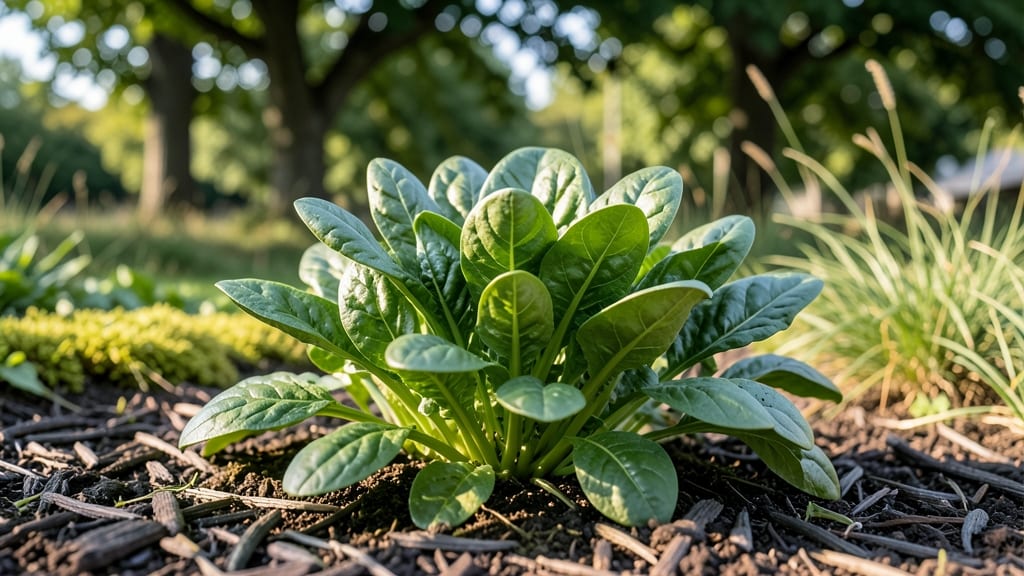
Spinach is not a single leaf but a leafy green vegetable made up of multiple true leaves growing from a rosette base, often harvested before bolting for tender eating.
Spinach isn't a single leaf but rather a leafy vegetable with a complex growth structure. 🌱 Each plant produces clusters of true leaves from a central rosette, and these leaves are what we harvest and eat.
Unlike plants with single leaves (like some herbs), spinach's entire edible portion consists of multiple leaves growing together, which is why it's classified as a leafy green vegetable rather than a single leaf.
This botanical structure explains why spinach is often grouped with other greens like kale or Swiss chard. The key difference lies in how these plants grow: spinach forms a dense rosette of leaves close to the ground, while plants like lettuce have broader, flatter leaf structures.
Understanding this helps gardeners and chefs know how to handle spinach properly—whether it's for cooking or growing in your garden.
💡 In This Article
- Botanical Classification of Spinach as a Leafy Vegetable
- How to Grow and Harvest Spinach for Maximum Leaf Production
Botanical classification of spinach as a leafy vegetable
Spinach belongs to the genus Spinacia, specifically Spinacia oleracea, and is classified as a leafy vegetable because its edible portion consists of multiple true leaves rather than a single leaf.
Each spinach plant produces a dense cluster of leaves growing from a central rosette, a characteristic shared with other leafy greens like Swiss chard or beet greens.
The key difference lies in its growth pattern: spinach's leaves are thin, tender, and grow close to the ground in a circular formation, unlike broadleaf plants like lettuce.
Botanically, spinach's leaves are simple (undivided) but arranged in a way that creates the illusion of a single large leaf when viewed from above. The plant's structure is designed for rapid growth and high leaf production, which is why it's often harvested young—typically 30-50 days after planting.
This growth habit contrasts with plants like cabbage, which form a single large leaf (the head) through folding and overlapping. 🌱 The rosette formation also makes spinach vulnerable to bolting (premature flowering) when exposed to heat or long daylight, which is why gardeners prioritize cool-season planting.
What makes spinach unique among leafy greens is its high leaf-to-stem ratio. The leaves are 90% of the edible portion, with minimal fibrous stems, which is why it's often classified as a "baby leaf" vegetable when harvested early.
This structure also explains why spinach is typically eaten raw in salads or lightly cooked—its delicate leaves wilt quickly at high temperatures (above 160°F), unlike heartier greens like kale, which can withstand longer cooking times.
The thin cell walls in spinach leaves break down easily, releasing nutrients and creating that signature tender texture.
Comparing spinach to other greens highlights its botanical distinctions. Lettuce, for example, has a broad, flat leaf structure with a distinct head, while spinach's leaves are more elongated and grow in a circular pattern.
Kale, another leafy green, has a more robust stem and larger leaves that develop a tougher texture over time. Spinach's growth pattern also means it doesn't form a distinct "heart" like lettuce—its leaves are uniform in size and shape, making it ideal for uniform harvesting and cooking.
Understanding spinach's botanical classification also explains why it's often grouped with other "potherbs" (cooking greens) in culinary contexts. The high leaf density and tender texture make it perfect for sautéing, blending into smoothies, or using in soups.
Unlike plants like celery, which have a single leaf structure with fibrous stalks, spinach's entire leaf—including the stem—is edible, though the stems are slightly more fibrous and often removed for a finer texture. 💫
For gardeners, this botanical structure influences how spinach is cultivated. The rosette formation requires careful spacing (4-6 inches apart) to prevent overcrowding, which can lead to disease or bolting.
The plant's shallow root system also means it thrives in loose, well-draining soil rich in organic matter, allowing the leaves to expand fully without competition. This growth habit is why spinach is often grown in succession—planting new seeds every 2-3 weeks ensures a continuous harvest of tender leaves.