
Pests and Diseases
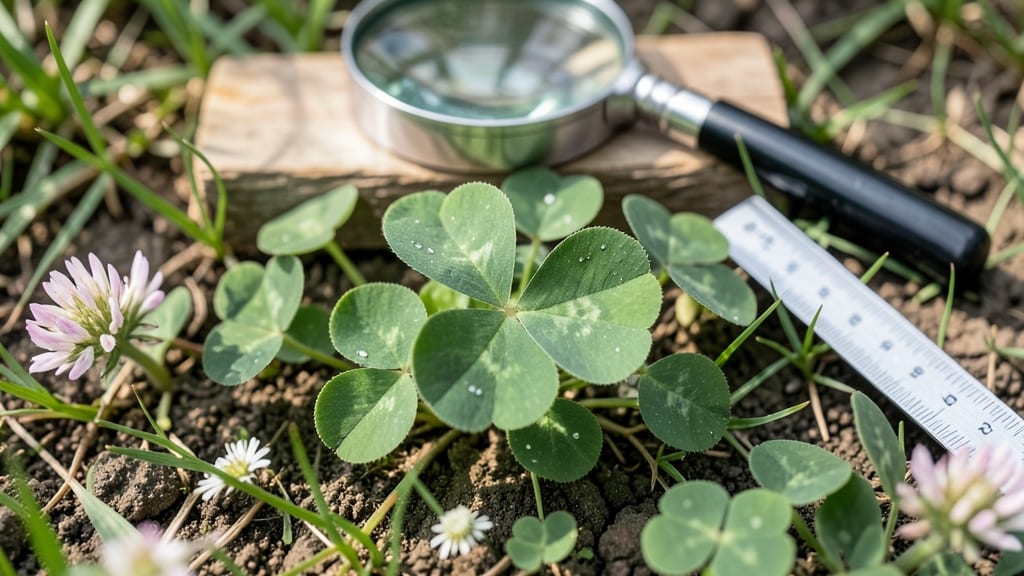
There is a 5-leaf clover, but it's extremely rare with odds of finding one estimated at 1 in 10,000. Most clovers have three leaves, though four-leaf varieties are far more common. Their rarity comes from genetic mutations in the Trifolium repens species.
Finding a five-leaf clover isn't just about luck—it's about understanding how these rare botanical anomalies form. 🌱 Unlike the more common four-leaf varieties (which occur about once in every 5,000 clovers), five-leaf clovers develop through additional genetic mutations that alter chlorophyll distribution.
These extra leaves don't just appear randomly; they result from a specific chromosomal rearrangement during cell division. The good news is that while they're rare, you can increase your chances by growing white clover (Trifolium repens) in nutrient-rich soil with plenty of sunlight.
What makes these clovers so fascinating is their symbolic value—many cultures consider them lucky charms. However, their true rarity comes from nature's precision, not magic. If you're gardening enthusiasts, try planting clover near fast-growing grasses or legumes; some gardeners report higher mutation rates in these conditions.
Just remember: patience is key, as even the most attentive growers might wait years before spotting one.
💡 In This Article
- The Science Behind Four-Leaf and Five-Leaf Clover Mutations
- How to Grow and Spot Rare Clover Varieties in Your Garden
The science behind four-leaf and five-leaf clover mutations
Four-leaf and five-leaf clovers emerge from genetic mutations in the Trifolium repens species, specifically through a process called chromosomal nondisjunction during cell division. Normally, clover plants produce three leaves due to their standard genetic blueprint, but when chromosomes fail to separate properly, extra leaf primordia (leaf-forming cells) develop.
This creates the additional leaves we associate with rare clovers. The four-leaf variety occurs roughly once in every 5,000-10,000 clovers, while five-leaf clovers are even rarer, appearing at about 1 in 10,000 due to more complex chromosomal rearrangements.
Chlorophyll distribution plays a key role in their appearance. Extra leaves often develop with slightly reduced chlorophyll, giving them a paler green hue compared to the vibrant green of standard leaves. This is why rare clovers sometimes appear less vivid—it's a visual clue that their genetic makeup differs.
The mutation doesn't just add leaves randomly; it alters the plant's meristem (growth tissue), which is why these variations are consistent across the plant's lifecycle. 🌿 Scientists classify these mutations as somatic mutations, meaning they occur in individual cells rather than being passed down through seeds.
Five-leaf clovers are rarer than four-leaf varieties because they require an additional layer of genetic alteration. While four-leaf clovers typically result from a single chromosomal event, five-leaf clovers often involve multiple mutations or more complex rearrangements.
This makes them statistically less likely to occur naturally. Botanists studying Trifolium repens have found that environmental stressors—like nutrient deficiencies or physical damage—can sometimes trigger these mutations, though the process remains largely random.
What's fascinating is how these mutations affect the plant's overall health. While rare clovers are structurally sound, they may grow slightly slower or produce fewer flowers because their energy is diverted to maintaining the extra leaves.
This is why gardeners often spot them in healthy, well-nourished clover patches. The key takeaway is that these "lucky" clovers aren't magical—they're a rare but natural outcome of plant genetics. 🌱
For those curious about the botanical classification, five-leaf clovers fall under the same species (Trifolium repens) but are considered a distinct phenotypic variation. Unlike cultivated varieties, these mutations aren't stable across generations, meaning they won't reliably produce more rare clovers if planted from seed.
This makes each discovery a unique event in nature's grand experiment.
If you're wondering why some sources claim even rarer odds (like 1 in 10,000 for five-leaf clovers), it's because these estimates account for the cumulative probability of multiple mutations occurring in the same plant.
The process is akin to flipping multiple coins and getting rare combinations—unlikely, but not impossible. This statistical rarity is what fuels their cultural significance as symbols of luck.