
Pests and Diseases
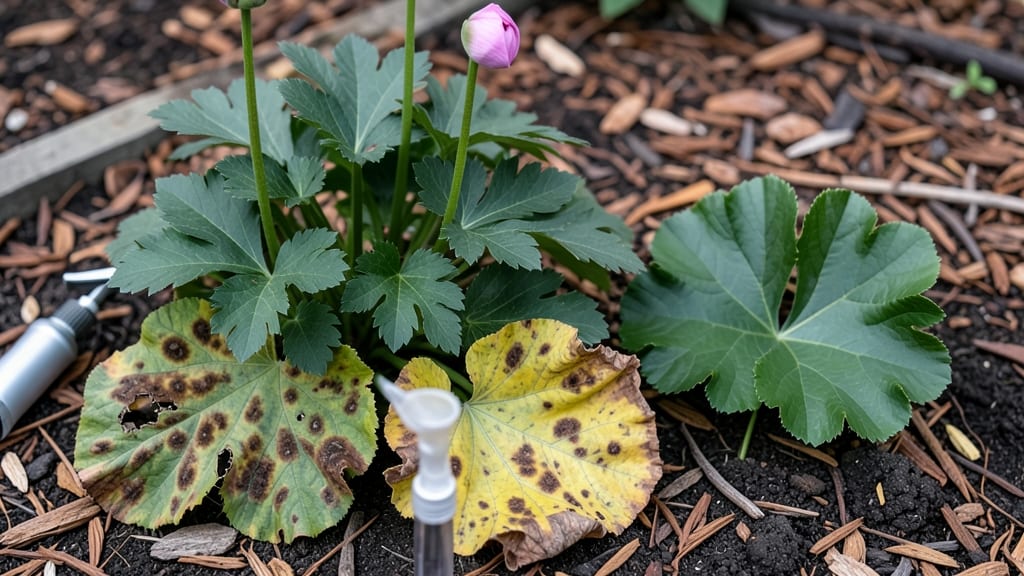
Japanese anemone leaf problems with crispy, brown edges are screaming for help—and copper spray is the knight in shining armor. 🌿 I’ve seen these delicate bloomers go from stunning to sad in a single season, and the fix starts with understanding why those edges curl and crisp like autumn leaves. The culprits? Fungal diseases like powdery mildew or leaf spot, often triggered by too much moisture or poor airflow. Spider mites and slugs love the same conditions, turning lush foliage into a crunchy mess. The good news? Copper spray tackles fungi and pests while being safe for organic gardens—just mix it right and apply it at dawn or dusk. You’ll see fresh, vibrant growth within weeks if you catch it early. The key is timing: spray before symptoms appear if your garden’s humid, or after rain to protect wet leaves. And yes, I mean that literally—no more sad, brittle edges ruining your late-summer blooms. Start with a 1% copper fungicide (like copper sulfate or tribasic copper sulfate) mixed at 1 tablespoon per gallon of water. For severe cases, add a neem oil boost—it’s like sending reinforcements. Reapply every 7-10 days until new leaves emerge, and always water at the base to keep foliage dry. Prevention is easier than rescue: space plants for airflow, water in the morning, and mulch to keep roots cool. My anemones now thrive with just one preventive spray in early summer—no more crispy edges, just lush, healthy plants that bloom until frost. Works for any anemone variety, from ‘Honorine Jobert’ to ‘September Charm.’ The secret? Consistency. Copper spray isn’t a quick fix—it’s a long-term partnership with your plants. Once you master it, your anemones will thank you with bold, disease-free foliage and a second flush of blooms.
Root Causes Behind Leaf Issues
Japanese anemones (Anemone × hybrida) are prized for their delicate, late-summer blooms, but their foliage can suffer from a variety of stress signals—often leaving gardeners puzzled. Understanding the why behind these problems is the first step to restoring your plant’s health.
Below, we break down the most common culprits, backed by science, so you can diagnose and act with confidence.
Japanese anemones thrive in moist but well-drained soil, and when their roots sit in soggy conditions, a cascade of issues begins. Here’s what happens:
- Root Rot (Phytophthora & Pythium): These water-mold fungi thrive in anaerobic (low-oxygen) soil, suffocating roots and blocking nutrient uptake.
Symptoms include yellowing leaves, wilting, and a foul, mushy smell at the base. - Nutrient Leaching: Excess water washes away essential minerals like potassium and magnesium, leading to interveinal chlorosis (yellowing between leaf veins). - Fungal Leaf Spots: Overly wet foliage creates the perfect breeding ground for pathogens like Alternaria or Septoria, causing brown, crusty lesions with yellow halos.
💡 Pro Tip: Test your soil’s drainage by digging a 6-inch hole—if water pools after 24 hours, amend with perlite, sand, or compost to improve aeration.
Japanese anemones are susceptible to foliar fungi that exploit weak spots—often triggered by humidity, poor airflow, or prior stress. Key offenders include:
- **Powdery Mildew (Erysiphe spp.): A white, talcum-like coating on leaves, caused by high humidity and low light. It clogs stomata, reducing photosynthesis and causing stunted growth. - Leaf Spot Diseases (Cercospora, Septoria): These bacteria or fungi create dark, irregular spots with feathery edges.
They thrive in wet foliage and can spread via splashing water or tools. - Rust Fungi (Puccinia spp.): Orange pustules on undersides of leaves indicate rust, which weakens the plant’s vigor and distorts new growth.
✨ Actionable Fix: Apply copper fungicide (like copper hydroxide) at the first sign of spots or powdery residue. Space plants for better airflow and avoid overhead watering.
While anemones aren’t typically pest magnets, aphids, spider mites, and Japanese beetles can wreak havoc by siphoning sap and transmitting viruses. Here’s how they sabotage your plant:
- Aphids: These tiny green/black bugs cluster on new growth, excreting sticky honeydew that fosters sooty mold (a black fungal growth).
Infested leaves curl, yellow, and drop prematurely. - Spider Mites (Tetranychus spp.): In dry conditions, these microscopic red spiders spin webs and pierce cells, causing bronzing, stippling, and leaf drop. - Japanese Beetles: Adults skeletonize leaves (eating tissue between veins), leaving a lace-like pattern.
Larvae (grubs) feed on roots, further stressing the plant.
🎯 Prevention: Use neem oil or insecticidal soap for soft-bodied pests. For beetles, handpick them into soapy water or apply kaolin clay as a barrier.
Japanese anemones are heavy feeders, and poor soil can lead to tell-tale deficiency symptoms:
| Deficiency | Symptoms | Cause | Fix |
|---|---|---|---|
| Nitrogen (N) | Pale yellow leaves, stunted growth | Overwatering, leaching, or old soil | Apply balanced fertilizer (10-10-10) |
| Potassium (K) | Brown leaf edges, weak stems | Overwatering, poor drainage | Use potassium sulfate or banana peel tea |
| Magnesium (Mg) | Yellowing between veins (chlorosis) | Acidic soil, over-fertilization | Add Epsom salt (1 tbsp/gal water) |
| Iron (Fe) | Yellow leaves with green veins | Alkaline soil (pH > 7.0) | Apply chelated iron or compost |
🔥 Quick Test: Perform a soil pH test—anemones prefer 6.0–6.5. If your soil is too alkaline, amend with sulfur or peat moss.
Japanese anemones are partial-shade lovers, and extreme conditions can trigger leaf problems:
- Too Much Sun (Sunburn): In hot, dry climates, leaves develop brown, crispy edges (similar to scorch).
This is not a pest—it’s oxidative damage from UV rays. - Cold Stress: Late frosts or temperatures below 20°F (-7°C) can cause blackened, mushy leaves, especially in young plants. - Wind Burn: Strong gusts desiccate leaf edges, leading to brown, papery margins.
🌿 Solution: Provide dappled shade (especially in afternoon sun) and mulch heavily in winter to insulate roots. Use windbreaks if your garden is exposed.
While less common, viruses like Tobacco Ringspot (transmitted by nematodes or aphids) can cause:
- Mosaic patterns (yellow/green patches)
- Stunted growth
- Distorted leaves
🚨 Warning: Viruses are incurable. Remove infected plants immediately and disinfect tools to prevent spread.
Final Note: Most leaf problems stem from one (or more) of these root causes. Start with water, soil, and pests—they’re the most common culprits. Once you’ve ruled those out, dig deeper into nutrients and environment. Your anemone’s recovery depends on precision**, not guesswork!
How to Fix Japanese Anemone Leaf Issues
Japanese anemones are stunning perennials, but those pesky leaf problems can turn your garden from dreamy to distressing. The good news? Most issues have simple, effective fixes—if you act fast.
Below, we’ve mapped out practical solutions for common leaf problems, from fungal infections to pest attacks, plus prevention tips to keep your anemones thriving. Let’s get those leaves looking crisp and healthy again!
If your anemone leaves are developing brown or black spots with yellow halos, fungal diseases like Septoria leaf spot or powdery mildew are likely to blame.
🔥 Step 1: Remove the Problem Areas
- 👨🍳 Snip off infected leaves with sterilized pruners (wipe with rubbing alcohol between cuts).
- 🗑️ Dispose of the clippings in the trash—not the compost—to prevent reinfection.
🌡️ Step 2: Apply Fungicide
- 💡 Copper fungicide (like Bordeaux mixture or copper soap) is your best bet—it’s organic, effective, and safe for pets.
- ⏰ Spray early morning or evening when leaves are dry to avoid burning them.
- 🎯 Repeat every 7–10 days until new growth appears.
✨ Prevention Tips
- 🌧️ Improve airflow by spacing plants 12–18 inches apart.
- 💧 Water at the base (avoid overhead sprinkling) to keep leaves dry.
- 🍂 Clean up debris in fall to remove fungal spores.
Tiny holes, chewed edges, or webbing on leaves? Pests are the culprits!
🔪 Step 1: Manual Removal (For Aphids & Slugs)
- 👨🍳 Blast aphids off with a strong spray of water (use a hose nozzle).
- 🐌 For slugs, set up beer traps (bury a shallow dish filled with beer near the plant) or use iron phosphate bait (pet-safe!).
🍳 Step 2: Natural Pest Control
- 🌿 Neem oil spray (mix 1 tbsp neem oil + 1 tsp mild soap + 1 quart water) works on mites and soft-bodied pests.
- 🐝 Encourage ladybugs—they love munching aphids!
- 🕷️ For spider mites, spray with water daily (they hate humidity) or use insecticidal soap.
💡 Prevention Tips
- 🌿 Plant companion flowers like marigolds or nasturtiums to repel pests.
- 🌙 Check plants at dusk when slugs are most active.
- 🍃 Mulch with diatomaceous earth (food-grade) to deter crawling pests.
If leaves look bleached, crispy, or yellowed (especially in hot weather), your anemone is getting too much direct sun.
🌳 Step 1: Provide Shade
- 🌿 Move potted anemones to a spot with morning sun + afternoon shade.
- 🏡 For in-ground plants, add a light shade cloth (30–50% coverage) during peak sun hours.
💧 Step 2: Hydrate Properly
- 🌧️ Water deeply 2–3 times per week (1–2 inches per week).
- 🌱 Mulch with straw or wood chips to retain moisture.
✨ Prevention Tips
- 🌱 Choose the right location—Japanese anemones thrive in partial shade (4–6 hours of sun max).
- 🌿 Gradually acclimate new plants to sunlight to avoid shock.
If leaves are yellow between veins (chlorosis), your anemone may be iron-deficient. Pale or weak growth? It could be nitrogen or phosphorus lack.
📊 Step 1: Soil Test & Amend
- 💡 Take a soil sample to a local extension office for a pH test (ideal: 6.0–7.0).
- 🌿 For iron deficiency, sprinkle chelated iron granules around the base.
- 💪 For general weakness, add balanced fertilizer (10-10-10) in early spring.
🍎 Step 2: Organic Boost
- 🌱 Mix in compost (1–2 inches) around the plant.
- 🥗 Use coffee grounds (for nitrogen) or bone meal (for phosphorus).
🎯 Prevention Tips
- 🌿 Mulch annually with well-rotted manure or leaf mold.
- 🌱 Avoid over-fertilizing—anemones prefer moderate feeding.
When in doubt, prune strategically!
- 🔪 Cut back any severely damaged leaves to redirect energy to healthy growth.
- 🌱 Deadhead spent blooms to encourage more flowers and prevent disease.
With these fixes, your Japanese anemone should bounce back in no time—and with a little prevention, you’ll enjoy lush, pest-free foliage season after season! 🌸
Frequently asked questions about Japanese anemone leaf problems
Why do Japanese anemone leaves develop crispy brown edges?
Crispy brown edges usually signal fungal infections like powdery mildew or environmental stress from too much sun or wind burn. Check for white powdery residue first—if present, it's mildew. For sun/wind damage, provide afternoon shade and mulch heavily to retain moisture. Copper fungicide helps with fungal issues.
How often should I apply copper spray for fungal protection?
Apply a 1% copper fungicide solution every 7-10 days during humid periods or after rain. For preventive care, one application every 2-3 weeks in early summer is ideal. Always spray in the early morning or evening to avoid leaf burn from direct sunlight.
What's the difference between leaf spot and powdery mildew on anemones?
Leaf spot appears as dark, crusty lesions with yellow halos, while powdery mildew looks like a white, talcum powder coating on leaves. Leaf spots thrive in wet conditions, while mildew loves high humidity and poor airflow. Both require copper spray, but mildew needs better ventilation—space plants 12-18 inches apart.
Can I use neem oil instead of copper spray for fungal problems?
Neem oil works best for preventing fungal issues rather than treating active infections. For existing problems, use copper fungicide first, then switch to neem oil as a preventive spray every 2 weeks. Mix 1 tbsp neem oil + 1 tsp mild soap + 1 quart water for best results.
Are Japanese anemones susceptible to viral infections?
Yes, but rarely. Viruses like Tobacco Ringspot cause mosaic patterns and stunted growth. If you suspect a virus, remove the plant immediately—there's no cure. Prevent spread by disinfecting tools with rubbing alcohol and avoiding overhead watering that can spread pathogens.