
Trees
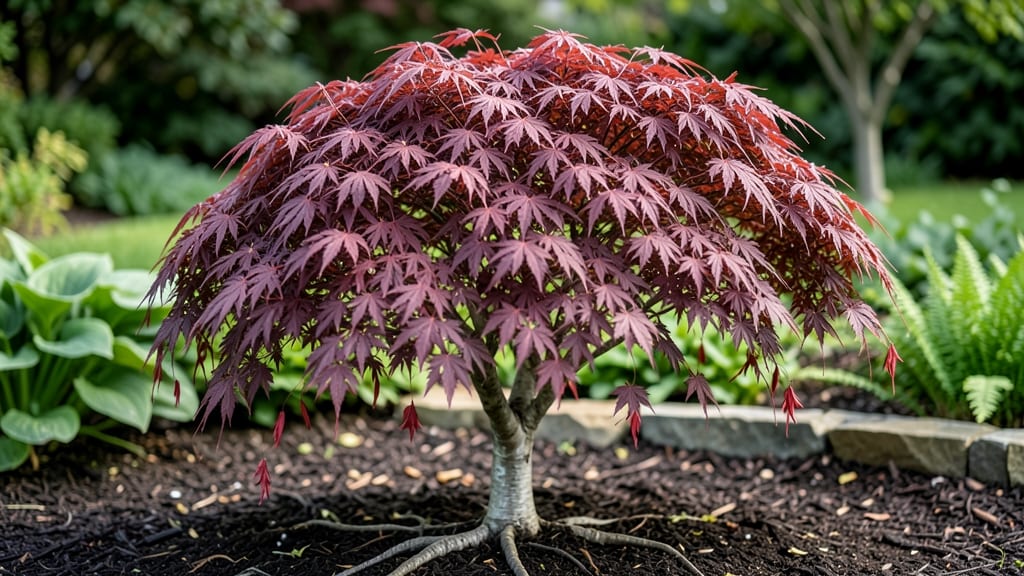
The Japanese laceleaf maple 'Crimson Queen' turns your yard into a living watercolor painting. 🌿 This cold-hardy stunner thrives in zones 5-8, delivering fiery red foliage that shifts through brilliant oranges and purples as seasons change—no other tree does this quite like it.
Plant it where you'll admire it daily: a spot with 4-6 hours of sunlight and well-draining soil rich in organic matter. The roots spread wide but shallow, so avoid compacted clay or soggy ground.
I've seen this maple transform dull corners into vibrant focal points, especially when paired with hostas or ferns for contrast. Year-round drama starts with spring's fresh green leaves, peaks in autumn's fiery display, and continues through winter's delicate lace-like branches.
Prune in late winter to shape it while dormant, and watch it bounce back with even more vigor. The compact size (15-20 feet tall) makes it perfect for small gardens or as a striking container specimen. What makes this tree truly special is its adaptability.
It handles city pollution better than many maples, and its disease resistance means fewer headaches. Just avoid overwatering—this is one tree that prefers to dry out slightly between waterings. Your neighbors will ask how you grew such a showstopper!
📚 In This Guide
- What you need
- Instructions
- Tips and common mistakes
- Wrapping up and next steps
What you need
- ● Japanese Laceleaf Maple Crimson Queen Tree: 1–3 trees (depending on desired visual impact; spacing ~15–20 ft apart for mature growth).
- ● Specs: 5–6 ft tall at purchase (container-grown preferred for easier transplanting).
- ● Planting Site: Full sun to partial shade (6+ hours of sunlight daily for optimal color).
- ● Well-draining soil (amend with compost if your soil is heavy clay).
- ● Sheltered from strong winds (young trees are delicate!).
- ○ Soil Amendments (Optional but Helpful): 5–10 lbs of organic compost or peat moss (per planting hole).
- ● 1 cup of slow-release fertilizer (10-10-10 NPK ratio).
- ● Digging Tools: 1 shovel (round-point or spade, 12–14 inches wide).
- ● 1 garden trowel (for delicate root adjustments).
- ● Planting Supplies: 1 planting hole twice as wide as the root ball, same depth.
- ● 1 burlap or landscape fabric (to mulch and retain moisture).
- ● 3–5 gallons of water (for initial watering).
- ● Mulch: 2–3 inches of wood chips or shredded bark (keep 6 inches away from the trunk).
- ○ Support (Optional): 1 tree stake (if planting in windy areas; use loosely to avoid girdling).
- ● 1 roll of soft tree tie (for staking).
- ● Best Planting Time: Early spring or fall (avoid extreme heat or frost).
- ● Local Regulations: Check if your area requires permits for tree planting (especially in urban zones).
- ● 💡 Pro Tip: Test your soil’s pH (ideal range: 5.0–6.5 for laceleaf maples). Use a soil test kit if unsure!
- ● 🌡️ Climate Note: This variety thrives in USDA Zones 5–8—verify your hardiness zone before purchasing.
Step-by-step guide to planting and caring for Japanese laceleaf maple Crimson Queen
This stunning tree thrives with the right approach—here's how to plant and nurture it for vibrant foliage all year.
🌱 Step 1: Choose the Perfect Planting Location
Japanese Laceleaf Maples need full sun to partial shade—at least 6 hours of sunlight daily—but protect them from harsh afternoon sun in hot climates. I always look for a spot with dappled light, like under taller trees or on the east side of a building. The Crimson Queen variety develops its richest colors when it gets morning sun and afternoon shade.
Check the soil pH before planting—this maple prefers slightly acidic to neutral soil (pH 6.1-7.5). If your soil is heavy clay or compacted, amend it with 2-3 inches of compost mixed into the top 12 inches of soil. The roots love well-draining soil, so avoid low-lying areas where water pools after rain.
🪴 Step 2: Dig the Hole and Plant Correctly
Dig a hole twice as wide as the root ball but no deeper than its container. Gently remove the tree from its pot and loosen any circling roots with your fingers—this prevents girdling as the tree matures. Place it in the hole so the top of the root ball sits just above ground level (never bury the trunk). The Crimson Queen grows best when planted at the correct depth.
Backfill the hole with the native soil, pressing lightly to remove air pockets but not compacting too firmly. Water deeply to settle the soil around the roots. I like to create a 2-inch-high berm of soil around the outer edge of the hole to encourage water to soak in slowly. Mulch with 2-3 inches of organic mulch (like shredded bark) in a 3-foot diameter circle, keeping it 6 inches away from the trunk to prevent rot.
☀️ Step 3: Water and Fertilize for Strong Growth
Water deeply once a week during the first growing season, ensuring the soil stays evenly moist but not soggy. You'll know it's time to water when the top 2 inches of soil feel dry to the touch. Overwatering is the biggest mistake—Japanese maples hate wet feet and can develop root rot. In hot summers, water every 3-4 days if the leaves start to droop slightly in the afternoon.
Fertilize once in early spring with a balanced, slow-release fertilizer (10-10-10 or 20-20-20). Sprinkle ½ cup around the drip line (the edge of the tree's canopy) and water it in. Avoid fertilizing in fall or winter—this tree enters dormancy and doesn’t need extra nutrients. If the leaves look pale or yellow, they might need a light application of iron sulfate to correct chlorosis, common in alkaline soils.
✂️ Step 4: Prune for Shape and Health
Prune Japanese Laceleaf Maples in late winter or early spring before new growth begins. Remove any dead, diseased, or crossing branches first—these can spread problems or weaken the tree's structure. The Crimson Queen has stunning lace-like foliage, so avoid heavy pruning that could reduce its dramatic appearance. Instead, focus on shaping the canopy by cutting back overgrown branches to an outward-facing bud.
Never prune more than 25% of the tree’s foliage in one season—this can stress the tree and reduce its vibrant color. I also remove any suckers (shoots growing from the base) as soon as they appear, since they divert energy from the main trunk. Use clean, sharp pruners to make cuts just outside the branch collar (the swollen area where the branch meets the trunk) to promote faster healing.
🌿 Step 5: Protect and Maintain Year-Round
In winter, protect young trees from salt spray (if near roads) and deicing chemicals by wrapping the trunk with tree guard or burlap. The Crimson Queen is cold-hardy down to -25°F, but newly planted trees benefit from a 4-inch layer of mulch to insulate roots. Remove any winter damage (like broken branches) in early spring before new growth starts.
Watch for aphids, spider mites, or scale insects—these pests love the tender new growth. Spray infested areas with a strong stream of water or apply neem oil if needed. The key to long-term success is patience. Japanese Laceleaf Maples grow 6-12 inches per year, so resist the urge to prune heavily for quick results. With the right care, your Crimson Queen will reward you with year-round color and texture for decades.
Tips & tricks for perfect Japanese laceleaf maple Crimson Queen planting
These little details make all the difference when planting your Crimson Queen—trust me, I've seen the results!
Location is Everything: When evaluating your planting spot, pay special attention to the morning sun exposure. The Crimson Queen's vibrant colors develop best when it receives direct morning sunlight but gets afternoon shade. I've noticed the most dramatic foliage colors on trees planted on the east side of buildings or under taller deciduous trees that provide natural shade. If you're in a hot climate, watch for afternoon sun—it can scorch the delicate lace-like leaves.
Root Ball Prep: Before planting, soak the root ball in water for 10-15 minutes to ensure it's fully hydrated. This helps reduce transplant shock, especially important for container-grown trees. When you remove it from the pot, gently tease apart any circling roots with your fingers—this prevents girdling as the tree matures. I've learned this the hard way after seeing several trees develop root issues from tight root balls.
Mulching Matters: The 2-3 inches of organic mulch we recommend isn't just decoration—it's essential for moisture retention and temperature regulation. Apply it in a 3-foot diameter circle but keep it 6 inches away from the trunk to prevent rot. I like to use shredded bark mulch because it breaks down slowly and improves soil structure over time. Replenish it annually to maintain the 2-inch layer on top of the soil.
Watering Wisdom: When checking if it's time to water, stick your finger 2 inches into the soil. If it feels dry at that depth, it's time to water deeply. The key is to water until you see moisture coming out of the drainage holes at the bottom of the planting hole. Overwatering is the biggest mistake—Japanese maples hate soggy roots. In hot summers, I've found that watering every 3-4 days when leaves start to droop slightly in the afternoon helps maintain that perfect moisture balance.
Pro Tips for Japanese Laceleaf Maple Crimson Queen
- These little details make all the difference when planting your Crimson Queen—trust me, I've seen the results!
- Location is Everything: When evaluating your planting spot, pay special attention to the morning sun exposure.
- Root Ball Prep: Before planting, soak the root ball in water for 10-15 minutes to ensure it's fully hydrated.
Frequently asked questions
How cold-hardy is the Crimson Queen laceleaf maple?
The Crimson Queen is a zone 5-9 powerhouse, meaning it can handle winters as chilly as -20°F (-29°C). Its lace-like foliage and deep red hues make it a standout even in harsh climates. Just ensure it’s planted in well-draining soil to avoid root rot—especially in heavy clay areas. Pro tip: Mulch heavily in late fall to protect roots!
When is the best time to plant a Crimson Queen laceleaf maple?
Spring (after the last frost) or early fall (4-6 weeks before the first frost) are ideal. Avoid summer heat or winter planting, as roots struggle to establish in extreme temps. If you’re transplanting a mature tree, water deeply weekly for the first year to help it adjust. Bonus: Plant on a slightly elevated spot to prevent water pooling.
Why are the leaves on my Crimson Queen turning brown or yellow?
Brown or yellow leaves usually signal stress from one (or more) of these issues:
- Overwatering or poor drainage (roots need oxygen!)
- Underwatering (drought stress is common in hot summers)
- Nutrient deficiency (apply a balanced fertilizer in early spring)
- Fungal issues (like powdery mildew—prune for airflow and treat with neem oil)
Check the soil moisture and leaf texture: Crispy edges = underwatered; mushy stems = overwatered.
Can I grow a Crimson Queen laceleaf maple in a container?
Yes, but it’s best for dwarf varieties or young trees (under 10 feet). Use a large, sturdy pot (20+ gallons) with drainage holes and a fast-draining potting mix. Move it to a protected spot in winter (like a garage or against a wall) if temps drop below 10°F (-12°C). Warning: Container-grown laceleaf maples may need annual root pruning to prevent circling roots.
What are some great alternatives if Crimson Queen isn’t available?
If you love the Crimson Queen’s drama but need options, consider these cold-hardy, laceleaf lookalikes:
Tree
Color
Hardiness Zone
Acer palmatum ‘Bloodgood’
Deep red-purple
5-9
Acer palmatum ‘Shishigashira’
Bright red with green edges
5-9
Acer palmatum ‘Emperor I’
Orange-red
5-8
Tip: All laceleaf maples thrive in partial shade—just avoid harsh afternoon sun to preserve their vibrant hues!
Wrapping up and next steps
The Japanese Laceleaf Maple Crimson Queen isn’t just a tree—it’s a showstopper that transforms your landscape into a living masterpiece. With its vibrant foliage, striking bark, and year-round interest, this cold-hardy beauty proves that drama doesn’t require a green thumb.
Whether you’re a seasoned gardener or a beginner, adding this stunner to your yard is a decision you won’t regret!
Ready to bring home your own slice of autumn magic? Start by researching local nurseries or trusted online plant retailers to find a healthy specimen. Then, roll up your sleeves—your future favorite shade tree is waiting! 🌿✨