
Pruning
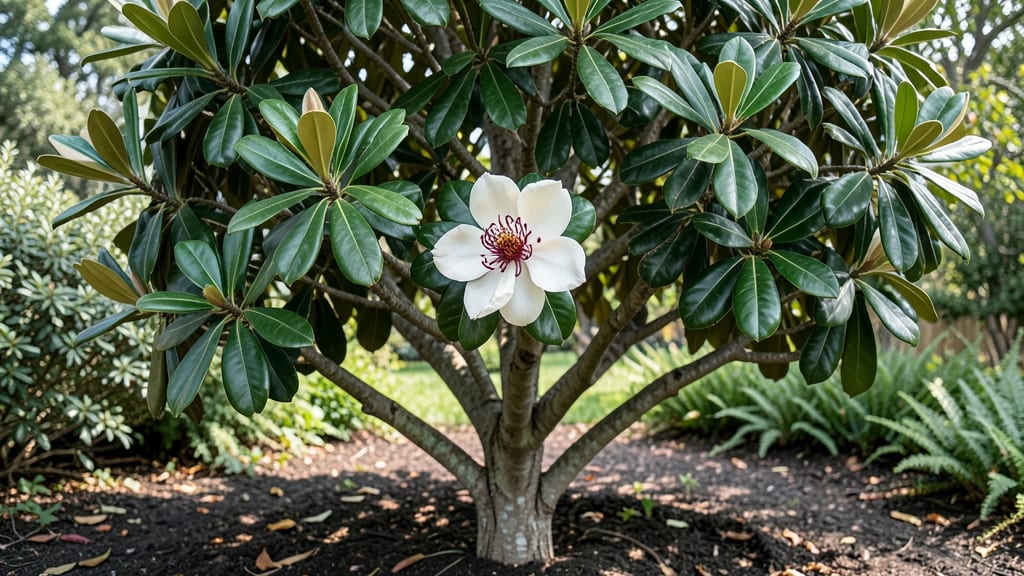
Pruning your large leaf magnolia tree transforms it from a wild, leggy mess into a stately centerpiece that steals the show year-round. ✂️ I’ve learned the hard way—aggressive cuts after flowering can rob you of next season’s blooms, but strategic trims keep those massive leaves lush and the branches balanced.
The key is timing: prune after blooming in late spring, but never more than 25% of the canopy at once.
This magnolia’s slow growth (just 12–24 inches per year) means patience pays off—each careful cut shapes the tree for decades. You’ll need sharp bypass pruners for clean cuts and a ladder (those leaves can reach 3–4 feet long!).
Focus on removing dead wood first, then thinning crowded branches to improve airflow, which prevents fungal issues that plague these moisture-loving giants.
What you’ll end up with is a tree that’s healthier, more compact, and packed with those iconic creamy-white blooms in late spring. The large leaves stay vibrant longer, and the structure becomes strong enough to support future growth without sagging.
Plus, you’ll avoid the heartbreak of seeing branches snap under winter ice—proper pruning makes all the difference.
Works for both young trees and mature specimens, though older magnolias need gentler touches. Here’s how to do it without stressing the tree—or your patience. Let’s get those branches looking intentional!
📚 In This Guide
- What you need
- Instructions
- Tips and common mistakes
- Wrapping up and next steps
What you need
- ● Pruning shears: Bypass pruners (sharp, 6-8" blades) for small branches.
- ● Loppers: 1-2 pairs (10-14" blades) for medium branches (½–2" thick).
- ● Pruning saw: 1 heavy-duty saw (for branches >2" thick).
- ● Extension pole: 6-10 ft. with saw attachment (for high branches).
- ● Disposable gloves: 1-2 pairs (nitrile-coated for grip and protection).
- ● Rubbing alcohol (70%+) or bleach solution: 1 small bottle (for sterilizing tools).
- ○ Pruning sealant: 1 small tube (optional, for large cuts >1" diameter).
- ● Ladder: Sturdy, extendable (if tree exceeds 10 ft.).
- ● Safety gear: Goggles + long sleeves (to avoid scratches from thorns).
- ● Tree wrap: 1 roll (to protect bark from tool marks).
- ● Marking spray: (for planning cuts before trimming).
- ● Compost or mulch: (to replenish soil after pruning).
- ● Camera/phone: (to document before/after progress!).
- ● Check local regulations—some areas restrict tree pruning without permits.
- ● Pick a dry, overcast day (avoid pruning when branches are wet or frozen).
- ● Have a clear workspace—remove debris, pets, and bystanders from the area.
- ● Know your tree’s growth habits (large leaf magnolias bloom on old wood—prune after flowering!).
Instructions for pruning your large leaf magnolia tree
Strategic pruning keeps your magnolia healthy and stunning year-round—here's how to do it right.
✂️ Step 1: Prune Dead or Diseased Branches Year-Round
Start by removing any dead, broken, or diseased branches at any time of year. Use clean, sharp pruning shears to make cuts just outside the branch collar—the swollen area where the branch meets the trunk. This prevents unsightly stubs and promotes faster healing. Look for branches that are brown, brittle, or oozing sap, or those with no leaves and no green tissue inside when cut.
Make your cuts at a 45-degree angle if the branch is larger than ½ inch in diameter. For smaller branches, a straight cut works fine. Disinfect your tools with rubbing alcohol between cuts to prevent spreading disease. I always prune these first—they're the easiest to spot and remove, and they give you a clean slate to work with for the rest of the tree.
✂️ Step 2: Lightly Shape in Late Winter Before Bud Break
Wait until late winter, just before buds swell but before new growth starts, to do your main shaping. This is the best time because the tree isn't actively growing, so it recovers faster. Focus on opening up the center of the tree to improve airflow and sunlight penetration. Remove branches that cross or rub against each other, as these create wounds and weak spots.
Keep your cuts minimal—never remove more than 25% of the tree's foliage in one season. For large leaf magnolias, I usually just thin out a few branches here and there rather than doing heavy pruning. You'll see the tree's natural shape emerge as you work, with a strong central leader and evenly spaced branches. Avoid cutting back into old wood—magnolias bloom on last year's growth, and heavy pruning can reduce or eliminate flowers.
✂️ Step 3: Remove Suckers and Water Sprouts After Flowering
After the spring flowering season, check for water sprouts—fast-growing, vertical shoots that appear along branches or the trunk. These compete with your tree for nutrients and should be removed as soon as you spot them. Use your pruning shears to cut them off at the base. Also look for suckers—shoots growing from the tree's roots or base. These weaken the tree and should be removed immediately with a clean cut just below the soil line.
This is also a good time to check for any branches growing straight upward instead of outward. These "shooters" take energy away from the tree's overall structure. Snip them back to a lateral branch or bud that's facing outward. I like to do this step in early summer, after the tree has finished flowering but before the heat of mid-summer sets in. The tree will appreciate the extra care during its growth phase.
✂️ Step 4: Clean Up Fallen Leaves and Pruned Branches
After each pruning session, collect and dispose of all fallen leaves and pruned branches. Magnolia leaves can harbor pests and diseases over winter, so it's important to remove them from the base of the tree. I use a tarp to catch the debris and then bag it for composting or disposal. This keeps your tree's base clean and reduces the risk of fungal infections.
Also take this time to inspect the tree for any signs of pests like scale insects or spider mites. Look for webbing, sticky residue (honeydew), or tiny bugs on the undersides of leaves. If you spot any issues, treat them immediately with horticultural oil or insecticidal soap. A clean workspace and regular inspections help keep your magnolia thriving for years to come.
⏰ Step 5: Apply a Slow-Release Fertilizer in Early Spring
After pruning, give your magnolia a boost with a balanced, slow-release fertilizer in early spring. Choose one with equal parts nitrogen, phosphorus, and potassium (like a 10-10-10 formula). Spread the fertilizer evenly over the root zone, about 2-3 feet out from the trunk. Water the area thoroughly to help the granules dissolve and reach the roots.
This step isn't strictly pruning-related, but it's a great follow-up to keep your tree healthy. Magnolias are slow growers, so they don't need heavy feeding. Over-fertilizing can lead to excessive growth and fewer flowers. I like to use organic options like compost or worm castings for a gentler approach. Watch for new growth in the following weeks—that's your sign the tree is responding well to your care.
Tips & tricks for perfect large leaf magnolia tree pruning
Common mistakes can turn a simple pruning session into a disaster—here's how to avoid them while keeping your magnolia thriving.
Tool Prep is Everything: Before you start, sharpen your pruning shears and disinfect them with rubbing alcohol. Dull blades tear wood instead of making clean cuts, which slows healing and invites disease. I keep a small bottle of rubbing alcohol in my tool bag specifically for this purpose—it takes 30 seconds between cuts and prevents cross-contamination between branches. For larger branches over ½ inch, I use a pruning saw with a fine-tooth blade to avoid tearing the bark.
Seasonal Timing Secrets: Late winter's your golden window for major shaping because the tree's dormant, but don't overlook summer's maintenance. After flowering, I make it a habit to check for water sprouts every 2 weeks—they grow fast and can steal nutrients from your showstopper blooms. Pro tip: Look for vertical shoots growing faster than surrounding branches; these are your water sprouts waiting to be removed at the base.
The 25% Rule: Never remove more than 25% of your tree's foliage in one season—this is non-negotiable for large leaf magnolias. I mark my calendar to remind myself: if I'm tempted to take more, I stop and wait until next year. The tree's natural shape emerges when you work with it, not against it. Think of pruning as sculpting rather than hacking—each cut should improve airflow and sunlight penetration without sacrificing next year's flowers.
Pest Prevention: After each pruning, I inspect the undersides of leaves for early signs of pests like scale insects or spider mites. Look for webbing or sticky residue (honeydew)—these are red flags. I keep horticultural oil and insecticidal soap on hand for immediate treatment. The key is acting fast: once pests establish themselves, they're much harder to control. A clean workspace and regular inspections prevent 90% of potential problems before they start.
Pro Tips for Large Leaf Magnolia Tree
- Common mistakes can turn a simple pruning session into a disaster—here's how to avoid them while keeping your magnolia thriving.
- Tool Prep is Everything: Before you start, sharpen your pruning shears and disinfect them with rubbing alcohol.
- Seasonal Timing Secrets: Late winter's your golden window for major shaping because the tree's dormant, but don't overlook summer's maintenance.
Frequently asked questions
Got questions about keeping your large leaf magnolia tree thriving with strategic pruning? Here are answers to the most common concerns—so you can trim with confidence!
When is the best time to prune a large leaf magnolia?
The ideal time is late winter or early spring (just before new growth starts). Avoid pruning in fall—it can stimulate tender growth that may be damaged by frost. Light shaping can also be done in summer, but major cuts should wait for dormancy.
Can I prune my magnolia tree in summer?
Yes, but only for minor adjustments like removing dead branches or light shaping. Heavy pruning in summer can stress the tree and reduce flowering. If you must trim, do it after the first flush of blooms to avoid cutting off next year’s buds.
Why isn’t my magnolia flowering after pruning?
Magnolias bloom on old wood, so aggressive pruning (especially in late summer/fall) can remove next year’s flower buds. Solution: Prune lightly in winter/early spring, and avoid cutting back more than 20% of the canopy at once.
How do I prune a large leaf magnolia to encourage bigger blooms?
Focus on selective pruning—remove only dead, crossing, or weak branches. Avoid "topping" (cutting the main stem) or shearing, which can reduce flower production. Thinning the canopy improves airflow and light, promoting healthier blooms.
What should I do if my magnolia’s branches are dying after pruning?
Check for over-pruning, disease, or pests (like scale insects). If branches are brown, brittle, or oozing sap, prune them back to healthy wood. Water deeply and apply mulch to reduce stress. If issues persist, consult a local arborist.
Are there alternatives to traditional pruning for large leaf magnolias?
Yes! Try pollarding (selective branch removal) or crown thinning to maintain shape without sacrificing blooms. For mature trees, drop crotching (removing branches at the trunk) can rejuvenate growth—just do it in late winter.
Wrapping up and next steps
Pruning your large leaf magnolia tree is all about striking the perfect balance—promoting health, enhancing beauty, and keeping it thriving year-round. 🌿 By following seasonal timing, using the right tools, and mastering techniques like thinning and heading back, you’ll ensure your magnolia remains a stunning focal point in your landscape.
Now that you’re armed with expert tips, grab those pruners and get ready to transform your tree into a showstopper!
🌱 Your Next Step:
Start small—pick a sunny day, gather your tools, and tackle just one branch at a time. Before you know it, your magnolia will be flourishing with vibrant blooms and lush foliage. Happy pruning!