
Companion Plants
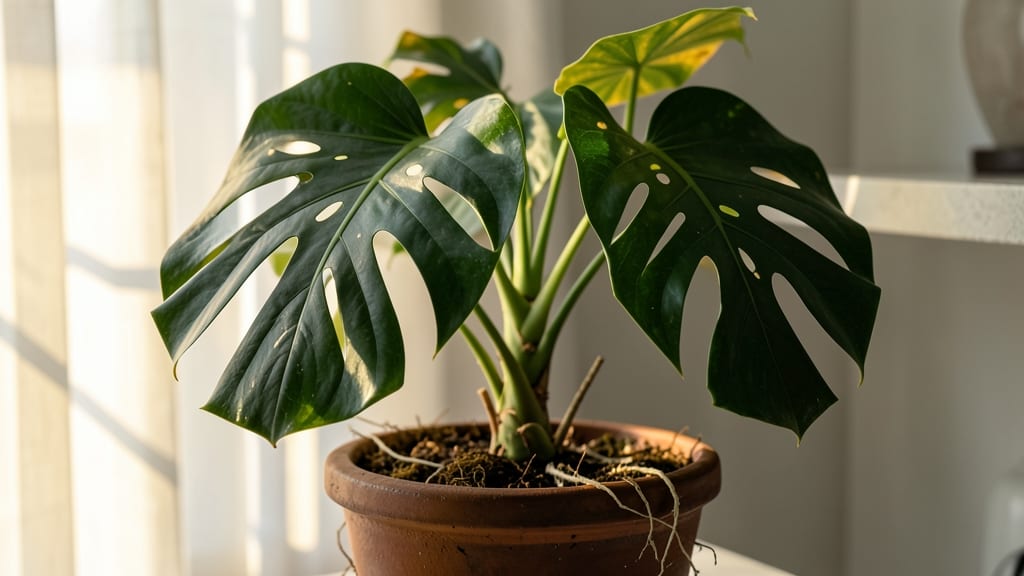
Mastering leaf shape big leaf plants identification starts with noticing their shapes—whether lobed like a maple, broad like a hosta, or serrated like a sawtooth. 🌿 I’ve spent years comparing plants in my garden, and the first clue is always the leaf’s outline: smooth edges or jagged teeth can tell you everything about a plant’s care needs and where it thrives best.
Take monstera deliciosa, for example—its glossy, split leaves are unmistakable, while philodendron hederaceum has heart-shaped leaves that climb or trail. Hostas, on the other hand, stay low to the ground with broad, often textured leaves that come in shades of blue, green, or variegated.
These differences aren’t just for show; they hint at sunlight needs, watering habits, and even pest resistance.
Once you recognize these shapes, you’ll spot them everywhere—from tropical houseplants to shade-loving perennials. A quick leaf shape check can save you from buying the wrong plant or misidentifying a troublesome pest. Think of it as a visual shortcut to better gardening decisions.
This guide covers 15 standout varieties, so you’ll know exactly which leaves belong to which plant—and how to care for them like a pro. No more guessing whether that giant leaf is a banana plant or a fiddle-leaf fig!
📚 In This Guide
- What you need
- Instructions
- Tips and common mistakes
- Wrapping up and next steps
What you need
- ● 15+ Reference Images: High-resolution photos of the 15 big-leaf plants listed in the guide (printed or digital).
- ● Field Guide or Notebook: A spiral-bound notebook or tablet (e.g., Rite in the Rain or iPad) for sketching leaf shapes.
- ● Ruler or Measuring Tape: A 12-inch metal ruler or flexible tape measure for leaf size documentation.
- ● Magnifying Glass (10x): For inspecting leaf veins, edges, and textures up close.
- ● Plant Identification App: PictureThis, PlantNet, or iNaturalist (free/premium versions).
- ● Pruning Shears: Sharp, bypass-style shears (e.g., Fiskars) for safe leaf sampling.
- ● Herbarium Press: A 12" x 16" press kit (e.g., Ames) to preserve leaf specimens.
- ● Camera with Macro Mode: Smartphone (e.g., iPhone 15 Pro) or DSLR with a 100mm macro lens.
- ● Field Bag: Waterproof backpack (e.g., Osprey Daylite) to carry tools and samples.
- ● Leaf Shape Templates: Printable PDFs of common leaf shapes (e.g., lobed, elliptical, cordate) for comparison.
- ● UV Flashlight: To check for fluorescence in leaf veins (e.g., Black Diamond model).
- ● Soil pH Kit: For testing growing conditions (e.g., Luster Leaf rapid test kit).
- ● Community Forum Access: Join r/whatsthisplant or Gardeners.com for crowd-sourced ID help.
How to identify big-leaf plants by shape
Here's my foolproof method for telling big-leaf plants apart—no botanist degree required.
🌿 Step 1: Observe Leaf Margin and Edge Characteristics
Start by examining the leaf edges. Smooth, unbroken margins are common in tropical plants like the monstera (with its signature split leaves) or rubber plant (Ficus elastica), which has glossy, leathery leaves with entire (unbroken) edges. Look for subtle details: a fiddle-leaf fig (Ficus lyrata) has pointed lobes that resemble a violin, while Swiss cheese plant (Monstera deliciosa) leaves develop dramatic fenestrations (holes) as they mature.
If the edges are jagged or serrated, you're likely dealing with a castor bean (Ricinus communis), whose leaves have deeply lobed, almost palm-like divisions. I always check margins first because they're the quickest way to narrow down possibilities—just run your fingers along the edge and note whether it's smooth, toothed, or lobed.
🌿 Step 2: Examine Leaf Venation Patterns
Next, trace the veins with your eyes. Big-leaf plants often have palmate (fan-shaped) or pinnate (feather-like) venation. A peace lily (Spathiphyllum) has prominent central veins with smaller parallel veins, while a philodendron typically shows pinnate patterns where veins branch off a central midrib. For elephant ear (Colocasia), look for a reticulate (net-like) pattern where veins interconnect densely.
Hold the leaf up to a light source if possible—the way veins cast shadows reveals their true structure. I've seen beginners mistake pothos (Epipremnum aureum) for philodendron because both have heart-shaped leaves, but pothos always has pinnate veins that become more pronounced as the leaf matures.
🌿 Step 3: Compare Leaf Shape and Overall Silhouette
Now step back and look at the leaf's overall form. Arrowhead plant (Syngonium) leaves start as simple arrowheads but develop into deeply lobed shapes as they age. A snake plant (Sansevieria) has long, strappy leaves with sharp points, while a bird of paradise (Strelitzia) has bold, banana-like leaves with dramatic parallel veins and a pronounced central ridge.
I keep a small notebook by my desk where I sketch leaf shapes I'm unsure about. Draw the outline and note any distinguishing features—like the elephant ear's sagittate (arrowhead) shape or the monstera's perforated texture. This visual reference becomes your cheat sheet for future identifications.
🌿 Step 4: Check Leaf Surface and Texture
Run your fingers over the leaf surface. Big-leaf plants often have glossy (like rubber plant), velvety (like a red velvet plant Gynura aurantiaca), or waxy (like aloe vera) textures. A peace lily has a slightly leathery feel, while a calathea (Calathea spp.) leaves are thin and papery with visible veins that ripple when touched.
Pay attention to color variations too. Red aglaonema (Aglaonema) leaves have striking marbled patterns, while snake plant leaves show striking variegation with yellow edges. I always check the underside of leaves—some, like philodendron, have a pale, almost white reverse side, while others like monstera maintain a consistent color.
⏰ Step 5: Note Growth Habit and Plant Structure
Finally, observe how the leaves attach to the stem. Monstera and philodendron have alternate leaf arrangements, while elephant ear leaves grow in a rosette pattern. A bird of paradise has a clumping habit, whereas a bamboo palm (Chamaedorea) grows in tufted clusters. Check whether the plant is woody (like a ficus) or herbaceous (like a calathea).
I've made the mistake of confusing a young fiddle-leaf fig with a peace lily because both have large leaves—until I noticed the fig's woody stem and the lily's petiole (leaf stalk) that droops slightly. Always look at the whole plant, not just the leaf.
Tips & tricks for mastering big-leaf plant identification
This visual guide gets easier with practice—here's how to sharpen your eye for those tricky details that make all the difference.
Lighting is Your Secret Weapon: Natural daylight is the best way to study leaf details, but if you're indoors, position your plant near a bright window or use a small desk lamp with a daylight bulb. I've caught subtle differences in venation patterns that were invisible under regular overhead lighting. The way veins cast shadows when held up to light reveals their true structure—especially helpful for distinguishing between pinnate and palmate patterns that look similar at first glance.
Leaf Undersides Hold Clues: Flip leaves over to check their reverse side—this is where many distinguishing features hide. Philodendron leaves often have a pale, almost white underside, while monstera maintains consistent coloring. The red velvet plant (Gynura aurantiaca) shows its velvety texture most clearly when viewed from below. I keep a small magnifying glass handy for examining these details, especially on larger leaves where the texture might be hard to feel with bare fingers.
Compare with Mature Leaves: Young leaves often look completely different from mature ones—this is where beginners make mistakes. A fiddle-leaf fig starts with simple leaves but develops its signature violin-like shape as it grows. Keep a reference photo of mature leaves for each plant type. I've seen people confuse young monstera with pothos because both have heart-shaped leaves at early stages, but the venation patterns differ dramatically once fully grown.
Create a Visual Reference System: Take photos of each plant you identify, labeling them with key characteristics like "glossy surface," "lobed edges," or "palmate venation." Organize these in an album or digital folder. I've created a simple chart with columns for leaf shape, margin type, venation pattern, and texture—this makes cross-referencing a breeze. When you're unsure about a new leaf, you can quickly compare it to your reference collection and spot similarities or differences.
Pro Tips for Leaf Shape Big Leaf Plants Identification
- This visual guide gets easier with practice—here's how to sharpen your eye for those tricky details that make all the difference.
- Lighting is Your Secret Weapon: Natural daylight is the best way to study leaf details, but if you're indoors, position your plant near a bright window or use a small desk lamp with a daylight bulb.
- Leaf Undersides Hold Clues: Flip leaves over to check their reverse side—this is where many distinguishing features hide.
Frequently asked questions
Got questions about identifying big-leaf plants or working with them in your garden? Here’s a quick guide to clear up common concerns—so you can confidently pick, grow, or troubleshoot these stunning foliage stars!
How do I tell the difference between a fiddle-leaf fig and a Swiss cheese plant?
Fiddle-leaf figs (Ficus lyrata) have large, glossy, violin-shaped leaves with smooth edges, while Swiss cheese plants (Monstera deliciosa) feature split or perforated leaves with a matte finish. Check the leaf texture and pattern—figs are sleek, while Monsteras are more intricate and tropical!
Can I grow big-leaf plants indoors year-round?
Many big-leaf varieties thrive indoors with bright, indirect light (e.g., near east or south-facing windows). Just ensure good airflow, occasional misting, and well-draining soil. Pro tip: Rotate your plants every few weeks to prevent lopsided growth from leaning toward light sources.
Why are my big-leaf plant’s edges turning brown?
Brown edges usually signal underwatering or fluoride/chlorine sensitivity in tap water. Try these fixes:
- Water only when the top 1–2 inches of soil are dry.
- Use filtered or distilled water to avoid chemical buildup.
- Trim damaged edges with clean scissors to encourage new growth.
Are there big-leaf plants that tolerate full sun?
Yes! If you need sun-loving options, consider:
Plant
Leaf Features
Sun Tolerance
Elephant Ear (Colocasia)
Massive, heart-shaped leaves (up to 2 ft wide!)
Partial sun to full sun (morning sun preferred)
Bird of Paradise (Strelitzia)
Long, strappy, tropical leaves
Full sun (drought-tolerant once established)
For containers, ensure they’re in well-draining soil to avoid root rot.
How can I propagate big-leaf plants without killing the mother plant?
Most big-leaf plants (like Monsteras or Philodendrons) propagate easily via stem cuttings:
- Use sterilized scissors to cut a healthy stem with at least 2–3 nodes.
- Place the cutting in water or moist sphagnum moss until roots form (2–4 weeks).
- Transplant once roots are 2+ inches long—gently to avoid shocking the plant!
Pro tip: Skip the bottom leaves to reduce stress on the parent plant.
Wrapping up and next steps
Identifying big-leafed plants is easier than you think—just observe their shape, edges, and veins! From the bold Monstera deliciosa to the delicate Ficus lyrata, each leaf tells a unique story. Now that you’ve explored 15 stunning varieties, why not put your new skills to the test?
🌿 Next steps:
- Snap a photo of a mystery leaf in your garden or home and compare it to your favorites!
- Experiment with pairing big-leaf plants for a lush, tropical vibe.
- Share your discoveries with fellow plant lovers—knowledge grows best together! 🌱
You’ve got this—happy leaf hunting! 🍃