
Diseases
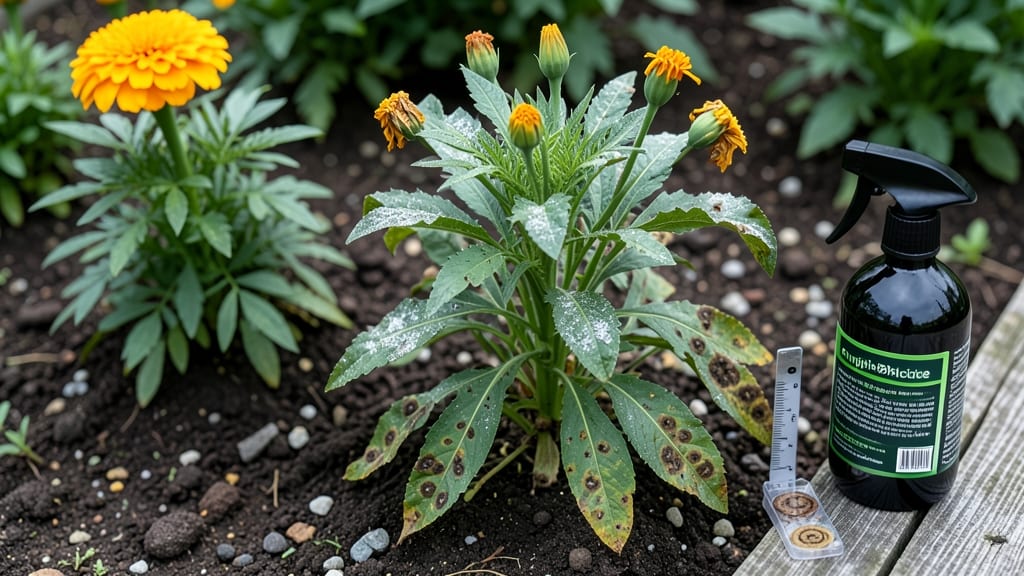
Tired of battling marigold leaf diseases that turn your bright blooms into a sad, spotted mess? 🌼 I’ve spent three summers fighting fungal infections that keep coming back—until I learned to spot the early signs and act fast.
Powdery mildew, bacterial leaf spot, and rust are the usual culprits, but each one needs a different fix before they spread.
The good news? Most marigold leaf diseases start with simple fixes—better airflow, less overhead watering, or a quick spray of neem oil. I’ve saved entire plants by catching problems early, and you can too.
The key is knowing what to look for: white powder, dark spots, or rusty patches all mean different treatments.
By the end of this guide, you’ll know exactly which disease you’re dealing with and how to treat it—whether it’s organic sprays, copper fungicides, or just pruning out the worst leaves. Your marigolds will bounce back faster than you think.
Works for both garden beds and containers, and the prevention tips keep future outbreaks from ruining your summer blooms. Let’s get those leaves healthy again!
Root Causes of Marigold Leaf Trouble
Marigold leaves develop diseases when environmental stress, pathogens, or cultural mismanagement create the perfect storm for fungal, bacterial, or viral invasion. Understanding these root causes helps you prevent (not just treat) issues before they spiral. Let’s break down the science behind why your marigolds’ leaves turn into a battleground.
Fungi thrive in moist, warm conditions and are the most common culprits behind marigold leaf diseases. These microscopic organisms release spores that land on leaves, stems, or soil—waiting for the right moment to strike.
🍄 Overhead Watering & Poor Airflow
Fungal spores love damp surfaces. When water droplets linger on leaves (from overhead irrigation or morning dew), they create a perfect breeding ground for pathogens like Alternaria or Powdery Mildew. Poor airflow—often caused by overcrowded plants or dense foliage—traps humidity near the leaves, accelerating fungal growth.
- Why it happens: Water droplets act as a bridge for spores to colonize leaf tissue.
- Actionable fix: Water at the soil base (not overhead) and space plants 12–18 inches apart for circulation.
🌱 Weakened Plant Immunity
Stressed marigolds (from nutrient deficiencies, transplant shock, or extreme heat) have lower resistance to fungal attacks. For example, Phytophthora (a water mold) exploits roots weakened by compacted soil or overwatering, then spreads to leaves.
- Why it happens: Healthy plants produce antifungal compounds; stressed ones don’t.
- Actionable fix: Feed with balanced fertilizer (10-10-10) and avoid soggy soil.
🌡️ Temperature & Humidity Fluctuations
Fungi like Botrytis (gray mold) and Septoria (leaf spot) boom when nights stay above 60°F (15°C) with high humidity. Daytime heat followed by cool, damp evenings creates the ideal “sweating” effect on leaves, encouraging spore germination.
- Why it happens: Warmth speeds up fungal metabolism; moisture softens leaf cuticles, making entry easier.
- Actionable fix: Space plants for airflow and mulch with straw to regulate soil temp.
While less common than fungi, bacteria (Xanthomonas, Pseudomonas) and viruses (e.g., Cucumber Mosaic Virus) hitch rides on contaminated tools, insects, or infected plant debris. These pathogens exploit wounds (from pruning, hail, or pests) to invade.
🪰 Contaminated Tools & Pests
Bacterial leaf spot (Xanthomonas campestris) spreads when pruners cut infected stems, leaving open wounds. Similarly, aphids or whiteflies transmit viruses while feeding.
- Why it happens: Bacteria enter through stomata (leaf pores) or wounds; viruses rely on vectors.
- Actionable fix: Sterilize tools with 70% rubbing alcohol and use neem oil to deter pests.
🌧️ Heavy Rain & Flooding
Excessive rain washes spores into soil, where they infect roots (Pythium), then travel upward to leaves. Viruses also spread faster in wet conditions, as water helps aphids disperse.
- Why it happens: Flooded roots drown beneficial microbes, weakening plant defenses.
- Actionable fix: Improve drainage with perlite and avoid planting in low-lying areas.
Even the hardiest marigolds falter when basic gardening practices go awry. These “soft” causes often amplify pathogen activity.
💧 Overwatering or Underwatering
Both extremes stress plants. Overwatering drowns roots (promoting Phytophthora), while underwatering causes osmotic stress, making leaves vulnerable to Alternaria.
- Why it happens: Roots need oxygen; waterlogged soil suffocates them.
- Actionable fix: Test soil moisture—water when top 1–2 inches are dry.
🌿 Poor Soil Health
Compacted, nutrient-poor soil starves roots, reducing their ability to absorb water and nutrients. This weakness invites root rot (Fusarium), which then spreads to leaves.
- Why it happens: Healthy roots produce antifungal compounds; weak ones don’t.
- Actionable fix: Amend soil with compost and avoid heavy clay.
🔄 Planting Too Close Together
Crowded marigolds compete for resources and trap humidity, creating the ideal fungal buffet. For example, Powdery Mildew spreads 10x faster in tight clusters.
- Why it happens: Reduced airflow = higher humidity near leaves.
- Actionable fix: Thin seedlings to 12–18 inches apart.
Pro Tip: 💡 Prevention is 90% of the battle. Rotate crops annually, remove infected debris, and choose resistant varieties (like ‘Bonanza’ marigolds) to break the disease cycle.
Quick Fixes for Fungal Foes
Marigolds may seem tough, but fungal diseases can still wreak havoc on their vibrant leaves. The good news? Most issues are treatable with the right approach. Below, we’ve mapped out practical, step-by-step solutions for each common marigold leaf disease—plus prevention tips to keep your plants thriving. No green thumb required!
Cause: White, powdery coating on leaves (often from poor airflow or humidity). Fix It: 🔥 Remove infected leaves – Snip off heavily affected foliage with clean pruners and dispose of it in the trash (not compost). 🍳 Neem oil spray – Mix 1 tsp neem oil + 1 tsp mild soap + 1 quart water. Spray every 7–10 days until symptoms fade. Best applied in the early morning or evening to avoid burning leaves. 👨🍳 Boost airflow – Space plants 12–18 inches apart and avoid overcrowding. Use a small fan on low setting near plants if humidity is high. 🥘 Prevent recurrence – Apply baking soda spray (1 tbsp baking soda + 1 quart water + a drop of soap) monthly as a preventive measure.
💡 Pro Tip: Powdery mildew thrives in damp, shady conditions. Water at the base (not overhead) and prune lower leaves to improve sunlight penetration.
Cause: Dark, water-soaked spots with yellow halos (often from splashing water or fungal spores). Fix It: ⏰ Stop watering from above – Switch to drip irrigation or soaker hoses to keep leaves dry. 🔪 Prune infected leaves – Cut off spots ½ inch below the lesion to prevent spread. Sterilize pruners with rubbing alcohol between cuts. 🌡️ Fungicide treatment – Use copper fungicide (follow label instructions) every 10–14 days until new growth appears. 🎯 Rotate crops – If growing marigolds in the same spot yearly, move them after 2–3 years to break the fungal cycle.
💡 Pro Tip: Mulch with straw or pine needles to reduce soil splashes onto leaves.
Cause: Dark, concentric spots with gray centers (common in warm, wet weather). Fix It: 🔥 Remove and destroy infected leaves – Do not compost them—bag and trash them immediately. 🍳 Copper-based fungicide – Spray every 7–10 days for 3–4 weeks to stop spread. 👨🍳 Improve drainage – Ensure pots or garden beds have holes for excess water and avoid soggy soil. 🥘 Preventive spray – Mix 1 quart water + 1 tbsp hydrogen peroxide (3%) and spray weekly as a preventive.
💡 Pro Tip: Avoid overhead watering—use a watering wand with a fine mist to keep leaves dry.
Cause: Orange, pustule-like spots on undersides of leaves (spreads via spores). Fix It: 🔪 Remove all infected leaves – Rust spores can linger—burn or trash heavily affected foliage. 🍳 Dormant oil spray – Apply dormant oil (like Neem Bliss) in early spring or fall to smother overwintering spores. 👨🍳 Copper fungicide – Spray every 2 weeks until new growth is rust-free. 🥘 Crop rotation – Do not plant marigolds in the same spot for 3+ years to break the rust cycle.
💡 Pro Tip: Pick up fallen leaves—rust spores can survive in debris over winter.
Want to keep marigolds healthy long-term?
Follow these easy habits: ✅ Water wisely – Morning watering at the base only (never wet leaves). ✅ Space plants properly – 12–18 inches apart for airflow. ✅ Clean up debris – Remove fallen leaves and spent blooms weekly. ✅ Rotate crops – Avoid planting marigolds in the same spot yearly. ✅ Use resistant varieties – Try ‘Bonanza’ or ‘Jolly Tall’ marigolds, which are less prone to disease.
✨ Final Thought: Most fungal issues are manageable with early action. The key? Catch problems fast, clean up thoroughly, and adjust care habits to stop recurrence. Your marigolds will bounce back—vibrant and disease-free! 🌼💪
Frequently asked questions about marigold leaf diseases
Why do my marigold leaves develop white powdery spots?
That’s likely powdery mildew, caused by fungal spores thriving in humid conditions. The white coating blocks sunlight, weakening leaves. Improve airflow by spacing plants 12–18 inches apart and spray with a mix of 1 tsp neem oil + 1 quart water every 7–10 days until symptoms fade.
Can I still use marigolds with leaf spots in my garden?
Only if the spots are minor and the rest of the plant looks healthy. Remove heavily infected leaves immediately to prevent spread. For severe cases, isolate affected plants or replace them—some diseases (like bacterial leaf spot) can persist in soil and reinfect next season.
How do I tell if my marigold has a fungal or bacterial infection?
Fungal diseases (like rust or mildew) show up as powdery coatings, spots with fuzzy edges, or orange pustules. Bacterial infections create water-soaked, yellow-edged spots that ooze when wet. If unsure, check leaf undersides—fungi often start there.
Will copper fungicide harm beneficial insects like bees?
Copper fungicides are generally safe for bees when used correctly, but apply them in the evening when pollinators are less active. Avoid spraying directly on flowers where bees forage. For extra protection, choose organic options like neem oil or potassium bicarbonate instead.
How often should I clean my pruning tools to prevent disease spread?
After every use! Wipe blades with a 70% rubbing alcohol solution or soak in a 10% bleach-water mix for 10 minutes. Sterilizing tools prevents cross-contamination between healthy and infected plants, especially when pruning marigolds with leaf diseases.