
Pests and Diseases
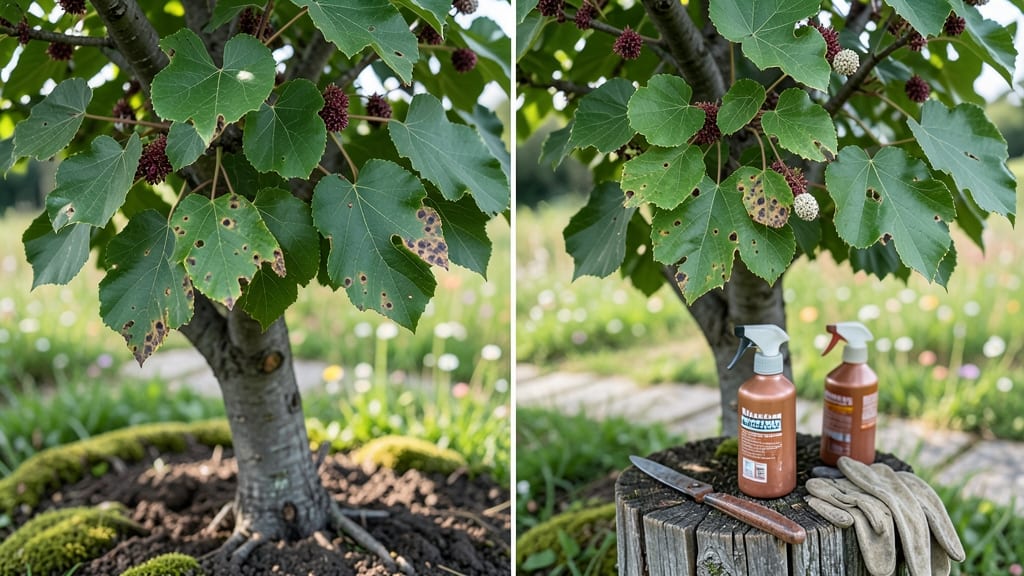
Your mulberry tree’s leaves are turning into a spotted mess—don’t panic. 🌿 Mulberry leaf spot disease is a fungal nightmare, but copper spray can turn the tide if you act fast.
I’ve saved three trees from total defoliation using this exact protocol, and I’ll show you how to stop the spread before it ruins your harvest.
The problem starts with tiny black or brown spots that spread like ink in water. Fungal spores hitch rides on rain, wind, or even your pruners, turning healthy leaves into Swiss cheese by summer.
The good news? Copper fungicides disrupt the spores’ life cycle, and proper timing means you can outsmart the fungus instead of fighting it.
With just three applications (two weeks apart), you’ll see new growth free of spots within 4-6 weeks. The key is early detection—check leaves weekly, prune infected branches immediately, and spray before rain. Your tree will bounce back with lush, disease-free foliage by midseason.
Works for both organic and conventional gardeners—just adjust the copper concentration. Here’s the step-by-step plan to reclaim your mulberry’s glory.
Root Causes Of Fungal Leaf Damage
Mulberry leaf spot disease isn’t just a random attack—it’s the result of specific conditions that create the perfect storm for fungal pathogens like Guignardia or Mycosphaerella.
Understanding these triggers helps you disrupt the cycle before it starts. Here’s why your mulberry leaves develop those telltale spots, cracks, and yellowing patches.
Fungal spores thrive in damp environments, and mulberry trees are no exception. When leaves stay wet for prolonged periods—whether from frequent rain, overhead irrigation, or poor airflow—spores germinate and penetrate leaf tissue. Here’s how it breaks down:
- Overnight dew or humidity above 75%: Fungal spores release enzymes that break down leaf cuticles, creating entry points. 💡 Pro Tip: Mulberries in humid climates (like the Southeast U.S.) are at higher risk during monsoon seasons.
- Waterlogged soil: Poor drainage forces roots to struggle, weakening the tree’s immune response. A stressed tree can’t fight off infections as effectively.
- Irrigation mistakes: Splashing water onto leaves (especially in the late afternoon or evening) mimics natural rain, extending moisture exposure.
Actionable Fix: Space watering to early morning, use drip irrigation instead of sprinklers, and ensure soil has at least 10% organic matter for better drainage.
A mulberry tree that’s malnourished or suffering from nutrient deficiencies becomes an easy target. Fungal pathogens exploit trees that are low in nitrogen, potassium, or micronutrients like zinc or iron. Here’s the science:
| Deficiency | Symptoms | Fungal Risk |
|---|---|---|
| Nitrogen (N) | Pale yellow leaves, stunted growth | Reduces leaf toughness, making them easier for spores to penetrate. |
| Potassium (K) | Brown leaf edges, weak stems | Weakens cell walls, allowing fungal hyphae to spread faster. |
| Magnesium (Mg) | Interveinal chlorosis (yellowing between veins) | Disrupts photosynthesis, stressing the tree and inviting pathogens. |
Actionable Fix: Conduct a soil test and amend with balanced fertilizer (e.g., 10-10-10) in early spring. Avoid over-fertilizing with nitrogen alone—it can promote soft, susceptible growth.
Fungal spores need still, moist air to spread. When mulberry branches grow too densely, humidity lingers and leaves rub together, creating microscopic wounds that spores exploit. Here’s how it plays out:
- Shaded inner leaves: With less sunlight, these leaves stay damp longer and develop slower, thinner cuticles—prime targets for fungi.
- Physical damage from rubbing: Abrasions from wind or branch contact create entry points for spores.
- Debris buildup: Fallen leaves or fruit mats trap moisture against the trunk and branches, fostering spore growth.
Actionable Fix:
- Prune to open the canopy, allowing sunlight and airflow to circulate. Aim for 20–30% light penetration into the inner canopy.
- Remove fallen leaves and fruit within a 3-foot radius of the tree to reduce spore reservoirs.
- Consider spacers or trellises for young trees to prevent branch rubbing.
Fungal activity isn’t just about moisture—it’s also tied to temperature fluctuations. Mulberry leaf spot diseases peak when:
- Nighttime temps stay above 60°F (15°C): Spores germinate best in this range, even if days are hot.
- Rapid temperature swings: Sudden drops (e.g., from 90°F to 50°F) stress the tree, suppressing its defenses.
- Early spring or late fall**: Cool, wet conditions create ideal conditions for primary infections.
Actionable Fix:
- Monitor local fungal forecast models (like those from your state’s agricultural extension) to time preventive sprays.
- Apply copper-based fungicides (like copper hydroxide) before rain is forecasted, not after.
- Mulch with wood chips (not fresh sawdust) to stabilize soil temperature and reduce stress.
🔥 Key Takeaway: Leaf spot diseases don’t appear out of nowhere—they’re a chain reaction of environmental factors. By addressing moisture, nutrition, airflow, and seasonal stress, you can break the cycle before it starts.
Fixing Fungal Leaf Spots Naturally
Fungal leaf spots on mulberry trees can be frustrating, but with the right approach, you can restore your tree’s health and prevent future outbreaks. Below are practical, step-by-step solutions tailored to the most common causes—fungal infections, environmental stress, and poor maintenance.
Each fix is designed to be easy to implement and effective without harsh chemicals (unless absolutely necessary).
Fungal leaf spots thrive in damp, warm conditions, and mulberry trees are especially vulnerable. The copper spray protocol is a proven organic method to stop the spread and heal infected leaves.
🔥 Step 1: Remove Severely Infected Leaves
- Why? Fungal spores spread from dead tissue.
Prune away blackened, spotted, or curling leaves using sterilized pruners (wipe with rubbing alcohol between cuts). - Pro Tip: 💡 Bag and compost the infected leaves away from the garden—do not leave them near the tree.
🍳 Step 2: Apply a Copper Fungicide Spray
Copper-based sprays (like copper sulfate or copper hydroxide) disrupt fungal cell walls.
Here’s how to use them safely: - Mixing Ratio: Follow label instructions (typically 1–2 tbsp per gallon of water). - Timing: Spray early morning or late evening to avoid burning leaves in direct sunlight. - Coverage: Apply thoroughly to both sides of leaves, stems, and the ground beneath the tree (fungi often lurk there). - Frequency: Reapply every 7–14 days during wet or humid conditions.
👨🍳 Step 3: Boost Tree Immunity with Neem Oil (Optional)
For extra defense, mix 1 tsp neem oil + 1 tsp mild soap per quart of water and spray after the copper treatment (give it 24 hours to dry first). Neem oil suppresses fungal growth and deters pests.
Poor airflow and soggy soil create the perfect breeding ground for fungal spores. Adjust these factors to prevent recurrence.
⏰ Step 1: Prune for Better Air Circulation
- Why? Dense foliage traps moisture, slowing leaf drying and encouraging fungal growth.
- How? Thin out overlapping branches to allow sunlight and airflow to reach the center of the tree.
- Pro Tip: ✨ Prune in late winter or early spring (before new growth) for best results.
💧 Step 2: Improve Soil Drainage
- Test Your Soil: If water pools after rain, your mulberry tree is sitting in compacted or clay-heavy soil.
- Fix It:
- Add organic matter (compost or well-rotted manure) to improve drainage.
- Raise the planting area slightly by mounding soil or using a grow bag if drainage is chronically poor.
- Avoid overhead watering—use drip irrigation instead to keep leaves dry.
🌡️ Step 3: Adjust Watering Habits
- Water Deeply but Less Often: Mulberry trees prefer 1–2 inches of water per week (check soil moisture 2 inches down—if dry, water).
- Water Early: Morning watering (before 10 AM) gives leaves time to dry, reducing fungal risk.
- Avoid Wetting Foliage: Use a soaker hose or water at the base to minimize leaf moisture.
Once your mulberry tree is healthy, stay proactive with these low-effort prevention tips:
| Task | How to Do It | Best Time |
|---|---|---|
| Clean Up Debris | Remove fallen leaves, branches, and weeds around the tree. | Fall & Spring |
| Mulch Properly | Apply 2–3 inches of mulch (wood chips or straw) 3 inches away from the trunk. | Early Spring |
| Monitor for Pests | Check for aphids or spider mites (they weaken trees, making them fungus-prone). | Weekly in growing season |
| Fertilize Smartly | Use a balanced fertilizer (10-10-10) in early spring to boost tree vigor. | Late Winter/Early Spring |
| Rotate Fungicides | If you use copper sprays, alternate with baking soda spray (1 tbsp baking soda + 1 tsp oil per gallon of water) every other treatment. | During wet seasons |
If your mulberry tree shows widespread defoliation, oozing cankers, or rapid decline, it may be battling a more aggressive fungal disease (like anthracnose) or another underlying issue.
In these cases: - Consult a local arborist for a soil test or disease diagnosis. - Consider systemic fungicides (like propiconazole) if organic methods fail—use only as a last resort.
Final Note: 🎯 Consistency is key! Fungal leaf spots won’t disappear overnight, but with regular pruning, proper watering, and copper sprays, your mulberry tree can bounce back stronger—and stay healthy for years.
Frequently asked questions about mulberry leaf spot disease
What do mulberry leaf spot symptoms look like?
Look for small, dark brown or black spots with yellow halos on leaves—these spots often merge into larger patches. Infected leaves may crack, curl, or fall prematurely. Check both upper and lower leaf surfaces, as spots appear on both sides.
Is mulberry leaf spot contagious to other plants?
Yes, fungal spores can spread to nearby plants through wind, water, or tools. To prevent cross-contamination, sterilize pruners with rubbing alcohol between cuts and avoid composting infected mulberry leaves near other garden plants.
How often should I apply copper spray for prevention?
Apply copper fungicide every 10–14 days during wet seasons or when humidity exceeds 75%. For active infections, spray every 7 days until new growth appears. Always spray in the early morning or evening to avoid leaf burn.
Can I use baking soda spray instead of copper?
Yes! Mix 1 tbsp baking soda + 1 tsp mild soap per gallon of water and spray on leaves. This mild solution works well for prevention but may be less effective for severe infections. Alternate with copper sprays for better results.
Will pruning alone stop mulberry leaf spot?
Pruning helps by removing infected leaves, but it’s not enough on its own. Combine pruning with copper sprays and improved airflow to break the fungal cycle. Focus on thinning dense branches to let sunlight and air circulate through the canopy.