
Pruning
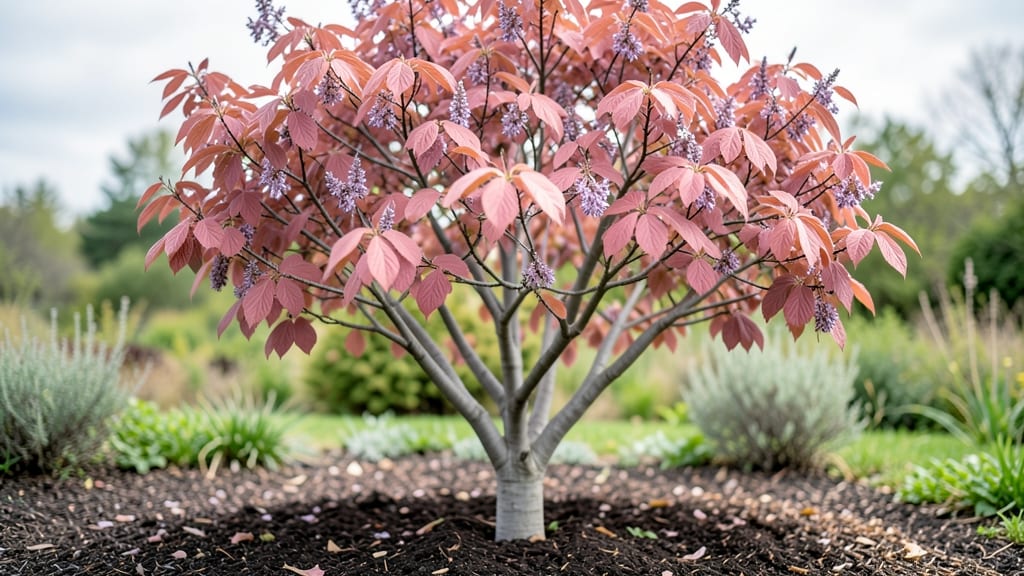
The most popular pink leaf tree names include Royal Poinciana (Delonix regia), Pink Muhly Grass (Muhlenbergia capillaris), and Japanese Snowbell (Styrax japonicus), each offering stunning pink foliage or flowers for garden landscapes.
These vibrant trees get their pink hues from natural pigments like anthocyanins, which respond to sunlight and seasonal changes. 🌸 For example, Royal Poinciana bursts into fiery pink blooms in spring, while Pink Muhly Grass turns soft pink in fall, creating seasonal interest.
Japanese Snowbell offers delicate pink flowers year-round in mild climates, making it perfect for shady garden spots. Each variety has unique care needs—Royal Poinciana thrives in hot, dry climates, while Snowbell prefers cooler, moist conditions.
When choosing a pink leaf tree, consider your local climate and sunlight exposure. Royal Poinciana needs full sun and well-draining soil, while Pink Muhly Grass tolerates partial shade and sandy soils. Japanese Snowbell adapts well to acidic, moist soils, making it ideal for woodland gardens.
Pruning timing matters too—Royal Poinciana blooms on new wood, so prune after flowering, while Snowbell's delicate branches benefit from light shaping in early spring.
💡 In This Article
- Identifying Pink-Leafed Trees by Botanical Classification
- Optimal Growing Conditions for Pink Leaf Trees
Identifying pink-leafed trees by botanical classification
The vibrant pink hues in these trees come from specialized pigments called anthocyanins, which act like natural sunscreen for plants. These water-soluble compounds protect leaves from excessive sunlight while giving them their striking color.
For instance, the Royal Poinciana (Delonix regia) produces bright pink flowers thanks to high anthocyanin levels in its petals, while Pink Muhly Grass (Muhlenbergia capillaris) develops pinkish-purple foliage as temperatures drop, triggered by shorter daylight hours in autumn. 🌸
Botanically, these trees belong to distinct families with unique leaf structures. The Royal Poinciana features compound leaves with 5-10 pairs of leaflets arranged in a feathery pattern, while Japanese Snowbell (Styrax japonicus) has simple, oval-shaped leaves with serrated edges.
Pink Muhly Grass, though often called a "grass," is actually a sedge with fine, thread-like blades that form dense, cloud-like plumes. The leaf arrangement differs dramatically—Poinciana's compound leaves maximize sunlight capture, while Snowbell's simple leaves optimize moisture retention in shaded areas.
What makes identification tricky is that some trees change color seasonally. The Royal Poinciana's pink flowers appear only in spring, while its green leaves dominate the rest of the year. In contrast, Pink Muhly Grass maintains its pinkish tint for months in fall before turning tan.
Japanese Snowbell, however, displays pink flowers year-round in frost-free zones, making it a reliable choice for consistent color. The key is observing both foliage AND flowering patterns over time to accurately identify these varieties.
Another distinguishing factor is growth habit. Royal Poinciana grows as a medium-sized tree (20-35 feet tall) with a broad canopy, while Pink Muhly Grass remains low-growing (2-3 feet) and spreads horizontally. Japanese Snowbell typically reaches 15-20 feet with a more compact, rounded shape.
These differences affect not just identification but also how you'll use them in your landscape—tall Poincianas make stunning focal points, while Muhly Grass works beautifully as ground cover or in mixed borders.
For gardeners, understanding these botanical traits helps predict behavior. For example, the Royal Poinciana's compound leaves mean it sheds less debris than simple-leaved trees, while Snowbell's delicate branches require more careful pruning to maintain their elegant shape.
The Muhly Grass's fine blades make it drought-tolerant but also more susceptible to wind damage in exposed locations. These structural differences directly impact care requirements and landscape design possibilities. 🌿
Consider this visual comparison when identifying unknown pink-leafed trees in your area:
- Leaf Structure: Compound (Poinciana) vs. Simple (Snowbell) vs. Grass-like (Muhly Grass)
- Color Timing: Seasonal (Muhly Grass) vs. Year-round (Snowbell) vs. Flower-specific (Poinciana)
- Growth Form: Tree (Poinciana/Snowbell) vs. Ground Cover (Muhly Grass)
Most identification mistakes happen when people confuse Pink Muhly Grass with ornamental grasses like Pink Pampas Grass (Cortaderia selloana), which has thicker, more rigid blades and grows much taller.
The key difference is Muhly Grass's delicate, feathery appearance and its tendency to form dense, low mounds rather than tall, spiky clumps. 🌱