
Pests and Diseases
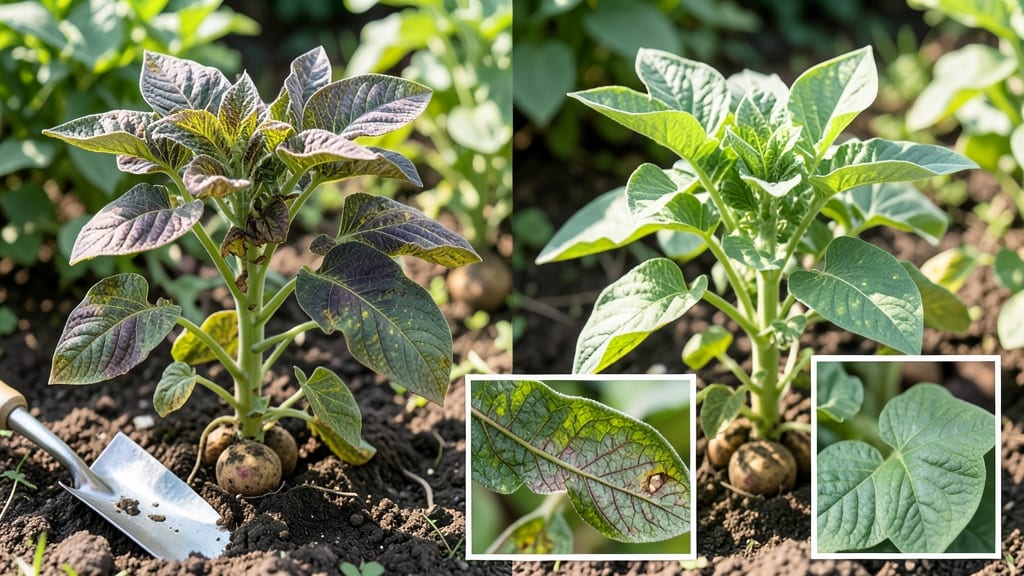
Your potatoes are rolling their leaves like a bad hand of poker—potato leaf roll virus (PLRV) turns lush green foliage into stunted, curled messes. 🌱 I’ve watched this disease wipe out entire harvests, but here’s the hard truth: catching it early and acting fast can save your crop (and your sanity).
The first sign? Leaves that roll upward like they’re trying to hide, paired with stunted stems and tiny, underdeveloped tubers. Aphids spread this virus faster than gossip at a garden club, so if you see them, act now—isolate infected plants immediately and crush any aphids you spot.
Resistant varieties like ‘Yukon Gold’ or ‘Red LaSoda’ can be your secret weapon. By removing infected plants before they spread, you’ll protect next year’s crop. Test seed potatoes from unreliable sources, and rotate crops to starve out any lingering virus. It’s not glamorous, but it works—my PLRV-free harvests prove it.
This isn’t just about saving plants; it’s about reclaiming control over your garden’s health. Let’s get those tubers growing strong again.
📚 In This Guide
- What you need
- Instructions
- Tips and common mistakes
- Wrapping up and next steps
What you need
- ● Diagnostic Tools: Hand lens or magnifying glass (10x magnification recommended)
- ● PLRV-specific ELISA test kit (or access to a plant pathology lab for confirmation)
- ● Pruning Supplies: Sharp, sterilized pruning shears (or bypass pruners) – 1 pair
- ● Rubbing alcohol (70% isopropyl) – small bottle (for sterilization)
- ● Disposable gloves – 1 pair (nitrile recommended)
- ● Sanitation & Disposal: Heavy-duty trash bags – 2-3 (for infected plant debris)
- ● Bleach solution (1 part bleach to 9 parts water) – 1 gallon (for cleaning tools)
- ● Garden Essentials: Healthy, certified disease-free potato seed stock – 1-2 lbs (for replanting)
- ● Compost or well-aged manure – 5-10 lbs (to boost soil health)
- ● Digital camera or smartphone – to document symptoms for later reference
- ● Soil test kit – to check for nutrient deficiencies that may stress plants
- ● Neem oil or copper fungicide – as a preventive spray (follow label instructions)
- ● Row covers (floating fabric) – to protect new plantings from aphids (PLRV vectors)
Step-by-Step pruning guide for potato leaf roll
Here’s how to keep your potato leaf roll looking lush and dramatic all year long.
✂️ Step 1: Identify and Remove Diseased Leaves
Start by examining the plant for any leaves showing signs of potato leaf roll virus—yellowing, curling, or stunted growth. These leaves won’t recover, so snip them off at the base with clean, sharp pruners. I like to bag the clippings immediately to prevent spreading any potential pathogens to healthy foliage.
Focus on the older, lower leaves first, as they’re more likely to harbor disease. If you see mottled patterns or severe curling, remove those leaves entirely. This step is critical—skipping it lets the virus spread, weakening the plant over time.
🌿 Step 2: Prune for Airflow and Light Penetration
Thin out crowded stems and leaves to improve airflow, which reduces humidity and slows disease progression. Aim for 12-18 inches of space between branches. I usually cut back any stems that are rubbing against each other or growing inward—this keeps the plant open and healthy.
Prune just above a leaf node or outward-facing bud to encourage new growth in the right direction. Avoid cutting into woody stems unless absolutely necessary, as this can stress the plant. Watch for new shoots emerging from the base—these are your plant’s way of compensating for lost foliage.
☀️ Step 3: Shape the Plant for Balanced Growth
Step back and assess the plant’s shape. If one side is overgrown, trim back the longest stems by one-third to encourage a fuller, more balanced look. I often prune in stages—first the top, then the sides—so the plant doesn’t go into shock. Use your fingers to gently twist off smaller stems if they’re too thin for the pruners.
For a year-round dramatic effect, avoid heavy pruning in late summer or early fall, as this can stunt new growth before winter. Instead, focus on light maintenance pruning every 4-6 weeks to keep the plant tidy without overstressing it.
🪴 Step 4: Clean Up and Fertilize After Pruning
Once you’ve finished pruning, clean your tools with rubbing alcohol to prevent cross-contamination. Remove all fallen leaves and debris from the base of the plant—this helps keep pests and diseases at bay. I also like to add a balanced, slow-release fertilizer after pruning to support new growth.
Water the plant deeply but gently right after pruning to help it recover. Avoid overhead watering, as wet foliage can encourage fungal growth. If you notice yellowing leaves after pruning, it’s usually just the plant adjusting—just keep an eye on it and adjust care as needed.
⏰ Step 5: Monitor and Adjust Through the Seasons
Check your potato leaf roll weekly for new signs of stress or disease. In spring, focus on light pruning to encourage new shoots, while in summer, you can be a bit more aggressive with shaping. I’ve found that late winter is the best time for a heavier prune—it wakes up the plant and sets it up for strong spring growth.
If you see new growth slowing down after pruning, try moving the plant to a sunnier spot or increasing water slightly. The goal is to keep it lush without overdoing it—your potato leaf roll should look full and vibrant, not stressed or sparse.
Tips & tricks for perfect potato leaf roll pruning
Keeping your potato leaf roll thriving takes a few key tricks that make all the difference between a scraggly plant and one that stays lush and dramatic year-round.
Disease Detection: In Step 1, look for subtle signs beyond just yellowing—check the undersides of leaves for tiny white spots or webbing, which can indicate pests like spider mites. These often show up before visible damage. I’ve caught early infections by running my fingers along the stems and noticing tiny bumps or sticky residue that signals aphids or scale insects.
Pruning Precision: When shaping in Step 3, use the "third rule" as your guide: never remove more than one-third of the plant’s foliage in a single session. This prevents shock while still encouraging fuller growth. For thicker stems, make clean cuts at a 45-degree angle just above a leaf node—this directs energy to new growth rather than leaving a wound that heals poorly.
Seasonal Timing: The instructions mention late winter as ideal for heavier pruning, but I’ve found that early spring—right as new shoots emerge—is even better. This timing gives the plant time to recover before summer’s heat stress. If you’re in a warmer climate, shift your maintenance pruning to every 3-4 weeks instead of 4-6 to prevent humidity buildup.
Tool Sanitation: In Step 4, rubbing alcohol is great, but I’ve upgraded to a 10% bleach solution (1 part bleach to 9 parts water) for stubborn pathogens. Soak tools for 1 minute, then rinse thoroughly. Store pruners in a dry place between uses—moisture breeds bacteria that can reinfect your plant. I keep a small spray bottle of diluted bleach solution nearby for quick cleanups during pruning sessions.
Pro Tips for Potato Leaf Roll
- Keeping your potato leaf roll thriving takes a few key tricks that make all the difference between a scraggly plant and one that stays lush and dramatic year-round.
- Disease Detection: In Step 1, look for subtle signs beyond just yellowing—check the undersides of leaves for tiny white spots or webbing, which can indicate pests like spider mites.
- Pruning Precision: When shaping in Step 3, use the "third rule" as your guide: never remove more than one-third of the plant’s foliage in a single session.
Frequently asked questions
What does potato leaf roll look like, and how can I tell it apart from other potato diseases?
Potato leaf roll causes stunted growth, rolled or cupped leaves, and reddish-purple discoloration on the undersides. Unlike late blight (which causes brown, greasy spots), leaf roll symptoms appear gradually and affect the entire plant. Check for small, deformed tubers too—this disease attacks both foliage and harvest!
How long does it take for potato leaf roll to spread in a garden?
The virus spreads slowly via aphids (not direct contact), but once infected, plants show symptoms in 4–6 weeks. If left unchecked, the disease can reduce yields by 50–100% by harvest time. Remove infected plants immediately to prevent aphids from spreading it to healthy crops!
Can I save a potato plant with leaf roll, or should I just pull it?
Unfortunately, there’s no cure—infected plants must be removed and destroyed (don’t compost!). Focus on preventing spread: Use yellow sticky traps for aphids, plant resistant varieties (like ‘Kennebec’ or ‘Red LaSoda’), and rotate crops yearly to break the virus cycle.
Are there chemical treatments or organic sprays to stop potato leaf roll?
No chemical or spray eliminates the virus, but you can reduce aphid populations (the main spreaders) with:
- Neem oil or insecticidal soap (organic options)
- Pyrethrin-based sprays (synthetic, but effective)
- Introduce ladybugs or lacewings—natural aphid predators!
Will potato leaf roll affect the tubers I harvest, even if the leaves look healthy?
Yes! The virus systemically infects the entire plant, including tubers. Even if leaves seem fine, discard any potatoes from infected plants—they may carry the virus and reinfect next year’s crop. Always plant certified disease-free seed potatoes to avoid this risk.
Pro Tip: Spot aphids early!
Check the undersides of leaves and new growth for tiny green/black bugs. A sharp stream of water can knock them off plants—try it before reaching for chemicals!
Wrapping up and next steps
Potato leaf roll virus (PLRV) may seem daunting, but with the right knowledge and proactive care, you can protect your potato plants—and even keep your garden thriving year-round! 🌱 By recognizing early symptoms, removing infected plants, and implementing preventive measures like resistant varieties and proper sanitation, you’re already taking big steps toward a healthier harvest.
Now’s the time to act: inspect your garden regularly, stay vigilant, and share these tips with fellow gardeners. Your next step? Start with a quick check of your current potato plants—early detection is your best defense! 🛡️