
Shrubs
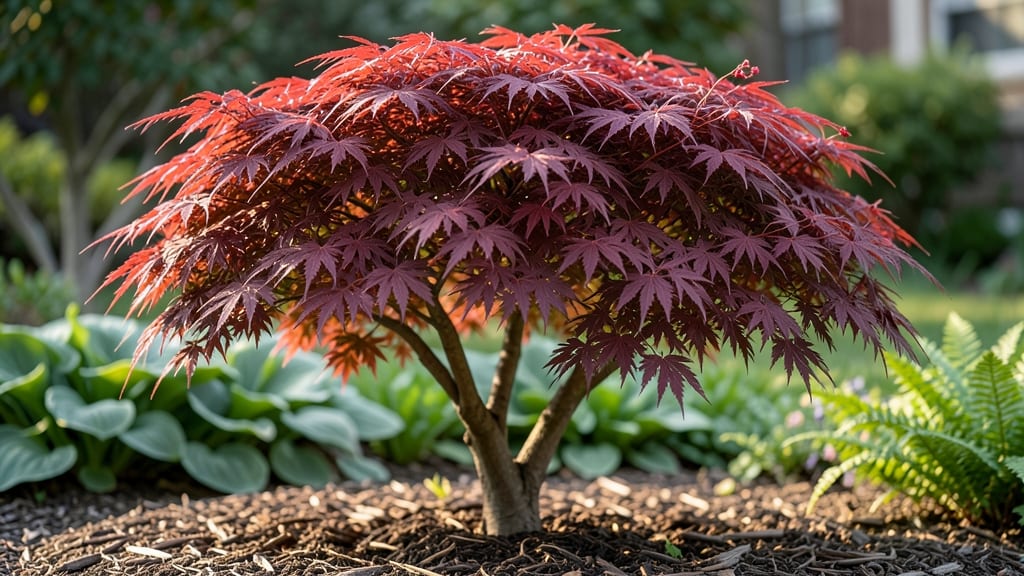
The red Japanese laceleaf maple transforms your yard into a living firework display—deep red leaves in summer that blaze brighter in fall. 🌿 I planted mine last spring, and by July, it was already stealing attention with its compact, rounded shape and velvety foliage that never loses its vibrant hue, even in winter.
This tree thrives where others falter: it handles Zone 5 winters without flinching and grows in full sun or partial shade. The secret to its drama? Well-draining soil with a touch of organic matter—think 3 parts soil, 1 part compost—and consistent moisture during its first two years.
Once established, it’s drought-tolerant, making it a low-maintenance star.
By autumn, your yard will be the talk of the neighborhood as leaves turn crimson and orange, lasting weeks longer than most maples.
Prune in late winter to shape it, and watch it reward you with 3-4 seasons of color—spring’s fresh green, summer’s deep red, and fall’s fiery finale.
Perfect for small yards, container gardens, or as a striking focal point near patios. Here’s how to keep yours thriving through every season—no green thumb required.
📚 In This Guide
- What you need
- Instructions
- Tips and common mistakes
- Wrapping up and next steps
What you need
- ● Red Japanese Laceleaf Maple (Acer palmatum 'Atropurpureum'): A 1- to 3-gallon container-grown specimen (or bare-root if available). Pro tip: 💡 Opt for a locally sourced plant to ensure cold hardiness!
- ○ High-quality potting soil or native soil mix: 50% native soil + 50% organic matter (compost or peat moss). Optional: Add a slow-release fertilizer (10-10-10 ratio) for extra vigor.
- ● Organic mulch: 2–3 inches of shredded bark or wood chips to retain moisture and regulate soil temperature.
- ● Garden trowel or spade: For digging holes (1.5x wider than the root ball).
- ● Garden gloves: Protect your hands from thorns and rough bark!
- ● Watering can or hose with a gentle spray nozzle: Avoid blasting roots.
- ○ Pruning shears: For shaping (sterilize with rubbing alcohol first). Optional: A small hand saw for stubborn branches.
- ○ Staking kit (optional): Use 2–3 stakes and soft ties if planting in windy areas.
- ● Sunlight: Partial shade (4–6 hours of dappled sun daily). Avoid harsh afternoon sun in hot climates.
- ● Well-draining soil: pH 5.0–6.5. Amend heavy clay with perlite or sand if needed.
- ● Cold-hardy zone: Plant in Zones 5–8. ✨ Pro tip: In colder zones, choose a sheltered spot to protect from winter winds!
How to plant and care for a stunning red Japanese laceleaf maple
This elegant tree delivers year-round interest with minimal fuss—here's how to set it up for decades of fiery fall color.
🪴 Step 1: Choose the Perfect Planting Location
The laceleaf maple thrives in full sun to partial shade, but its vibrant red foliage develops best with at least 4-6 hours of direct sunlight daily. I always scout the site first—look for areas with dappled shade from nearby trees, which protects delicate new growth while still allowing autumn color to shine.
This tree has shallow roots, so avoid planting near sidewalks, foundations, or other structures that could interfere with its spread. The ideal spot offers 6-8 feet of clearance all around for mature growth. Test the soil pH before planting—laceleaf maples prefer slightly acidic to neutral (6.1-7.5)—and amend heavy clay with compost to improve drainage.
🌱 Step 2: Dig and Plant at the Right Depth
Dig a hole twice as wide as the root ball but no deeper—planting too low suffocates roots and invites rot. Loosen the sides of the hole with a shovel to encourage root expansion. When you remove the tree from its container, gently tease apart any circling roots with your fingers—this prevents girdling as the tree matures.
Position the tree so the top of the root ball sits 1-2 inches above ground level. The flare where roots meet the trunk should be visible above the soil line. Backfill with native soil mixed with half the original container's volume of compost to give it a nutrient boost. Water deeply to settle the soil and eliminate air pockets.
💧 Step 3: Water Deeply and Mulch Properly
After planting, water 2-3 gallons daily for the first 2 weeks to help roots establish. You'll know you're doing it right when water drains through the hole and the surrounding soil feels moist 6 inches down. Overwatering now causes more damage than underwatering—let the top inch dry between waterings after the initial phase.
Apply 2-3 inches of mulch (wood chips or shredded bark) around the base, keeping it 6 inches away from the trunk to prevent rot. This mulch ring protects roots from temperature swings and retains moisture. Refresh the mulch annually in early spring—never let it pile against the trunk where it can trap moisture and invite pests.
☀️ Step 4: Prune for Structure and Health
Wait until late winter or early spring before your tree's first flush of growth to prune. Remove any dead, crossing, or rubbing branches first—these compete for energy and create entry points for disease. Use clean, sharp pruners to make cuts just outside the branch collar, the swollen area where the branch meets the trunk.
For young trees, focus on establishing an open center by removing branches that grow inward. Mature laceleaf maples develop their signature lace-like foliage naturally, so minimal pruning maintains their airy form. Never remove more than 25% of the canopy in one season—this stresses the tree and reduces its ability to produce vibrant fall color.
⏰ Step 5: Fertilize and Monitor Year-Round
Apply a balanced, slow-release fertilizer (10-10-10) in early spring when new growth appears. Work it into the soil 6-12 inches from the trunk—never apply directly against the bark. This feeding supports the tree's energy needs for leaf production and root expansion. In fall, switch to an acid-loving plant fertilizer to enhance those fiery red tones.
Watch for signs of stress like yellowing leaves or stunted growth—these often signal compacted soil or insufficient water. Japanese laceleaf maples are generally pest-free, but inspect for lace bugs or spider mites in hot, dry summers. A strong spray of water usually dislodges them before they cause damage. With proper care, your tree will reward you with 10-15 years of dramatic seasonal color.
Tips & tricks for perfect red Japanese laceleaf maple planting
Here's what I learned after planting and nurturing these stunning trees for years—details that make all the difference in achieving that showstopping fall color.
Sunlight Strategy: While the 4-6 hours of direct sunlight in Step 1 is ideal, I've found that morning sun (east-facing exposure) produces the most vibrant red foliage. The cooler morning light enhances the anthocyanins that create those fiery colors, while harsh afternoon sun can sometimes bleach the leaves. If your location only gets afternoon sun, consider planting near a reflective surface like a light-colored wall to maximize light exposure.
Root Ball Preparation: The instructions mention teasing apart circling roots, but I take this a step further by soaking the root ball in water for 10-15 minutes before planting. This helps hydrate the roots and reduces transplant shock. For container-grown trees, I also trim any overly long roots with clean pruners—this encourages new root growth without overwhelming the tree. Remember, the goal is to preserve the root structure while preventing girdling that could strangle the tree as it matures.
Mulching Mastery: The 2-3 inches of mulch in Step 3 is perfect, but here's the secret: use a mulch with a slightly acidic pH (like pine bark or cedar chips) to complement the tree's natural soil preferences. I also create a small well around the trunk when applying mulch—this helps direct water straight to the roots during those critical first two weeks. Just be vigilant about keeping the mulch 6 inches away from the trunk to prevent rot and pest issues.
Pruning Precision: When pruning in late winter as mentioned in Step 4, I always make my cuts just outside the branch collar but at a slight downward angle. This helps water run off the cut and prevents rot. For young trees, I mark branches to remove with a piece of tape before making cuts—this helps me visualize the open center structure we're creating. And remember, the 25% canopy rule is strict: removing more than that can shock the tree and reduce its ability to produce those stunning fall colors.
Pro Tips for Red Japanese Laceleaf Maple
- Here's what I learned after planting and nurturing these stunning trees for years—details that make all the difference in achieving that showstopping fall color.
- Sunlight Strategy: While the 4-6 hours of direct sunlight in Step 1 is ideal, I've found that morning sun (east-facing exposure) produces the most vibrant red foliage.
- Root Ball Preparation: The instructions mention teasing apart circling roots, but I take this a step further by soaking the root ball in water for 10-15 minutes before planting.
Frequently asked questions
Got questions about growing and caring for your red Japanese laceleaf maple? Here are some of the most common ones—plus expert tips to keep your tree thriving!
How cold-hardy is the red Japanese laceleaf maple?
The red Japanese laceleaf maple (Acer palmatum 'Atropurpureum') is one of the toughest in its family, surviving USDA zones 5-9. Its cold tolerance makes it perfect for northern climates, but young trees may need winter protection (like burlap wraps) in their first few years to prevent sunscald.
When does it turn red, and how long does the color last?
Color peaks in late September to October, with vibrant reds that deepen into purples as fall progresses. Unlike some maples, its foliage holds color well into November—sometimes even longer in cooler climates. Early frosts can intensify the hues, so don’t prune too late in the season!
Can I grow it in full sun or shade?
While it loves full sun (6+ hours/day) for the best color, it tolerates partial shade (4-6 hours), especially in hotter zones. Avoid deep shade—it may produce sparse foliage and duller fall colors. Mature trees can handle light afternoon shade in sweltering climates.
Why are the leaves turning brown or yellow prematurely?
Premature browning often signals stress from overwatering, underwatering, or root issues. Check soil moisture (it should be evenly moist but well-draining), and ensure the tree isn’t planted in low-lying areas where roots sit in water. Yellowing? Test for nutrient deficiencies (iron/manganese) or pests like spider mites.
How fast does it grow, and when can I expect fall color?
Growth is moderate (12-18 inches/year), so expect a 6-foot tree in about 5 years. Fall color typically appears after 3-5 years of establishment, with peak vibrancy in mature trees (10+ years). Patience pays off—young trees focus energy on root growth first!
Are there dwarf varieties for small yards?
Yes! Consider 'Bloodgood' (compact, 15-20 ft) or 'Dragon’s Blood' (dwarf, 8-10 ft). Both retain the laceleaf texture and fiery reds. Just ensure they get adequate airflow to prevent fungal issues in tight spaces.
Wrapping up and next steps
The Red Japanese Laceleaf Maple is a stunning, low-maintenance shrub that brings vibrant color and texture to any landscape—especially in colder climates. 🍁 With its fiery red foliage, delicate lace-like leaves, and cold-hardy nature, it’s a showstopper that thrives with minimal fuss.
Whether you’re a seasoned gardener or just starting out, this plant is a must-have for adding drama and beauty to your outdoor space.
Ready to transform your yard? Start by choosing a sunny spot, gathering your supplies, and planting with confidence—your future fiery fall display awaits! 🌟