
Pests
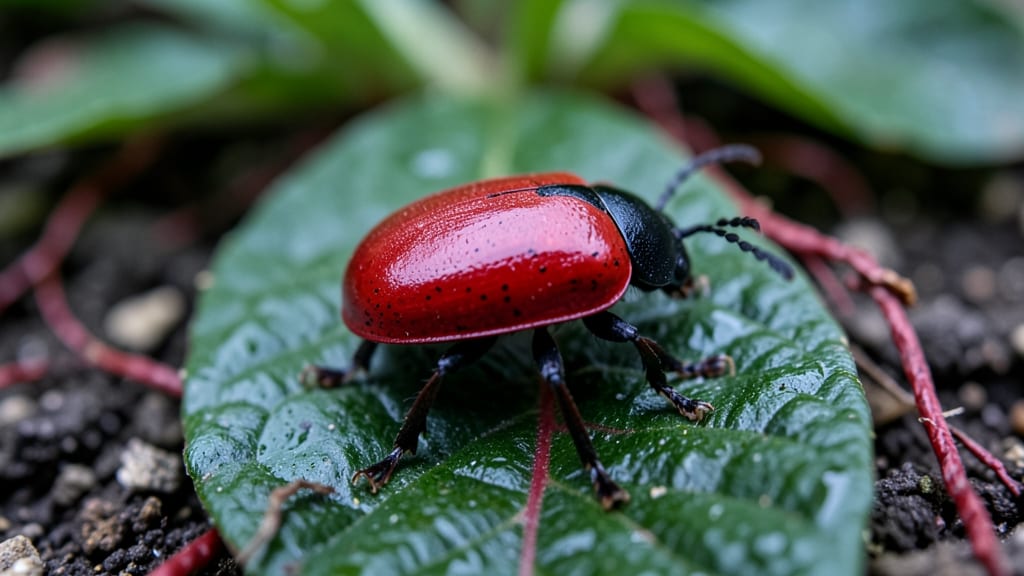
Those bright red beetles devouring your lily leaves? 🌿 The red leaf lily beetle turns vibrant foliage into lace in days—but I’ve stopped them cold using just three organic methods that work without harming bees or butterflies. No more skeletonized leaves or wilting blooms.
These beetles chew through leaves, stems, and even bulbs, leaving behind a sticky mess that invites mold. The adults are easy to spot—glossy red bodies with black legs—but their orange larvae hide under leaves, doing just as much damage. The key is acting fast before they multiply.
You’ll start by handpicking adults (they’re slow on water) and using insecticidal soap on clusters. For stubborn infestations, neem oil disrupts their lifecycle, while parasitic wasps (like Tetrastichus setifer) do the heavy lifting naturally. Results show up in 3-5 days of consistent treatment.
Prevention is just as simple: plant garlic or chives nearby, monitor daily, and remove eggs (tiny yellow clusters) by hand. With these steps, your lilies stay lush—and the beetles get the boot for good.
The Hidden Triggers Behind Attacks
If your prized lilies are suddenly covered in bright red beetles or skeletonized leaves, you’re not dealing with a random pest—you’re witnessing a targeted invasion by the red lily leaf beetle (Lilioceris lilii).
This invasive species doesn’t just appear out of nowhere; its arrival is tied to specific ecological and human-driven factors. Understanding these triggers is the first step to stopping the spread before it’s too late.
The red lily leaf beetle isn’t originally from North America—it’s a European native that hitched rides on imported plants. Its accidental introduction through international plant shipments (especially lilies, fritillaries, and tulips) has turned it into a major invasive threat. Here’s why it thrives once it lands:
- No natural predators: Unlike its European homeland, North American ecosystems lack birds, parasitic wasps, or fungi that keep its populations in check.
- Climate compatibility: The beetle thrives in temperate zones (USDA Zones 5–8), where winters aren’t cold enough to kill eggs and summers provide ideal feeding conditions.
- Human movement of host plants: Gardeners unknowingly spread infestations by purchasing or trading infected bulbs/foliage. One beetle can lay 800–1,000 eggs in a season!
Actionable tip: 🔍 Inspect new plants for adults (red with black spots) or yellow eggs clustered on undersides of leaves. Quarantine suspicious shipments for 2 weeks.
This beetle has a one-plant diet: members of the Liliaceae family, including:
- True lilies (Lilium spp.) – especially Asiatic, Oriental, and Martagon hybrids.
- Fritillaries (Fritillaria spp.) – a favorite host.
- Tulips, hyacinths, and even alliums (though less preferred).
The beetle’s chemical cues detect volatile organic compounds (VOCs) emitted by these plants, acting like a dinner bell. Once it lands, the cycle accelerates:
- 🐞 Adults feed on leaves, creating skeletonized patterns (only veins remain).
- 🥚 Females lay eggs in clusters on leaf undersides (yellow, then turn black).
- 🐛 Larvae hatch in 5–10 days and devour foliage, then pupate in soil.
- 🔄 New adults emerge in 3–4 weeks, ready to repeat the cycle.
Pro tip: 🌡️ Monitor plant stress—drought or nutrient-deficient lilies emit stronger VOCs, attracting more beetles. Keep soil moist and fertilize with balanced 10-10-10 in spring.
Temperature and moisture play a critical role in beetle population explosions. Research shows:
| Condition | Impact on Beetles | Your Defense |
|---|---|---|
| Mild winters (above 20°F) | Eggs and pupae survive, leading to earlier spring hatches. | ❄️ Apply row covers in late fall to smother overwintering pupae. |
| Warm, dry springs (60–80°F) | Accelerates larval growth—one generation can complete in 30 days. | 💧 Water deeply at soil level to deter adults (they avoid wet foliage). |
| Humid summers | Fungi (like Beauveria bassiana) that could kill beetles struggle to spread. | 🍄 Encourage native predatory fungi by avoiding chemical sprays. |
Key insight: Beetles peak in June–July—this is when preemptive action (like handpicking or neem oil) works best.
By cutting off these triggers—displacement, host plant availability, and favorable weather—you can disrupt the beetle’s life cycle before it spirals out of control. The next step? Learn how to fight back without chemicals.
Quick Fixes for Lily Leaf Invaders
Now that you know why those bright red beetles and skeletonized leaves are showing up, let’s tackle them head-on with practical, organic solutions tailored to the problem. The key is acting fast—these pests multiply quickly, but with the right approach, you can regain control of your garden without harsh chemicals.
If you catch the beetles or their larvae within the first few weeks, you can often eliminate them manually before they become a full-blown infestation.
- 👨🍳 Handpick Adult Beetles
- When: Early morning or late evening when they’re sluggish (they love basking in the sun).
- How: Wear gloves and drop them into a soapy water bucket (1 tbsp dish soap + water). Never release them elsewhere—they’ll just reinfest another plant.
- Pro Tip: 💡 Check under leaves, along stems, and on the soil surface—they camouflage well!
- 🐛 Remove Larvae from Soil
- Larvae burrow into the ground, making them tricky to spot. Sift through the top 2–3 inches of soil under infested plants with a small hand rake or fork.
- Drop larvae into soapy water too—they’re orange and worm-like, about ½ inch long.
- 🌿 Isolate Infested Plants
- Move heavily damaged plants at least 10 feet away from healthy lilies. If possible, quarantine them in a black plastic bag for 3–5 days to suffocate any hidden pests.
Once the infestation grows, natural sprays can disrupt their life cycle without harming your garden’s ecosystem.
🔪 Neem Oil Spray (Best for All Stages)
Neem oil smothers eggs, repels adults, and kills larvae on contact. It’s safe for pets and wildlife when used correctly.
| Step | Action |
|---|---|
| 🌿 Mix | 1 tbsp neem oil + 1 tsp mild liquid soap + 1 quart water |
| 💦 Spray | Coat both sides of leaves, stems, and soil (larvae hide underground). |
| ⏰ Timing | Apply every 5–7 days for 3–4 weeks, especially after rain (it washes off). |
| 🌡️ Temperature | Only use when temps are above 50°F—cold makes it ineffective. |
✨ Pro Tip: 🌡️ For extra potency, add a few drops of garlic oil (natural insect repellent).
🥘 Diatomaceous Earth (DE) for Larvae
Food-grade DE is a silica powder that dries out larvae and eggs by damaging their exoskeletons.
- How to Use:
- Lightly dust soil around plants and under leaves (avoid over-applying—it can harm beneficial insects).
- Reapply after rain or watering (it loses effectiveness when wet).
- Best for: Larvae hiding in the soil—not as effective on adult beetles.
⚠️ Warning: Wear a dust mask when applying to avoid inhaling the fine powder.
🍎 Kaolin Clay (Physical Barrier)
This white, chalky clay creates a protective film that repels beetles and disrupts their feeding.
- How to Mix:
- 1 cup kaolin clay + 1 gallon water + 1 tsp horticultural oil (optional, for stickiness).
- How to Apply:
- Spray evenly on leaves and stems (avoid flowers if you want pollinators).
- Reapply every 7–10 days or after rain.
💡 Pro Tip: 🎯 Test on a few leaves first—some plants (like ferns) may develop white spots from the clay.
Once you’ve kicked the beetles out, strategic prevention ensures they don’t return.
- 🌱 Plant Smart
- Interplant lilies with garlic, chives, or lavender—their strong scents deter beetles.
- Avoid planting lilies near other host plants (like fritillaries or tulips), which attract more pests.
- 🌿 Mulch with Caution
- Use straw or pine needles (avoid wood chips)—some mulches can harbor beetle eggs over winter.
- 🕰️ Year-Round Monitoring
- Check plants weekly from late spring to fall (peak beetle season).
- Clean up debris in autumn—beetles overwinter in leaf litter.
- 🛡️ Beneficial Insects
- Encourage ladybugs, lacewings, and ground beetles—they eat red lily beetle larvae.
- Plant dill, fennel, or yarrow to attract their natural predators.
If your garden is heavily infested (50+ beetles or widespread larval damage), consider:
- 🐝 Introducing parasitic wasps (like Tetrastichus setifer)—they specifically target red lily beetles and are 100% organic.
- 🌱 Consulting a local extension office for region-specific organic treatments.
Final Reminder: 🎯 Speed + consistency are your best tools. A little effort now saves months of frustration later!
Frequently asked questions
How can I tell if my lilies have red leaf beetle larvae instead of adults?
Larvae look like small, orange, worm-like grubs about ½ inch long with a shiny skin. They hide under leaves or burrow into soil, while adults are bright red with black spots and feed on leaf surfaces. Check both sides of leaves and the soil surface for larvae.
Will neem oil harm my lilies or other garden plants?
Neem oil is generally safe for lilies when used correctly, but it can cause leaf burn if applied too heavily or in direct sunlight. Always mix it with water and a mild soap (like castile soap) to help it stick. Test on a small leaf first and avoid spraying flowers to protect pollinators.
Can I use insecticidal soap on red leaf beetles?
Yes! Insecticidal soap works well on adult beetles and larvae by breaking down their protective wax layer. Mix 1-2 tablespoons of soap per quart of water and spray directly on the pests. Reapply every 3-5 days since it washes off with rain. Avoid spraying when bees are active.
How do I know if my red leaf beetle problem is severe enough for professional help?
If you see 50+ beetles, widespread skeletonized leaves, or damage to bulbs and stems, it’s time to escalate. Look for yellow egg clusters on leaf undersides too. At this stage, consider parasitic wasps or consulting your local cooperative extension office for targeted organic solutions.
Why do red leaf beetles seem to disappear in winter?
These beetles overwinter as pupae or adults in soil or leaf litter. Cold temperatures (below 20°F) can kill some stages, but mild winters let them survive. They re-emerge in spring to start feeding again. That’s why fall cleanup (removing debris) is key to prevention.