
Leaf Blower
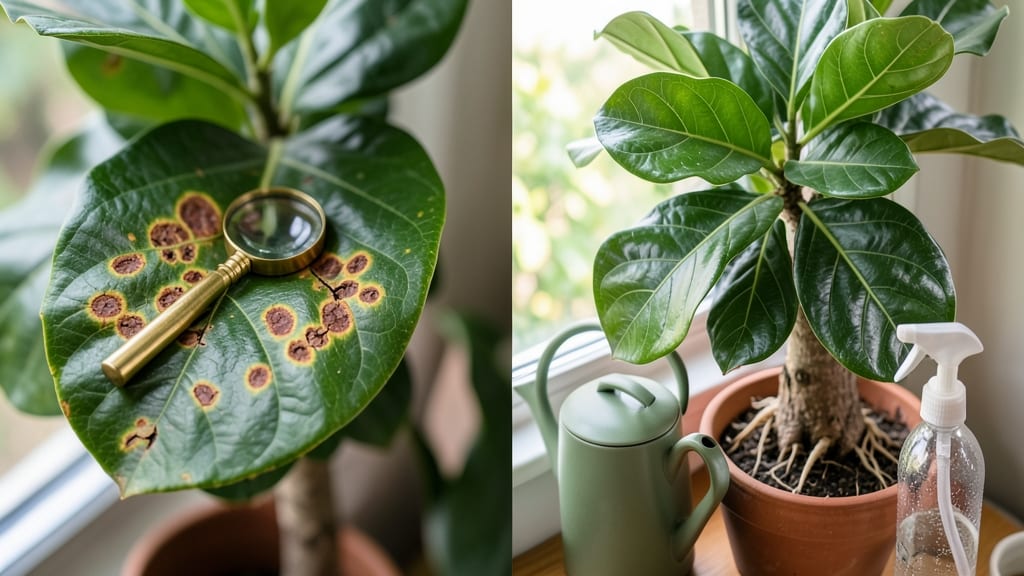
Red spots on your fiddle leaf fig aren’t just ugly—they’re a cry for help. 🌿 I’ve nursed back more than my share of spotted leaves, and the key is acting fast before the fungus spreads. Those crimson splotches? Often anthracnose, a stubborn but beatable foe with the right care.
The spots start small, like scattered freckles, then darken and ooze if you’re unlucky. Overhead watering, poor airflow, or damp leaves turn your plant into a fungal buffet.
The good news? With 3 days of targeted treatment, you can stop the spread and nurse your fig back to glossy perfection.
First, isolate the plant and wipe leaves with a 70% isopropyl alcohol solution—it kills spores on contact. Then adjust care: water only at the base, boost airflow with a small fan, and avoid soggy soil.
Within 72 hours, new growth should emerge spot-free, and your leaves will regain that signature velvety sheen.
Prevention is easier than cleanup: neem oil sprays every 2 weeks keep fungus at bay, and a humidifier (set to 40-50%) mimics its tropical home. Trust me, your fiddle leaf fig will thank you with bold, unblemished foliage by next week.
Root Causes of Leaf Discoloration
When your fiddle leaf fig starts showing red or brown spots, it’s rarely just a random cosmetic issue—it’s a cry for help from the plant. Understanding the why behind these marks is the first step to restoring your fig’s lush, green glory.
Let’s break down the most common culprits, backed by science, so you can diagnose and treat the problem like a pro.
Fiddle leaf figs are tropical plants, but that doesn’t mean they love soggy roots. When soil stays too wet for too long, it creates the perfect breeding ground for fungal infections like Phytophthora or Pythium. These pathogens thrive in anaerobic (oxygen-deprived) conditions, leading to:
- Reddish-brown spots that spread quickly, often with a water-soaked appearance.
- Yellowing leaves (a sign of root stress) before spots even appear.
- Mushy stems or blackened roots when the issue is severe.
Why it happens: Fusarium and other water-loving fungi release enzymes that break down cell walls, causing tissue to rot. The red spotting is your plant’s immune response—essentially, it’s bleeding as it fights back.
💡 Pro Tip: Stick your finger 2 inches into the soil—if it’s damp, wait. If it’s bone-dry, you’ve likely underwatered (another stressor). Fiddle leaf figs prefer 60-70% humidity and soil that dries out 1-2 inches top-down between waterings.
Fungal spores are everywhere, but they only cause trouble when conditions are right. For fiddle leaf figs, the most common offenders are:
- Leaf Spot (Cercospora or Septoria): Tiny red or brown spots with yellow halos, often appearing first on older leaves.
- Powdery Mildew (Erysiphe): White, powdery patches that can turn reddish-brown as they age (though usually grayish-white first).
- Anthracnose: Dark, sunken spots that ooze when wet, common in humid climates.
Why it happens: Fungi like Cercospora release toxins that disrupt the plant’s chlorophyll production, leading to discoloration. High humidity (above 70%) and poor air circulation create a greenhouse effect, trapping moisture on leaves and inviting spores to land and multiply.
🔥 Key Sign: Check the underside of leaves—fungal spots often start there, where spores land and germinate first.
Fiddle leaf figs crave bright, indirect light, but direct sunlight can turn their leaves into lobster traps—red, crispy, and sad. When UV rays hit leaves too intensely, they trigger:
- Red or purple splotches (like a bad sunburn on human skin).
- Dry, papery edges where cells die from excessive heat.
- Leaf scorch (brown, crunchy patches) if stress is prolonged.
Why it happens: Chlorophyll is sensitive to photoinhibition, where excess light damages the plant’s energy-producing machinery. The red spots are a protective pigment called anthocyanin, which the plant produces to shield itself from further damage—but it’s a last-resort move.
🌡️ Quick Fix: Move your fig to a spot with morning sun + afternoon shade (e.g., near an east-facing window). If outdoors, use a 30-50% shade cloth to filter harsh rays.
Not all red spots are from fungi or water—some are bug bites. Common pests like spider mites, aphids, or scale insects inject toxins or scrape at leaf tissue, leaving:
- Reddish stippling (tiny dots from mites feeding).
- Sticky residue (honeydew from aphids, which can attract sooty mold).
- Yellowing between veins (a sign of sap-sucking pests).
Why it happens: Pests don’t just eat—they inject saliva that disrupts the plant’s vascular system. The red spots are often the plant’s immune response, trying to isolate the damaged area. Left unchecked, pests weaken the fig, making it more susceptible to fungal infections.
🕵️♂️ Detective Work: Flip leaves over—webbing (mites), white fluff (mealybugs), or black specks (scale) are dead giveaways.
Too much of a good thing can turn your fiddle leaf fig’s leaves into chemical war zones. Over-fertilizing—especially with high-nitrogen or salt-heavy fertilizers—leads to:
- Reddish-brown leaf tips or edges (a sign of fertilizer burn).
- Crispy, curled leaves as cells dry out from salt buildup.
- Stunted growth (the plant is too busy detoxing to thrive).
Why it happens: Excess salts in the soil disrupt osmosis, preventing roots from absorbing water. The plant’s response? It shuts down damaged areas, leading to necrotic (dead) spots. Reddish hues appear when anthocyanins flood the tissue as a stress signal.
✨ Prevention Tip: Always water thoroughly after fertilizing to rinse excess salts from the root zone. Use a balanced, organic fertilizer (like 5-5-5) and dilute it to half-strength if your fig is new to feeding.
Quick Fixes for Fiddle Leaf Fig Spots
If your fiddle leaf fig is showing up with red or brown spots, don’t panic—most causes are treatable with the right care. Below, we break down the cause-specific fixes to restore your plant’s health in days. Prevention tips are included to keep those pesky spots away for good!
If the spots are dark red, brown, or yellow with yellow halos, fungal leaf spot is likely the culprit. This common issue thrives in damp, humid conditions.
🔥 Step 1: Isolate the Plant
Move your fiddle leaf fig away from other houseplants to prevent the fungus from spreading. Fungal spores are contagious!
🍳 Step 2: Prune the Affected Leaves
Use sterilized scissors or pruning shears to snip off leaves with severe spots. Dispose of them in the trash (not the compost)—fungus can survive in compost piles.
👨🍳 Step 3: Apply a Fungicide Spray
Mix a natural fungicide like:
- 1 part hydrogen peroxide (3%) + 9 parts water – Spray lightly on affected leaves.
- Neem oil solution (1 tsp neem oil + 1 tsp mild soap + 1 quart water) – Spray every 3–5 days until spots fade.
- Copper fungicide (store-bought, like Bonide Copper Fungicide) – Follow label instructions.
⚠️ Warning: Always test sprays on a small leaf first to avoid chemical burns.
🥘 Step 4: Improve Airflow & Reduce Humidity
Fungal spots love stagnant, moist air. Boost airflow by:
- Using a small fan (set to low) near the plant for 1–2 hours daily.
- Spacing plants at least 12 inches apart to allow air circulation.
- Watering only when the top 1–2 inches of soil are dry (stick your finger in to check!).
💡 Pro Tip: Wipe leaves with a damp microfiber cloth every few days to remove dust and reduce fungal growth.
If spots are dry, crunchy, or white (like sunburn), your fiddle leaf fig is getting too much direct sunlight.
🔪 Step 1: Move to Indirect Light
Relocate your plant to a spot with bright, indirect light (e.g., near an east-facing window or a few feet from a south-facing one). Avoid harsh afternoon sun.
⏰ Step 2: Rotate the Plant Weekly
Fiddle leaf figs grow toward light, which can cause uneven exposure. Rotate the pot ¼ turn every week to ensure all leaves get equal light.
🌡️ Step 3: Monitor Temperature
Keep your plant in a stable environment (65–75°F). Avoid placing it near:
- Heaters or vents
- Drafty windows or doors
- Direct AC airflow
✨ Pro Tip: If moving the plant isn’t an option, use a light sheer curtain to diffuse harsh sunlight.
If spots appear mushy, black, or accompanied by yellowing leaves and wilting, root rot may be the issue—often caused by overwatering.
🚰 Step 1: Check the Soil Moisture
Stick your finger 1–2 inches into the soil:
- If it’s damp or soggy, hold off on watering.
- If it’s dry, water thoroughly—but only when needed.
Use a well-draining potting mix (add perlite or orchid bark to improve aeration).
🌱 Step 2: Repot if Necessary
If the roots smell rotten or mushy when you check:
- Remove the plant from its pot and trim away black, mushy roots with sterilized scissors.
- Repot in fresh, dry soil and a pot with drainage holes.
- Avoid watering for 5–7 days to let roots recover.
💡 Pro Tip: Use a moisture meter to avoid overwatering—fiddle leaf figs prefer slightly dry soil!
🍃 Step 3: Adjust Watering Habits
Water only when:
- The top 2–3 inches of soil are dry.
- Your plant’s leaves feel lightweight (not heavy from excess water).
Empty the saucer under the pot 30 minutes after watering to prevent root suffocation.
If spots are tiny, clustered, or accompanied by webbing or sticky residue, pests may be feeding on your plant.
🕷️ Step 1: Identify the Pest
Common culprits:
- Spider mites – Tiny red/yellow dots, webbing on undersides of leaves.
- Mealybugs – Cottony white clusters in leaf crevices.
- Scale – Brown/brownish bumps on stems or leaves.
🧼 Step 2: Clean Infested Areas
Use a soft cloth dipped in rubbing alcohol (70% isopropyl) or soapy water to wipe off pests. For stubborn infestations:
- Spray with neem oil solution (1 tsp neem oil + 1 tsp soap + 1 quart water).
- Use an insecticidal soap (follow label instructions).
✨ Pro Tip: Isolate the plant and quarantine new plants for 2 weeks to prevent reinfestation.
🌿 Step 3: Encourage Beneficial Insects
Release ladybugs or predatory mites (available at garden centers) to naturally control pests. Keep your plant healthy to boost its resistance!
Keep your fiddle leaf fig spot-free with these long-term habits:
| Issue | Prevention Tip |
|---|---|
| Fungal spots | Water in the morning (not evening) so leaves dry quickly. |
| Sunburn | Use sheer curtains to filter direct sunlight. |
| Overwatering | Use a self-watering pot or moisture meter. |
| Pests | Wipe leaves monthly with neem oil as a preventive spray. |