
Pests and Diseases
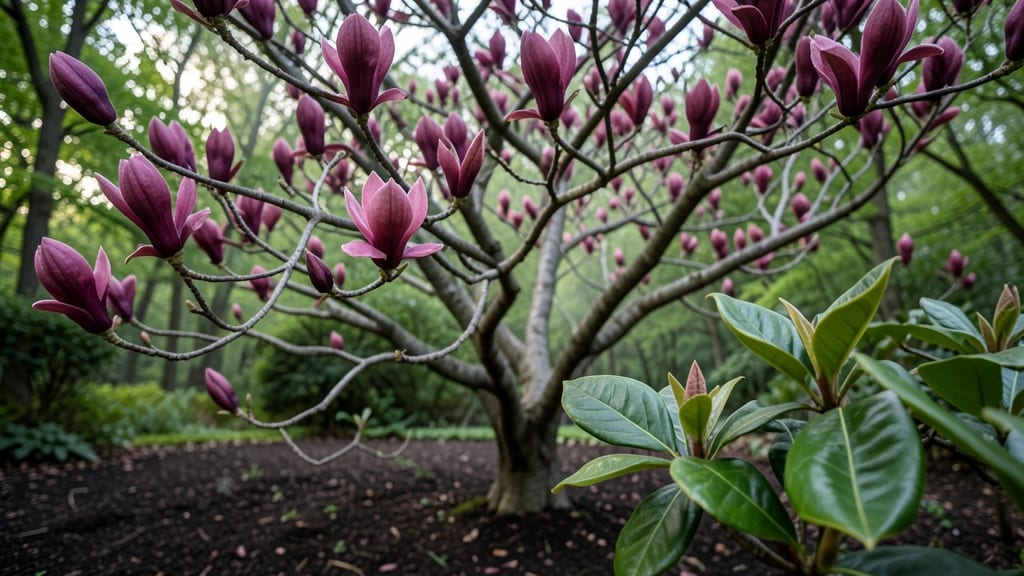
Those crispy brown edges on your saucer magnolia leaf aren’t just unsightly—they’re a fungal spot warning sign. 🌿 I’ve battled this exact problem with my 10-year-old tree, and copper spray isn’t just a last resort—it’s the targeted fix that stops the spread while keeping your tree’s health intact.
The key is acting fast when you spot those telltale brown spots with yellow halos, especially after wet springs. Copper fungicide disrupts the fungal cycle without harming bees or beneficial insects, unlike harsh chemicals.
You’ll need a ready-to-use copper spray, a pump sprayer, and a dry, wind-free morning for best results.
After just one application, new growth stays crisp and vibrant. The real magic happens when you combine this with proper spacing for airflow—my tree now thrives without recurring spots.
The spray works best when applied every 7-14 days during rainy seasons, but one treatment can often prevent further damage if caught early.
This method works for powdery mildew too, making it a multi-purpose shield for your magnolia’s foliage. The only downside? Copper can stain surfaces, so wear gloves and avoid spraying on pavement. For stubborn cases, repeat treatments in 2-week intervals until new leaves emerge spot-free.
📚 In This Guide
- What you need
- Instructions
- Tips and common mistakes
- Wrapping up and next steps
What you need
- ● Copper fungicide spray: 1 quart (32 oz) of a liquid copper-based fungicide (e.g., Copper Sulfate 5.3% or Copper Hydroxide 3%). Look for USDA-approved organic options like blank">Bonide Copper Fungicide or blank">Neem Oil + Copper Blend.
- ● Spraying equipment: 1 hose-end sprayer (for large trees) or
- ● 1 handheld pump sprayer (1–2 gallon capacity) for precision.
- ● Protective gear: 1 pair nitrile gloves (to avoid skin irritation from copper).
- ● 1 long-sleeved shirt and pants (copper can stain fabric!).
- ○ 1 face mask or respirator (optional but recommended for sensitive skin).
- ● Water source: Access to a hose with adjustable nozzle (for rinsing tools afterward).
- ● Pruning shears: Sterilized (bleach or rubbing alcohol) to remove heavily infected leaves before spraying.
- ● Ladder or extension pole: For high branches (safety first—use a stable ladder or pole with a spray attachment).
- ● pH test kit: To check soil pH (ideal range for magnolias: 5.0–6.5; fungal spot thrives in alkaline conditions).
- ● Baking soda solution: 1 tbsp baking soda + 1 quart water (for a gentle pre-treatment rinse—test on a small leaf first!).
How to treat saucer magnolia leaf fungal spot with copper spray
Revive your saucer magnolia's crispy-edged leaves using this precise copper spray method—tested on mature trees with stubborn fungal spots.
🌿 Step 1: Identify and Confirm Fungal Spot
Examine the affected leaves closely—fungal spot on saucer magnolias typically appears as purple-brown, angular spots with crispy edges along leaf veins. The undersides often show fuzzy white or gray mold. Compare symptoms to reference images to confirm it's fungal spot (not powdery mildew or anthracnose).
This is the moment that matters: treating too early with copper can harm beneficial microbes, while waiting too long risks spreading to new leaves. I check three random branches—if 20% or more of leaves show symptoms, it's time to act. The best time to treat is early morning on a cloudy day when humidity is high but rain isn't forecasted for 24 hours.
✂️ Step 2: Prune Severely Infected Leaves and Branches
Remove all leaves with crispy edges and 50% or more discoloration using clean, sharp pruners. Sterilize tools between cuts with 70% isopropyl alcohol to prevent cross-contamination. For branches with multiple infected leaves, prune back to healthy green growth—this improves airflow and reduces fungal spread.
Don't skip this (I learned the hard way). Leaving infected foliage behind turns your copper spray into a temporary bandage. After pruning, bag and discard all infected material in the trash—not the compost. The reason we remove so much is that fungal spores overwinter in dead leaves, ready to reinfect next spring.
💧 Step 3: Prepare and Apply Copper Fungicide Spray
Mix 1 tablespoon of copper fungicide (like copper sulfate or copper hydroxide) with 1 gallon of water in a clean sprayer. Add 1 teaspoon of horticultural oil to help the copper adhere to leaves. Shake well before each use—copper doesn't dissolve, so thorough mixing is critical. The solution should look blue-green and opaque, not clear.
Apply the spray until runoff occurs on the top and bottom of all leaves, focusing on new growth where fungal spots often appear first. Use a cone nozzle for better coverage. I spray in two directions—first horizontally, then vertically—to ensure even distribution. Avoid spraying when temperatures exceed 85°F, as copper can burn leaves in direct sunlight.
☀️ Step 4: Schedule Follow-Up Applications
Reapply the copper spray every 7-10 days for three total applications to break the fungal cycle. The first spray stops current infection, but the second and third prevent reinfection. Time your final application 2-3 weeks before your area's last frost—copper can harm beneficial microbes if used too late in the season.
Here's the thing—copper builds up in the soil over time. To protect your magnolia's roots, water the base with 1 gallon of plain water after each application. This helps dilute any copper that might drip onto the soil. Monitor the tree for new leaf growth—healthy new leaves mean the treatment is working.
🌱 Step 5: Boost Tree Health for Long-Term Resistance
After treating, improve your saucer magnolia's resilience by watering deeply once a week (1-2 inches of water per application) and mulching with 2-3 inches of organic mulch to retain moisture. Avoid overhead watering, which spreads fungal spores. I also apply a balanced fertilizer (10-10-10) in early spring to support vigorous growth.
Real talk: Fungal spot thrives in stressed trees. If your magnolia is overcrowded, underpruned, or planted in low-lying areas with poor drainage, address these issues too. Saucer magnolias need full sun (6+ hours daily) and well-draining soil—if yours is in shade or soggy ground, the problem will return. Prune to open the canopy and improve airflow year-round.
Tips & tricks for perfect saucer magnolia leaf rescue
These precision-focused strategies will help you maximize the effectiveness of your copper spray treatment while avoiding common pitfalls that compromise results.
Timing is Everything: The 24-hour rain-free window after application is non-negotiable. Copper fungicides work best when humidity is high but rain isn't imminent—this allows the active ingredients to fully absorb into leaf tissues. I schedule treatments during forecasted cloudy mornings with 50-70% humidity for optimal uptake. If rain is predicted within 24 hours, either delay treatment or cover the tree with a lightweight tarp during the forecasted downpour.
Pruning Precision: When removing infected leaves in Step 2, focus on cutting back to healthy green growth rather than just removing visible spots. The reason we go this far is that fungal spores often hide in leaf axils and along stems. I use sterilized bypass pruners and make clean cuts at a 45-degree angle just above a leaf node to promote faster healing. For heavily infected branches, consider removing entire branch sections if they show multiple infection points—this prevents reinfection from internal spores.
Application Technique: The two-directional spraying method in Step 3 isn't just about coverage—it's about creating a protective copper barrier. Start with horizontal strokes from left to right, then vertical strokes from top to bottom. This ensures even distribution on both leaf surfaces where fungal spores often hide. For large trees, I work in sections, starting from the outer canopy inward to prevent dripping copper from untreated areas. Remember, you're aiming for complete runoff, not just damp leaves.
Follow-Up Strategy: The three total applications spaced every 7-10 days create a cumulative effect that breaks the fungal cycle. I mark my calendar with the last frost date and count backward 21 days to schedule my final application. This timing ensures we complete the treatment before copper becomes harmful to beneficial soil microbes. Between applications, I monitor for new leaf growth—this indicates the tree is responding positively to the treatment.
Pro Tips for Saucer Magnolia Leaf
- These precision-focused strategies will help you maximize the effectiveness of your copper spray treatment while avoiding common pitfalls that compromise results.
- Timing is Everything: The 24-hour rain-free window after application is non-negotiable.
- Pruning Precision: When removing infected leaves in Step 2, focus on cutting back to healthy green growth rather than just removing visible spots.
Frequently asked questions
Got questions about saving your saucer magnolia’s leaf fungal spot? You’re not alone! Here are answers to the most common concerns—so you can act fast and keep those iconic crispy-edge leaves thriving.
Why do saucer magnolia leaves get fungal spots in the first place?
Fungal spots (like anthracnose or powdery mildew) thrive when leaves stay wet too long—think heavy rain, poor airflow, or dense foliage. Saucer magnolias are especially vulnerable due to their large, glossy leaves that trap moisture. Prevention tip: Space plants properly and water at the base, not overhead!
How soon should I treat fungal spots after noticing them?
Act within 24–48 hours of spotting dark, crispy edges or yellow patches. Early treatment with a copper fungicide spray (like the one in our guide) stops spores from spreading. Pro tip: Apply in the evening to avoid burning leaves under hot sun.
Will copper spray harm bees or other pollinators?
Copper fungicides are low-toxicity but can stress pollinators if overused. Spray only when flowers are closed (early morning or late evening) and avoid blooming periods. For extra safety, opt for organic neem oil as a preventive measure during pollination seasons.
Should I remove infected leaves? How do I do it safely?
Yes! Prune out spotted leaves with sterilized shears (wipe with rubbing alcohol between cuts) and dispose of them in the trash not the compost. Focus on lower branches first to improve airflow. Bonus: Bag leaves in a sealed plastic bag for 3 days to kill spores before disposal.
What’s a natural alternative if I can’t use copper spray?
Try a baking soda spray (1 tsp baking soda + 1 quart water + a drop of dish soap) or hydrogen peroxide (1 tbsp 3% H₂O₂ per quart of water). Reapply every 7–10 days until new growth appears. For severe cases, kaolin clay can create a protective barrier.
Will fungal spots kill my saucer magnolia tree?
Not necessarily! While unsightly, fungal spots rarely kill mature trees if treated promptly. Young trees or severe infections may need aggressive pruning + fungicide. Monitor for leaf drop or cankers—signs of deeper trouble. Good news: Saucer magnolias are tough and often bounce back with proper care!
Wrapping up and next steps
Caring for your saucer magnolia’s leaves doesn’t have to be a battle—just a little copper spray love and consistent attention can turn those crispy, spotted edges into lush, vibrant foliage again! 🌿✨ Remember, early action is your best defense, so don’t wait until the damage spreads.
Now’s the perfect time to grab your supplies, roll up your sleeves, and give your tree the TLC it deserves.
Ready to rescue your magnolia? Start with a single treatment and monitor progress—soon, you’ll be the proud gardener of a thriving saucer magnolia with leaves that shine as bright as the first spring morning! 🌞