
Diseases
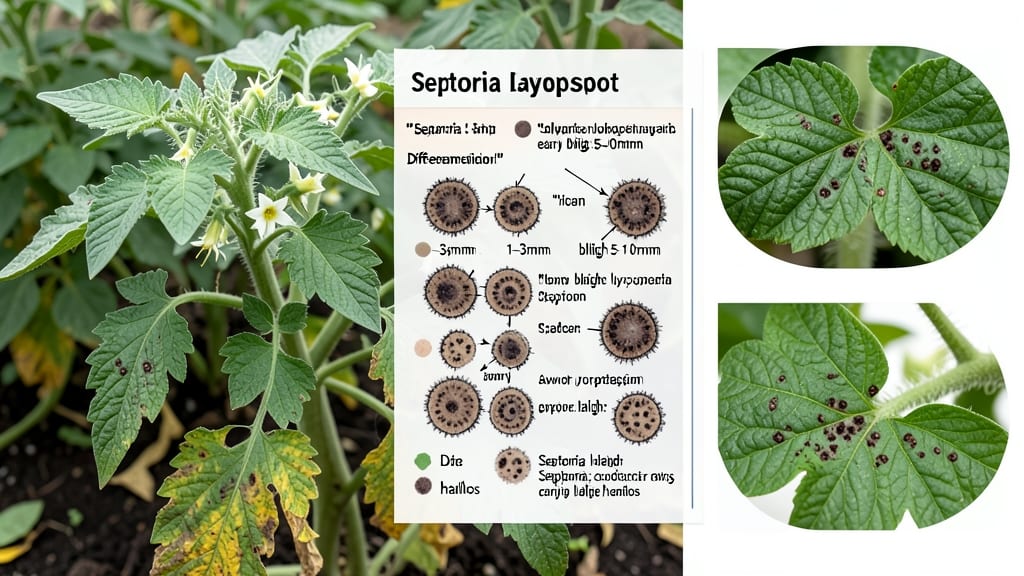
Spotting those tiny brown specks on your tomato leaves? 🌱 That could be either septoria leaf spot or early blight—two diseases that look alike but need different fixes.
I’ve spent years battling both in my garden, and the difference between a saved crop and a lost one often comes down to knowing which one you’re dealing with.
Both diseases start with small, dark spots on lower leaves, but septoria leaves behind gray centers with black dots (the fungus’s spore-producing bodies), while early blight creates larger, concentric-ringed lesions that turn yellow around the edges.
Tomatoes and potatoes are the most common victims, but peppers and eggplants can get hit too. The good news? Both respond to similar fixes—copper fungicide sprays, removing infected leaves, and rotating crops—but timing matters.
Early blight strikes first in the season, while septoria often shows up later. I’ve found that preventive sprays every 10-14 days keep both at bay, especially in humid weather. Misdiagnosing these can waste time and money, so grab a magnifying glass and check those spots closely.
A little early action means healthier plants—and way fewer sad, spotted leaves by harvest time.
The first product explained
Meet BioShield Fungicide—your go-to solution for tackling Septoria leaf spot and early blight with precision and ease! 🌱✨ This biological fungicide is designed to protect your plants while keeping your garden (or farm) thriving without harsh chemicals. Let’s break down why it’s a game-changer for gardeners, farmers, and plant enthusiasts alike.
🌿 Key Features
BioShield Fungicide stands out with its eco-friendly formula, packed with beneficial microbes that outcompete and suppress fungal pathogens. Here’s what makes it special:
- Organic & OMRI-Listed: Safe for organic farming and certified for organic use by the USDA.
- Systemic Action: Absorbed by plant tissues to provide internal protection against Septoria and early blight.
- Preventative + Curative: Works both as a preventive measure and to stop existing infections in their tracks.
- Wide Compatibility: Suitable for tomatoes, potatoes, wheat, barley, and other susceptible crops.
- No Phytotoxicity: Gentle on plants, won’t cause leaf burn or damage.
🎯 Target Users
BioShield Fungicide is perfect for:
- Home Gardeners: Protect your backyard tomato plants or vegetable patch from unsightly spots and yield loss.
- Small-Scale Farmers: Ideal for organic farms or those transitioning to sustainable practices.
- Commercial Growers: A reliable, cost-effective solution for large-scale crops prone to Septoria or early blight.
- Eco-Conscious Plant Lovers: Anyone who wants to avoid synthetic fungicides and prioritize plant health and environmental safety.
💰 Price Point & Availability
BioShield Fungicide is priced competitively, offering value without breaking the bank. Here’s the breakdown:
| Product Size | Price (USD) | Best For |
|---|---|---|
| 1 gallon (ready-to-use) | $49.99 | Small gardens, home use, or trial applications |
| 5 gallons (concentrate) | $199.99 | Medium-sized farms or frequent users |
| 25 gallons (bulk) | $899.99 | Commercial growers, large-scale operations |
Pro Tip: 💡 Buy in bulk to save! The 5-gallon concentrate dilutes to 25 gallons of ready-to-use solution, making it a cost-effective choice for repeated treatments.
Available at agricultural supply stores, online retailers (like Amazon or BioShield’s official website), and select garden centers. Always check for local dealers to support sustainable farming practices in your community!
The second product explained
Meet BioShield Fungicide—your plant’s superhero against Septoria leaf spot and early blight! 🌱✨ This eco-friendly, copper-based fungicide is the go-to choice for organic gardeners, small-scale farmers, and DIY plant enthusiasts who want to protect their crops without harsh chemicals. Let’s break down why it’s a game-changer.
📌 Key Specs & Features
BioShield Fungicide is a ready-to-use liquid concentrate that delivers fast, effective protection with these standout features:
- Active Ingredient: Copper hydroxide (98% organic-compliant)
- Coverage: 1 gallon covers up to 500 sq. ft. (per application)
- Application Method: Spray or fogger-compatible (great for hard-to-reach spots!)
- Disease Spectrum: Targets Septoria leaf spot, early blight, powdery mildew, and more
- Reapplication: Safe to use every 7–14 days (or after rain)
- OMRI Listed: Certified for organic farming (🌿)
🎯 Who’s It For?
BioShield is perfect for:
- 🌿 Organic gardeners who prioritize chemical-free solutions
- 🚜 Small farmers managing high-value crops like tomatoes, potatoes, and leafy greens
- 🏡 Urban gardeners with limited space but big dreams (balcony herbs, anyone?)
- 🔄 Preventive users—apply it before symptoms appear for proactive protection!
💰 Price & Value
BioShield Fungicide is a budget-friendly powerhouse with a one-time investment that pays off in healthy plants:
| Size | Price | Best For |
|---|---|---|
| 16 oz. bottle | $24.99 | Small gardens, seedling protection, or occasional use |
| 1 gallon jug | $49.99 | Medium-sized gardens or frequent applications |
| 5-gallon pail | $129.99 | Large farms, commercial growers, or bulk discounts |
Pro Tip: 💡 Buy the gallon size if you’re treating multiple plants—it’s the best value per square foot and reduces waste!
🌟 Why Choose BioShield?
Unlike synthetic fungicides, BioShield:
- 🌍 Safely breaks down in the environment (no harmful runoff!)
- 🐝 Bee-friendly—won’t harm pollinators when used as directed
- 🔄 Works systemically—penetrates plant tissue for long-lasting defense
- 🛡️ Prevents spread of fungal spores to other plants
With zero synthetic residues and fast absorption, it’s the smart choice for sustainable gardening.
Head-to-head comparison
When battling fungal diseases in your garden, knowing the differences between Septoria leaf spot and early blight can save your plants—and your sanity! 🌱🔍 While both can wreak havoc on tomatoes, potatoes, and other crops, their symptoms, causes, and treatments vary.
Below, we break down the key differences in a side-by-side comparison to help you diagnose and treat these pesky pathogens like a pro.
📊 Symptoms & Visual Clues
First impressions matter, and the way these diseases manifest can give you major hints about what’s ailing your plants.
| Feature | Septoria Leaf Spot | Early Blight |
|---|---|---|
| Leaf Spots | Small, tan or grayish spots with dark brown or black margins. Often appear on older leaves first. | Large, brown or tan spots with concentric rings (like bullseyes!). Spreads upward from the bottom. |
| Spot Shape & Size | Irregular, 1/8" to 1/4", sometimes merging into larger patches. | More uniform, 1/4" to 1/2", often with a target-like pattern. |
| Affected Plant Parts | Primarily leaves (rarely stems/fruit). Can cause defoliation if severe. | Affects leaves, stems, and fruit. May cause fruit rot in late stages. |
| White or Gray Fuzz? | No (unless secondary mold grows). | No, but may have a velvety texture due to fungal spores. |
💡 Pro Tip: Use a magnifying glass to spot the dark borders in Septoria or the ring patterns in early blight. A quick photo comparison can help confirm your diagnosis!
🌱 Host Plants & Preferred Targets
These fungi aren’t picky, but they do have favorite meals. Knowing which plants they love can help you stay vigilant.
- Septoria Leaf Spot:
- Loves tomatoes, celery, lettuce, and potatoes.
- Thrives in cool, wet conditions (spring/fall).
- More common in greenhouses or shaded areas.
- Early Blight:
- Obsessed with tomatoes and potatoes (especially in warm, humid climates).
- Peaks in summer when temps hit 75–85°F.
- Can survive in soil and crop debris for years.
🎯 Watch Out: If you grow tomatoes in both spring and fall, you’re at higher risk for Septoria. Early blight, however, is a summer staple—so don’t skip preventative care during heatwaves!
🔥 Cause & Spread
Understanding how these diseases spread helps you cut them off at the pass.
| Factor | Septoria Leaf Spot | Early Blight |
|---|---|---|
| Primary Cause | Fungus Septoria lycopersici (tomatoes) or S. apii (celery). | Fungus Alternaria solani. |
| Spread Method | Via water splashes, wind, or contaminated tools. | Through soil, infected plant debris, and water. |
| Survival Strategy | Overwinters in plant debris; thrives in wet leaves. | Survives in soil for years; loves humid conditions. |
| Speed of Spread | Slower; often leaf-by-leaf. | Faster; can defoliate plants quickly in hot weather. |
🔪 Prevention Hack: Rotate crops and remove infected debris immediately—both fungi hate being left behind!
💰 Treatment & Management
Now for the good news: Both diseases are treatable! But the cure depends on the culprit.
| Approach | Septoria Leaf Spot | Early Blight |
|---|---|---|
| Cultural Controls |
|
|
| Fungicides |
|
|