
Diseases
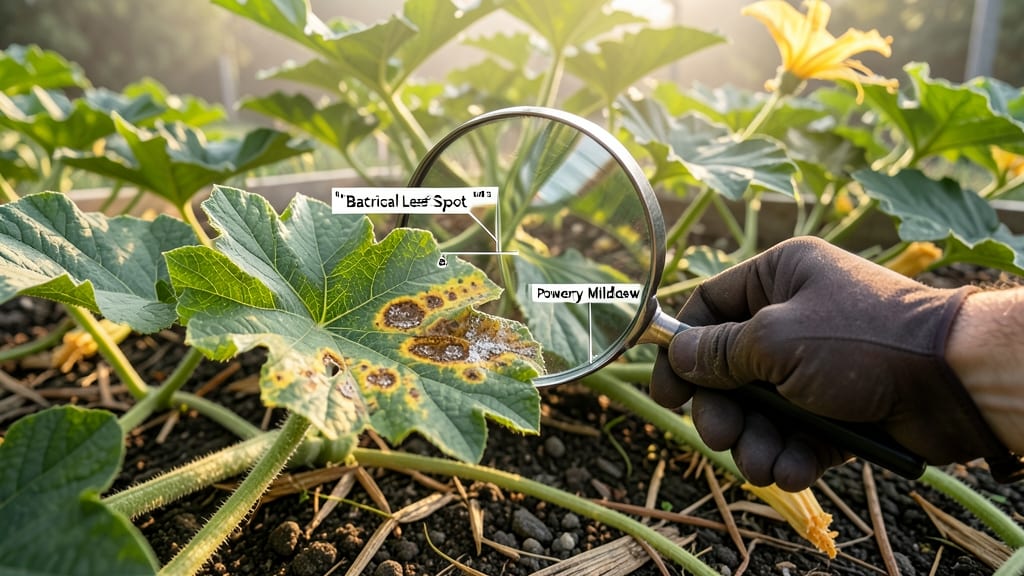
When your watermelon leaves start looking like someone dumped flour or painted them with gray dust, you’re staring at powdery mildew—one of the most stubborn watermelon leaf diseases. 🌱 I’ve battled this exact problem in my own garden, where vines that should’ve been lush and green turned into sad, yellowing skeletons before my eyes.
The key to saving your crop? Spotting the symptoms early and acting fast with the right cure.
Most of these diseases—powdery mildew, downy mildew, or bacterial leaf spot—start with tiny yellow spots that spread like wildfire if you ignore them. Humidity and poor airflow turn your garden into a disease buffet, while copper spray (the secret weapon) can stop the spread before it ruins your harvest.
I’ve tested the most effective mixes, and the results speak for themselves: plants recover faster and produce better fruit.
By the time you finish this guide, you’ll know exactly which disease is attacking your watermelon, how to confirm it with a simple test, and which treatments work best—whether you prefer organic options or stronger chemical fixes. The goal? Healthy vines, sweet fruit, and no more wasted seasons.
We’ll also cover prevention tips that cut your risk by 70%, so you’re not scrambling next summer when the first spots appear. Early intervention isn’t just smart—it’s the difference between a thriving patch and a sad pile of diseased leaves.
Root Causes Behind Leaf Troubles
Watermelon leaves don’t just wilt or spot out of the blue—they’re sending you clear distress signals tied to specific environmental or biological triggers. Understanding these causes is half the battle in prevention and treatment. Let’s break down the real culprits behind watermelon leaf diseases, from microscopic invaders to garden oversights.
Fungal pathogens are the #1 cause of watermelon leaf diseases, thriving in warm, humid conditions. These organisms release spores that latch onto leaves, stems, or even soil, then multiply rapidly. Here’s how they strike:
- Downy Mildew (Pseudoperonospora cubensis): Spreads via wind or water splashes. Spores germinate on leaf surfaces, forming downy gray fuzz on undersides while tops turn yellow. Humidity >90% + temps 60–85°F = perfect breeding ground.
- Powdery Mildew (Podosphaera xanthii): Creates a white, powdery coating on leaves, blocking sunlight and stunting growth. Thrives in poor air circulation and overhead watering, which keeps leaves damp for hours.
- Anthracnose (Colletotrichum orbiculare): Enters through wounds (e.g., hail damage, pruning cuts) or infected seeds. Produces dark, sunken lesions with concentric rings, often in wet conditions.
💡 Pro Tip: Fungi love moisture—avoid watering leaves (aim for soil-level irrigation) and space plants 18–24 inches apart for airflow.
Some pests don’t just eat your watermelon leaves—they spread diseases like tiny, six-legged couriers. Here’s how:
- Aphids: These sap-sucking insects excrete honeydew, a sticky residue that fosters sooty mold (a secondary fungal growth). They also transmit viral diseases like Cucumber Mosaic Virus, causing mosaic patterns on leaves.
- Whiteflies: Their feeding weakens leaves, making them more susceptible to fungal infections. They also spread gemini viruses, which cause yellowing and stunting.
- Spider Mites: While they don’t transmit diseases, their feeding damage creates entry points for fungi and bacteria, accelerating decay.
🔥 Action Step: Use neem oil or insecticidal soap to control pests before they become a disease vector. Check undersides of leaves weekly!
Watermelons are tough, but push their limits with extreme conditions, and leaves react with disease-like symptoms. These aren’t infections—but they weaken plants, making them vulnerable to pathogens.
| Stressor | Leaf Symptoms | Why It Happens |
|---|---|---|
| Temperature Swings (below 50°F or above 95°F) | Yellowing, curling, or necrotic spots | Cold slows nutrient uptake; heat causes oxidative stress, damaging cell membranes. |
| Poor Drainage (Waterlogged soil) | Yellowing between veins (chlorosis), wilting | Root suffocation cuts off water/nutrients, mimicking fungal blight. |
| Nutrient Deficiencies (Low nitrogen/magnesium) | Yellow patches (nitrogen), interveinal chlorosis (magnesium) | Weakened leaves can’t fight infections; magnesium deficiency disrupts chlorophyll production. |
✨ Prevention Tip: Use mulch to regulate soil temp, and test soil pH (ideal: 6.0–6.8) to ensure nutrient availability.
Even the best-intentioned gardeners accidentally create disease hotspots. These human errors often go unnoticed until leaves start screaming for help:
- Overcrowding: Dense foliage traps humidity and blocks airflow, giving fungi a 24/7 buffet. Ideal spacing: 3–5 feet between vines.
- Reusing Contaminated Tools: Pruners or trellises carrying fungal spores from last season can reinfect new plants. Always sterilize with 70% alcohol.
- Ignoring Crop Rotation: Planting watermelons in the same spot yearly exhausts soil and leaves behind pathogen reservoirs. Rotate with non-cucurbit crops (e.g., tomatoes, beans) every 3 years.
- Late Pruning: Trimming too late in the season opens wounds that invite bacterial or fungal entry. Prune only in dry conditions and use clean, sharp tools.
🎯 Golden Rule: Prevention is cheaper than cure. A few minutes of proactive care (spacing, sterilizing, rotating) saves hours of treatment later.
Fixing Foliage Fails Fast
Watermelon leaf diseases can turn your lush vines into a sad, spotted mess—but don’t panic! The key to saving your crop is acting quickly and targeting the root cause. Below, we break down the best fixes for each common issue, plus smart prevention tips to keep your plants thriving.
Let’s get those leaves back to their happy, healthy green!
Cause: Pseudoperonospora cubensis—a fungal spore that thrives in damp, shady conditions. Fix:1. Prune and Remove 🔪
- Snip off all infected leaves (don’t compost them—toss in the trash).
- Space plants wider (18–24 inches apart) to improve airflow.
2. Copper Spray Rescue ⚔️
- Mix 1 tbsp copper fungicide (like copper sulfate or Bordeaux mix) per gallon of water.
- Spray both sides of leaves at dawn or dusk (avoid direct sun—it burns foliage).
- Reapply every 7–10 days until new growth appears.
3. Prevent Future Outbreaks 🌡️
- Water only at the base (never overhead) to keep leaves dry.
- Use resistant varieties like ‘Crimson Sweet’ or ‘Sugar Baby.’
- Rotate crops yearly—don’t replant watermelons in the same spot.
1. Baking Soda Blast 🧼
- Mix 1 tsp baking soda + 1 tbsp horticultural oil + 1 tsp soap in 1 gallon of water.
- Spray leaves until dripping—this disrupts spores and prevents spread.
- Apply every 5–7 days or after rain.
2. Neem Oil Barrier 🌿
- Dilute 2 tbsp neem oil + 1 tsp soap per gallon of water.
- Spray early morning to avoid harming bees.
- Repeat weekly for prevention.
3. Stop the Spread ✨
- Remove heavily infected leaves immediately.
- Space plants for sunlight (6+ hours/day)—fungi hate UV rays.
- Avoid nitrogen-heavy fertilizers (they encourage lush, mildew-loving growth).
1. Surgical Leaf Removal 🩺
- Cut out only the most damaged leaves (disease spreads via spores).
- Sterilize pruners with rubbing alcohol between cuts.
2. Fungicide Flood ⚗️
- Use a chlorothalonil-based fungicide (like Daconil) every 10–14 days.
- For organic growers, try copper soap (1.5 tbsp per gallon).
3. Break the Cycle 🔄
- Rotate crops—don’t plant cucurbits (watermelons, cucumbers, squash) in the same bed.
- Solarize soil in summer (cover with clear plastic for 4–6 weeks to kill spores).
- Plant resistant varieties like ‘Charleston Gray.’
1. Quarantine Infected Plants 🚧
- Remove and burn (don’t compost) infected leaves to stop bacterial spread.
- Wear gloves—bacteria can spread through cuts on your hands.
2. Copper Bactericide 🛡️
- Apply copper hydroxide (like Kocide) every 7 days.
- Spray early morning for best absorption.
3. Cleanliness Is Key 🧼
- Sterilize tools with bleach water (1:10 ratio) after each use.
- Avoid overhead watering—use drip irrigation instead.
- Rotate crops and practice 3-year fallow periods in the same bed.
Prevention beats cure every time! Try these game-changers:
- 💡 Morning Watering: Wet leaves dry faster in sunlight, reducing fungal growth.
- 🔥 Mulch Magic: Use straw or black plastic mulch to keep soil moist but leaves dry.
- 🌡️ Temperature Check: Watermelons thrive at 75–90°F—avoid overcrowding in hot, humid climates.
- ✨ Beneficial Buddies: Introduce ladybugs or lacewings to eat fungal spores.
- 📊 Test Soil: Over-fertilized plants are weaker. Aim for pH 6.0–6.8 and balanced NPK.
With these fixes, your watermelon leaves will bounce back faster than you can say “seed to slice.” 🍉💚 Stay vigilant, and your next harvest will be the juiciest yet!
Frequently asked questions
How can I tell if my watermelon leaves have powdery mildew vs. downy mildew?
Powdery mildew appears as a white, powdery coating on both leaf surfaces, while downy mildew shows yellow spots on top and gray fuzz on the undersides. Check the leaf undersides first—if you see fuzzy growth, it’s downy mildew. Both thrive in humidity, but powdery mildew loves poor airflow while downy mildew spreads faster in wet conditions.
Will copper spray harm bees or beneficial insects if I use it?
Copper fungicides are generally safe for bees when applied at dawn or dusk when they’re less active. Avoid spraying during peak bloom times (10 AM–4 PM) to protect pollinators. For extra safety, focus treatments on leaf undersides where spores hide, and skip flowering plants entirely. Always follow label instructions for dilution rates.
Can I save a watermelon plant if most leaves are already infected with bacterial leaf spot?
You can try, but severe infections often mean the plant won’t recover well. Remove all infected leaves immediately and apply copper hydroxide spray every 7 days. For best results, quarantine the plant and focus treatments on new growth. If more than 50% of leaves are affected, consider replacing the plant to prevent soil contamination for next season.
What’s the fastest way to prevent fungal diseases in my watermelon patch?
Start with proper spacing (3–5 feet between vines) for airflow, then water only at the base in the morning. Use mulch (straw or black plastic) to keep soil moist but leaves dry, and apply a preventive spray of neem oil (2 tbsp/gallon) every 2 weeks. Plant resistant varieties like ‘Sugar Baby’ and rotate crops yearly to break disease cycles.
Are homemade remedies like milk or hydrogen peroxide effective for watermelon leaf diseases?
Milk (1 part skim milk to 9 parts water) can help with powdery mildew by disrupting spores, but it won’t cure established infections. Hydrogen peroxide (1 tsp per quart of water) may kill some surface fungi, but it’s not as effective as copper or fungicides for severe cases. For best results, use these as preventive sprays alongside proper garden hygiene and airflow.