
Pests and Diseases
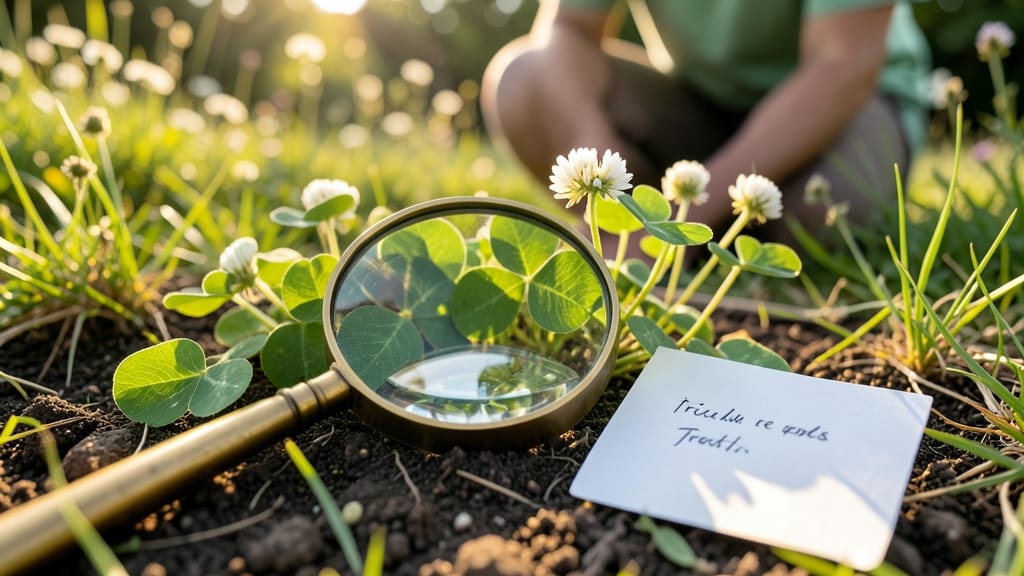
The chance of finding a four-leaf clover in nature is about 1 in 10,000, though estimates range from 1 in 5,000 to 1 in 20,000 based on environmental factors. Cultivated varieties or genetic modifications can slightly improve your odds.
The rarity comes from a natural genetic mutation where a third leaf sprouts from the center stem of the typical three-leaf clover. 🌿 Unlike the common trifoliate clover, tetrafoliate (four-leaf) versions are purely accidental—no plant can reliably produce them through normal reproduction.
This makes them a symbol of luck rather than a predictable find, though some gardeners report higher success rates in shaded, nutrient-rich patches during spring or early summer.
What's fascinating is how environmental stress can trigger these mutations—drought, poor soil, or even physical damage might increase the odds slightly. That's why experienced hunters often focus on older clover patches where the plants have faced more challenges.
The key is patience: while you might not find one immediately, the thrill of the search makes it worth the effort.
💡 In This Article
- How Four-Leaf Clover Genetics Affect Rarity
- Proven Four-Leaf Clover Hunting Strategies
How four-leaf clover genetics affect rarity
The four-leaf clover's rarity stems from a spontaneous genetic mutation where a fourth leaf grows from the central stem of the trifoliate (three-leaf) clover. This mutation occurs during cell division when an extra meristem—plant tissue that produces new cells—forms.
The typical three-leaf structure is genetically dominant, meaning the mutation must overcome strong biological resistance to appear. 🌱 In most cases, the fourth leaf is smaller and less developed, which is why it's often overlooked.
Environmental factors play a surprising role in triggering these mutations. Stressors like poor soil quality, limited sunlight, or drought conditions can increase mutation rates by forcing plants to adapt rapidly.
For example, clovers growing in shaded, nutrient-deprived areas show a slightly higher mutation frequency—some studies suggest up to 1 in 5,000 in extreme conditions versus 1 in 20,000 in ideal growing environments.
The mutation rate also varies by species; white clover (Trifolium repens) has a higher natural occurrence than red clover (Trifolium pratense).
Selective breeding could theoretically increase four-leaf clover production, but it's challenging because the mutation isn't hereditary. Even if you find one, its offspring will revert to the standard three-leaf form.
Some gardeners have experimented with exposing clovers to gamma radiation or chemical mutagens to force mutations, but this raises ethical concerns and isn't practical for most hunters.
The closest controlled method is tissue culture, where plant cells are grown in labs to encourage mutations—but this produces sterile plants unfit for natural environments.
What makes the four-leaf clover unique is its symbolic power despite its biological limitations. The extra leaf doesn't provide any survival advantage, which is why it remains a rare fluke of nature.
Unlike cultivated plants bred for specific traits, four-leaf clovers are purely accidental—each one is a one-in-ten-thousand shot at luck. This randomness is part of their allure, making every discovery feel like a small victory against improbable odds. 🌟
For those curious about the science, the mutation follows Mendelian genetics but with a twist: the fourth leaf isn't a dominant trait. Instead, it's a sporadic expression of genetic instability, often linked to errors in DNA replication during cell growth.
This is why you'll never find a field where four-leaf clovers grow reliably—they're nature's way of reminding us that some things are best left to chance.
If you're hunting for these rare plants, focus on areas with mixed sunlight and moist, slightly acidic soil (pH 6.0-7.0). These conditions create the right balance of stress and nutrients to nudge mutation rates upward.
However, even with perfect conditions, the odds remain slim—proof that the magic of finding a four-leaf clover lies in the hunt itself.