
Fertilization
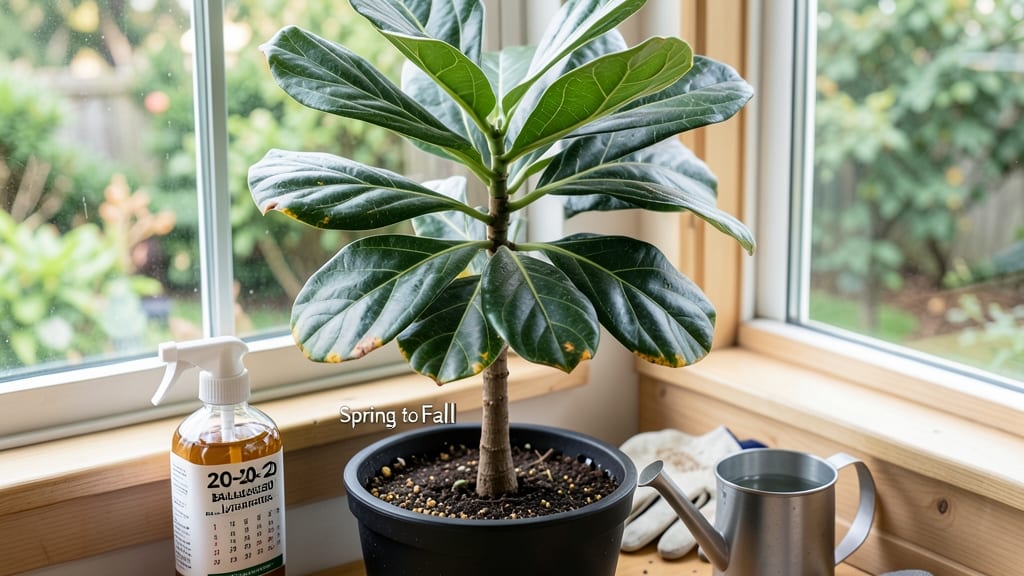
Fiddle leaf figs need fertilizing every 4-6 weeks during their active growth phase—spring through early fall—when they’re pushing out new leaves and reaching for the light.
But here’s the catch: timing matters more than most people realize. Too early, and you’ll shock those delicate roots before the plant wakes up; too late, and you’ll miss the window to fuel that summer growth spurt.
We’ve all seen the sad, crispy-edged leaves that scream, "I got too much love, too soon."
Indoor growers especially need to pay attention to seasonal shifts. While your fiddle leaf fig 🌿 might not feel the chill of winter, its growth slows dramatically in fall and nearly stops in winter.
That’s when you dial back—or skip—fertilizer entirely. The key is reading the plant’s cues: new leaves mean it’s hungry; yellowing or brown tips mean it’s begging for a break.
Below, I’ll break down the exact schedule to follow, from the first light feed of spring to the final touch-up in fall, plus how to spot the signs when your plant is telling you, "I’ve got this—no food, thanks."
Best fertilization schedule for fiddle leaf figs: spring growth & fall prep
Timing is everything when it comes to fertilizing your fiddle leaf fig. Unlike outdoor plants tied to seasons, your indoor Ficus lyrata follows a growth-based schedule that aligns with its natural cycles.
The key is feeding during active growth (spring and summer) while giving it a break during dormancy (fall and winter). This approach prevents nutrient burnout and keeps those signature leaves vibrant.
I’ve learned from years of fiddle leaf fig care that over-fertilizing is a common mistake—it leads to leaf scorch and root damage. The solution? A balanced, diluted fertilizer applied at the right times.
Think of it like a slow-release meal plan for your plant, not a heavy feast. Let’s break it down month by month so you can keep your fiddle leaf fig thriving without guesswork.
| Month | Fertilizer Action | Frequency | Signs of Over-Fertilizing | Signs of Under-Fertilizing |
|---|---|---|---|---|
| March | Light Feed | ½ strength | Brown leaf tips | Slow growth |
| April | Feed | Every 4 weeks | Yellowing leaves | Pale foliage |
| May | Feed | Every 4 weeks | Crispy edges | Stunted growth |
| June | Feed | Every 4 weeks | Root rot risk | Dropping leaves |
| July | Light Feed | ½ strength | Leaf drop | Weak stems |
| August | Feed | Every 4 weeks | Burnt leaf spots | Slow recovery |
| September | Light Feed | ½ strength | Wilting | Dull leaves |
| October–February | Skip | Dormancy
How to choose the right fertilizer for fiddle leaf figs (and avoid common mistakes)Fiddle leaf figs thrive when fed the right nutrients, but choosing the wrong fertilizer can lead to leaf scorch, salt buildup, or stunted growth. The key lies in selecting a balanced NPK ratio of 2-3-1—like a 10-10-10 or 20-20-20 fertilizer—to support leafy growth without overloading roots. Organic options like compost tea or worm castings provide slow-release nutrients, while synthetic fertilizers offer precise control. Let’s break down the pros and cons to help you pick the best fit for your plant. Organic fertilizers, such as fish emulsion or seaweed extract, enrich soil health over time and reduce the risk of chemical burns. They’re ideal for gardeners who prefer eco-friendly solutions and want to improve soil structure. However, they may require more frequent applications to match the nutrient density of synthetics. On the other hand, synthetic fertilizers deliver quick results but can harm your fiddle leaf fig if overused or not properly diluted. Here’s a quick guide to help you decide when and how to fertilize your fiddle leaf fig:
Organic Fertilizers
Pros:
Cons:
Synthetic Fertilizers
Pros:
Cons:
DIY Alternatives
For eco-conscious gardeners, DIY fertilizers like compost tea or banana peel tea offer natural, cost-effective alternatives. Simply steep banana peels in water for a week to create a potassium-rich solution, or blend crushed eggshells into the soil for calcium. These methods are gentle on your fiddle leaf fig and reduce waste. However, they may not provide the same immediate nutrient boost as commercial options, so monitor your plant’s growth closely. Watch for red flags like brown leaf tips or yellowing leaves, which often signal over-fertilization. If you notice these symptoms, flush the soil by watering thoroughly to remove excess salts. Always dilute synthetic fertilizers to half-strength and apply only during the active growing season (spring through early fall). Avoid fertilizing in winter when your fiddle leaf fig enters dormancy. Remember, consistency is key. Stick to a monthly feeding schedule during the growing season, and always water your plant before applying fertilizer to prevent root burn. With the right balance, your fiddle leaf fig will reward you with vibrant, healthy foliage for years to come. 🌿 |