
Size
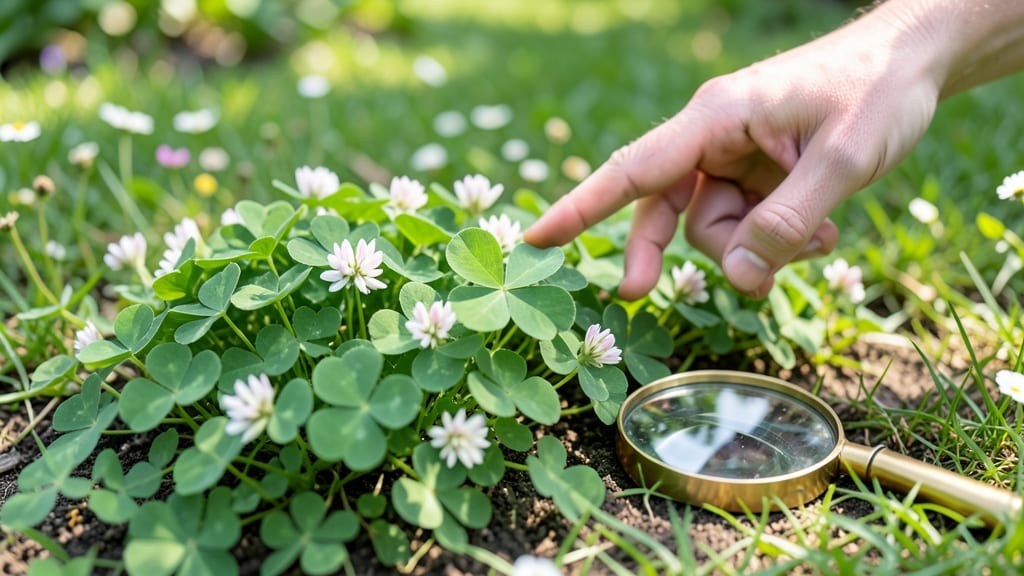
Four-leaf clovers grow naturally in temperate climates alongside common three-leaf clovers, thriving in grassy fields, meadows, and open woodlands across Europe, North America, and parts of Asia, with the highest concentrations in regions with moist, well-drained soil and mild summers.
These lucky little plants prefer regions where summers stay cool and winters aren't harsh—think of them as the understated cousins of their more common three-leaf relatives. 🌿 In the U.S., they're most abundant in the Pacific Northwest and Northeast, where damp meadows and shaded forest edges provide their ideal growing conditions.
What's fascinating is how their rarity actually stems from genetics: only about 1 in 10,000 clovers develops that fourth leaf, making their natural habitats a treasure hunt for lucky finders.
European clover fields also host them, particularly in Ireland and Scotland, where they've become cultural symbols. The secret to spotting them in the wild? Look for areas with regular rainfall but good drainage—standing water will drown their delicate roots.
I've found that even urban parks with well-maintained grass can yield them if the soil stays consistently moist.
💡 In This Article
- Natural Habitats of Four-Leaf Clover Varieties
- How to Cultivate Four-Leaf Clovers in Your Garden
Natural habitats of four-leaf clover varieties
Four-leaf clovers don't grow in isolation—they thrive alongside their more common three-leaf relatives, sharing the same ecological niches but with one key genetic twist. These rare plants belong to the Trifolium repens species, which prefers open, sunlit areas where grass competes with them for space.
The difference? Their fourth leaf isn't about sunlight needs but about a rare genetic mutation that occurs during early growth stages, typically when temperatures hover between 50-75°F—ideal conditions for both leaf development and mutation visibility.
Their preferred habitats all share three critical factors: moisture balance, well-drained soil, and moderate sunlight exposure. In North America, the Pacific Northwest's 60-80 inches of annual rainfall creates perfect conditions, while Europe's Atlantic coast regions mirror this pattern.
What's surprising is how they avoid dense forests—they need at least 4-6 hours of sunlight daily but can't handle the dryness of full sun exposure. This creates their signature "edge habitat" preference: meadow margins, open woodlands, and even well-maintained lawns where grass isn't mowed too short.
Soil composition plays a hidden role in their distribution. Four-leaf clovers favor slightly acidic to neutral pH (6.0-7.0) soils rich in organic matter, which three-leaf clovers also prefer but can tolerate wider ranges. The key difference?
Four-leaf varieties show reduced vigor in heavy clay soils where waterlogging occurs, explaining why they're rarer in low-lying areas. 🌱 This is why you'll find them more frequently on gentle slopes or raised meadow areas where drainage improves naturally.
Regional variations create fascinating patterns. In Ireland and Scotland, where they're most culturally significant, four-leaf clovers dominate in limestone-rich pastures that create slightly alkaline conditions. Meanwhile, North American varieties prefer granite-derived soils in the Northeast.
The mutation rate actually increases slightly in these specific soil types, though scientists still debate whether it's due to mineral composition or microbial activity in the rhizosphere (the soil zone around roots).
What most people overlook is the seasonal timing of their appearance. Four-leaf clovers emerge 2-3 weeks earlier than three-leaf varieties in spring, taking advantage of cooler temperatures before summer heat stresses them. This early growth gives them a competitive edge in disturbed soils where grass hasn't yet established dominance.
The trade-off? Their delicate stems make them more vulnerable to late frosts, which is why they're rarely found above 5,000 feet elevation in mountainous regions.
Here's the ecological paradox: while four-leaf clovers are genetically rare (about 1 in 10,000 clovers develops the mutation), their preferred habitats are actually quite common. The real limiting factor is often human activity—over-fertilized lawns or frequent mowing can reduce their numbers by up to 60%.
This makes protected meadows and organic farms the best places to spot them naturally. 🌿