
Shrubs
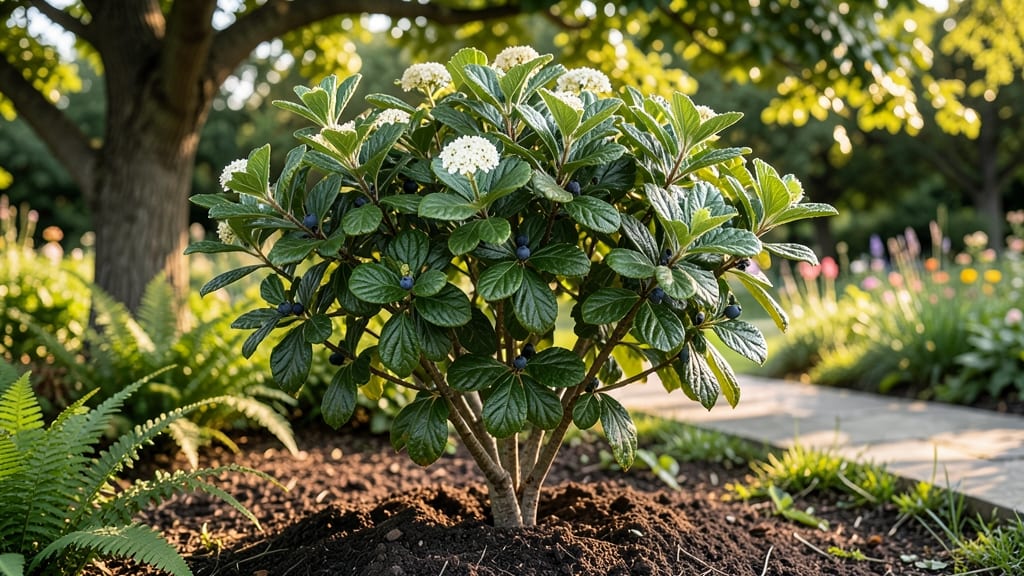
Planting Allegheny leatherleaf viburnum transforms your shady garden corner into a lush, low-maintenance jewel. 🌿 This Zone 4 superstar thrives where most shrubs fail, delivering glossy leaves that resist disease and stunning fall color—no fuss, just beauty. The secret to its success lies in its adaptability.
It handles partial shade like a pro, tolerates poor soil, and even shrugs off deer browsing. Once established, it needs minimal watering and pruning, making it perfect for busy gardeners who still want impact.
By late summer, you'll spot clusters of tiny white flowers that give way to red berries, followed by fiery orange-red foliage that lasts well into winter. The plant grows steadily but never gets out of control, staying compact enough for small gardens.
Works beautifully as a specimen plant, hedge, or foundation shrub. Here's how to get started with this carefree standout!
📚 In This Guide
- What you need
- Instructions
- Tips and common mistakes
- Wrapping up and next steps
What you need
- ● Alleghany Leatherleaf Viburnum plants: 1–3 nursery-grown plants (3–4 feet tall, in 1–3 gallon containers)
- ● Choose healthy specimens with glossy, dark green leaves and sturdy stems.
- ● Well-draining soil: Native soil amended with 20% compost or a 50/50 mix of garden soil and peat moss (for better moisture retention).
- ● pH range: 5.0–7.0 (slightly acidic to neutral).
- ● Sunlight access: Full sun to partial shade (6+ hours of sunlight daily for optimal growth).
- ● Watering supplies: Garden hose with a soaker hose attachment or a watering can (deep watering preferred).
- ● Mulch: 2–3 inches of organic mulch (e.g., wood chips or shredded bark) to retain moisture and suppress weeds.
- ● Pruning tools: Bypass pruners (for clean cuts) and hand pruners (for smaller branches).
- ● Fertilizer: Slow-release balanced fertilizer (10-10-10) or organic options like compost tea (apply in early spring).
- ● Plant support: Stakes or cages (if planting in windy areas or for young, top-heavy plants).
- ● Soil test kit: To check pH and nutrient levels before planting.
- ● Pest control: Neem oil or insecticidal soap (preventative measure for aphids or spider mites).
- ● Garden gloves: For comfort while handling soil or pruning.
Step-by-Step instructions for planting and caring for alleghany leatherleaf viburnum
This hardy shrub thrives in Zone 4 with minimal fuss—just follow these steps for lush, disease-resistant foliage.
🪴 Step 1: Choose the Perfect Planting Location
Alleghany leatherleaf viburnum loves partial shade to full sun but tolerates deep shade if the soil stays moist. I always pick a spot with morning sun and afternoon shade—this prevents leaf scorch while keeping the glossy foliage vibrant. Avoid low-lying areas where cold air pools, as Zone 4 winters can be brutal.
Test the site by observing it for a week. If the ground stays damp but not soggy, it's ideal. The shrub's natural range includes moist woodlands, so it appreciates consistent moisture but won't tolerate standing water. Amend heavy clay soil with 2-3 inches of compost before planting to improve drainage.
🌱 Step 2: Plant at the Right Time and Depth
Plant in early spring (as soon as the ground thaws) or early fall (6-8 weeks before first frost). The roots establish best when soil temperatures are cool but not frozen. Dig a hole twice as wide as the root ball but only as deep—planting too deep suffocates the roots and causes stress.
Loosen the root ball gently if roots are circling. Place the shrub in the hole so the top of the root ball sits 1 inch above soil level—this prevents rot during heavy rains. Backfill with native soil (no amendments) and water deeply to settle everything. You'll see the soil settle about an inch after watering, so adjust depth if needed.
💧 Step 3: Water Deeply and Mulch Correctly
Water once a week for the first month (or daily if temperatures exceed 85°F) until the shrub establishes roots. You'll know it's getting enough water when the top 2-3 inches of soil stay moist but not soggy. Overwatering in Zone 4 is just as damaging as underwatering—this shrub hates wet feet.
Apply 3 inches of mulch (wood chips or shredded bark) around the base, keeping it 3 inches away from the trunk. Mulch conserves moisture and regulates soil temperature. Replenish mulch annually in early spring—this prevents weeds and protects roots during winter freezes.
☀️ Step 4: Prune for Shape and Health
Prune in late winter or early spring before new growth begins. Remove dead, diseased, or crossing branches first—this improves airflow and prevents fungal issues. Cut back to a healthy bud just above where branches intersect. For shaping, prune no more than 25% of the shrub annually to avoid shocking it.
Watch for new growth in spring—the first flush of leaves appears bright green before darkening to its signature leathery texture. If you see leggy growth reaching for light, your shrub needs more shade. Alleghany leatherleaf viburnum responds well to pruning, so don't hesitate to shape it into a hedge or let it grow naturally as a multi-stemmed shrub.
⏰ Step 5: Prepare for Zone 4 Winters
This shrub is Zone 4 hardy, but young plants (under 3 years old) benefit from winter protection. Apply a 4-6 inch layer of mulch around the base in late fall to insulate roots. Avoid heavy mulch against the trunk—it can trap moisture and cause rot. In extreme winters (below -10°F), wrap the base with burlap for extra protection.
Spring is the best time to check for winter damage. Scratch the bark gently—if it's green underneath, the plant survived. If you see dead branches, prune them out in early spring. The shrub's glossy leaves are a sign of health, so if they look dull or brown in spring, it may need more sunlight or better drainage.
Tips & tricks for perfect alleghany leatherleaf viburnum growth
These practical insights will help you cultivate a thriving, disease-resistant shrub that stands out in your Zone 4 landscape.
Location Intelligence: When evaluating your planting site, focus on the morning sun and afternoon shade pattern mentioned in Step 1. If you notice your potential spot gets intense afternoon sun, consider planting it closer to a northern-facing wall or under taller trees that provide natural shade. The key is preventing leaf scorch while maintaining enough light for that signature glossy foliage. I've seen this shrub struggle in full sun locations where temperatures regularly exceed 85°F—the leaves lose their vibrant sheen and become dull.
Planting Precision: The 1 inch above soil level positioning in Step 2 is critical—this small detail prevents rot during heavy spring rains that are common in Zone 4. After planting, press the soil gently around the base to eliminate air pockets, but don't compact it too firmly. You can actually use your foot to press down lightly, but avoid stepping directly on the root ball. This creates better soil contact while maintaining proper aeration for root establishment.
Watering Wisdom: The first month's watering routine in Step 3 is your most important maintenance period. Instead of just checking soil moisture, I recommend using a moisture meter for the first two weeks to get a feel for how quickly your soil drains. If the meter shows consistently wet conditions after 24 hours, you're overwatering—this shrub's roots need oxygen too. The 2-3 inches of soil moisture guideline is perfect, but it varies with your soil type. Sandy soils may need more frequent watering, while clay soils hold moisture longer.
Winter Protection Strategy: For that 4-6 inch mulch layer in Step 5, I recommend using a mix of wood chips and straw for better insulation. The straw provides additional air pockets that help regulate temperature fluctuations. When wrapping with burlap in extreme winters, leave the top open to allow some airflow—this prevents moisture buildup that can cause rot. I've found that even mature plants benefit from this extra protection during our Zone 4 winters when temperatures dip below -10°F for extended periods.
Pro Tips for Alleghany Leatherleaf Viburnum
- These practical insights will help you cultivate a thriving, disease-resistant shrub that stands out in your Zone 4 landscape.
- Location Intelligence: When evaluating your planting site, focus on the morning sun and afternoon shade pattern mentioned in Step 1.
- Planting Precision: The 1 inch above soil level positioning in Step 2 is critical—this small detail prevents rot during heavy spring rains that are common in Zone 4.
Frequently asked questions
Got questions about growing Allegheny Leatherleaf Viburnum? You’re not alone—this tough, low-maintenance shrub has its own quirks! Here are answers to the most common concerns from gardeners in Zone 4
and beyond.
How fast does Allegheny Leatherleaf Viburnum grow?
This shrub grows at a moderate pace, typically adding 12–24 inches per year under ideal conditions. With patience, it can reach 6–10 feet tall and wide over 10–15 years. Prune lightly in late winter to shape it without stunting growth.
Is it truly cold-hardy in Zone 4?
Allegheny Leatherleaf Viburnum thrives in Zones 3–8 and handles winter temps down to -30°F (-34°C). Its glossy, leathery leaves resist cold damage, and it rarely needs winter protection—just avoid planting in low-lying, frost-prone areas.
What pests or diseases should I watch for?
One of its biggest perks? Disease resistance! While aphids or spider mites may occasionally visit, they’re usually minor. If you spot them, hose off leaves or use neem oil for a natural remedy. No major fungal issues like powdery mildew plague other viburnums.
Can I grow it in full sun or does it need shade?
This shrub is flexible—it tolerates full sun to part shade, but morning sun + afternoon shade (especially in hot climates) prevents leaf scorch. In Zone 4, full sun is fine if soil stays moist. Mulch heavily to retain moisture.
How and when should I prune it?
Prune in late winter or early spring (before new growth) to:
- Remove dead or crossing branches.
- Shape lightly to encourage airflow.
- Avoid heavy pruning—it blooms on old wood!
What’s a good alternative if I want similar but smaller?
If space is tight, try:
- Viburnum dentatum (Arrowwood Viburnum) – Compact, great for hedges.
- Viburnum trilobum (American Cranberrybush) – Smaller, with showy fall berries.
- Viburnum burkwoodii – Dwarf variety, fragrant spring blooms.
Wrapping up and next steps
Ready to transform your landscape with a low-maintenance, disease-resistant beauty? The Allegheny leatherleaf viburnum is your perfect match—its glossy foliage, fragrant blooms, and winter hardiness make it a standout for Zone 4 gardens.
Whether you’re a seasoned gardener or just starting, this shrub delivers year-round interest with minimal fuss.
🌱 Next steps: Grab your gloves, pick a sunny spot, and plant your viburnum this season. Watch as it thrives with care—then sit back and enjoy the rewards! 🌿