
Leaf Blower
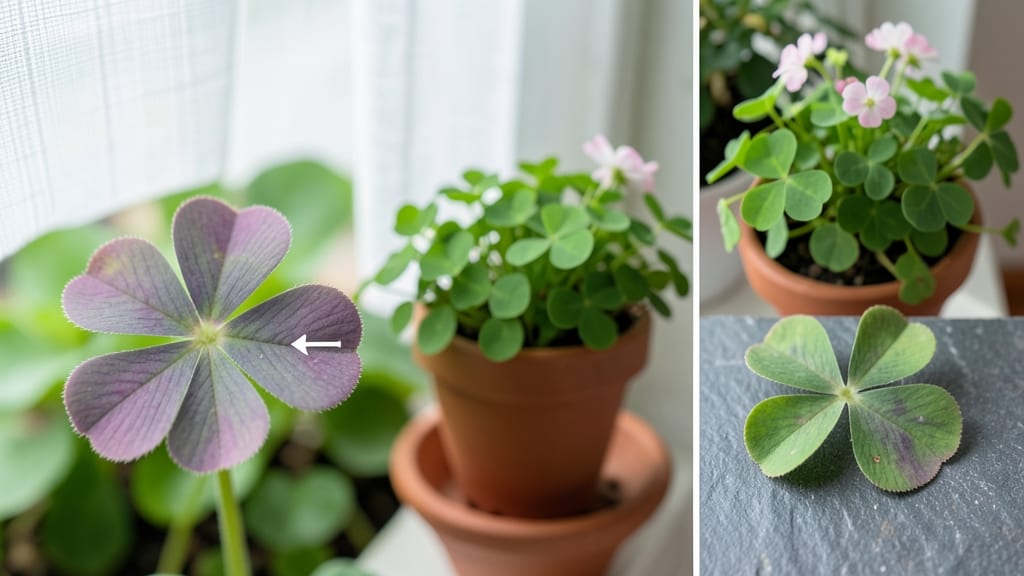
Five-leaf clovers are real but extremely rare: only about 1 in 10,000 four-leaf clovers naturally develop an extra leaf due to a genetic mutation, though most still retain four leaves. Their rarity fuels folklore and superstition about luck.
While five-leaf clovers do exist in nature, they're botanical anomalies rather than the norm. 🌱 The extra leaf forms when a genetic mutation occurs during cell division, creating an additional leaflet on what would otherwise be a standard four-leaf clover.
Most "five-leaf" clovers you find are actually four-leaf varieties with an unusually shaped leaflet. True five-leaf specimens are so rare that finding one is often considered a gardener's treasure—though they're still technically part of the same species, Trifolium repens.
The mutation rate makes them valuable to collectors and adds to their legendary status in luck-based folklore.
The key to growing them lies in understanding their environmental triggers. These rare clovers thrive in similar conditions to their four-leaf counterparts—well-draining soil, partial sunlight, and regular moisture—but the mutation itself is unpredictable.
Some gardeners swear by specific soil amendments or stress conditions, though science shows the mutation is purely random. For those eager to hunt for these botanical curiosities, early spring is the best time to search, as young clover growth is more likely to reveal these unusual variations.
💡 In This Article
- Botanical Science Behind Five-Leaf Clover Mutations
- How to Identify and Grow Rare Five-Leaf Clovers
Botanical science behind five-leaf clover mutations
A true five-leaf clover emerges when a genetic mutation occurs during the plant's early development. This mutation affects the sympodial branching process, where the plant normally produces three leaflets per stem. The extra leaflet forms due to a random error in cell division, where an additional meristem (growth point) develops.
This process is similar to how some flowers develop extra petals—it's a spontaneous anomaly rather than a controlled trait.
The mutation rate is staggeringly low: botanists estimate only 1 in 10,000 four-leaf clovers will develop a fifth leaflet. Most "five-leaf" clovers you encounter are actually four-leaf varieties with an unusually shaped leaflet or overlapping growth.
True five-leaf specimens are so rare because the mutation must occur during the plant's first few days of growth, when its cellular structure is most vulnerable to environmental stressors like temperature fluctuations or nutrient imbalances.
Environmental factors can influence mutation rates, though they don't create the mutation itself. For example, cool spring temperatures (50-60°F) combined with rich, slightly acidic soil (pH 6.0-6.5) may create optimal conditions for clover growth, increasing the chances of spotting rare variations.
However, the actual mutation remains random—no gardening technique can force a fifth leaf to appear. This unpredictability is what makes five-leaf clovers so coveted by collectors and folklore enthusiasts alike.
Standard clover anatomy features three leaflets arranged in a trifoliate pattern, each with a distinct shape and vein structure. A true five-leaf clover will have this same pattern but with an additional leaflet emerging from the same stem.
The fifth leaflet is typically smaller and may have a slightly different shape due to the constrained space during growth. 🌿 This structural difference makes identification challenging without close examination under good light conditions.
Scientists classify these mutations under polymorphism, where genetic variation exists within a species without changing its fundamental characteristics. While five-leaf clovers are part of the same species (Trifolium repens) as four-leaf varieties, their rarity makes them valuable study subjects for plant geneticists.
The mutation doesn't affect the plant's reproductive capabilities, meaning five-leaf clovers can still produce seeds—though those seeds will most likely grow into standard four-leaf plants.
What makes these mutations particularly fascinating is their connection to epigenetics, where environmental factors can influence gene expression without altering the DNA sequence. While no direct evidence links five-leaf clovers to epigenetic changes, the process demonstrates how subtle environmental interactions can produce dramatic visible differences in plant morphology.
This scientific perspective helps explain why some gardeners report finding more rare clovers in specific microclimates or soil types—though the connection remains more observational than causal.