
Companion Plants
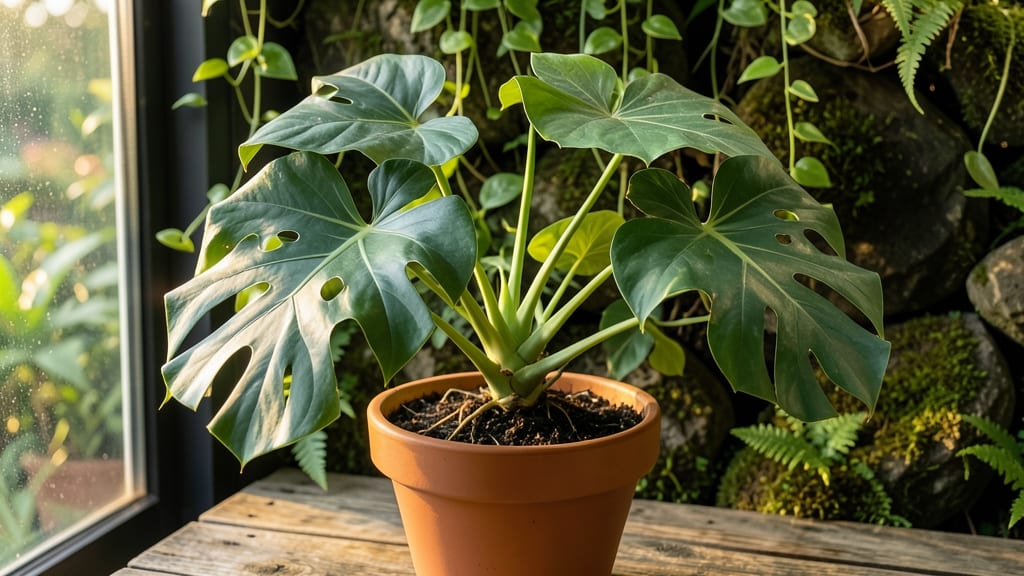
Spotting large big leaf plants identification starts with those bold, lobed patterns that make your garden feel like a tropical escape. 🌿 I’ve spent years studying everything from familiar favorites like elephant ears to lesser-known beauties with intricate veining—each one tells a story about its care needs and where it thrives best.
The key is noticing the leaf shape, texture, and how they grow: whether they’re reaching skyward or sprawling across the ground.
Most of these giants love bright, indirect light and rich, well-draining soil—think of them as the divas of the plant world. They’ll reward you with lush foliage that acts as a natural shade umbrella for smaller plants below.
My go-to for beginners? The Alocasia with its arrow-shaped leaves or the Monstera deliciosa, which starts small but grows into a stunning statement piece. Just watch for those telltale signs of overwatering—yellowing leaves scream "back off!"
You’ll recognize them instantly once you know what to look for: the deep veins, the glossy sheen, or the way some leaves curl at the edges when happy. These plants aren’t just pretty—they’re tougher than they look, handling humidity like a pro and even purifying the air.
The trick is matching them to your space: tall varieties near fences, sprawling ones in containers, and compact ones in shady corners.
Start with one or two to test your space, and don’t be afraid to experiment. Even if you’re not a plant whisperer yet, these giants give clear feedback—drooping leaves mean "water me," crispy edges mean "less sun."
Before you know it, you’ll be spotting new varieties in nurseries and dreaming up bold new garden designs. Let’s get identifying!
📚 In This Guide
- What you need
- Instructions
- Tips and common mistakes
- Wrapping up and next steps
What you need
- ● Plant identification guidebook (or digital app like PictureThis or PlantNet): For comparing leaf patterns and growth stages.
- ● Measuring tape or ruler (12-inch minimum): To measure leaf size and spacing.
- ● Digital camera or smartphone (with macro mode or high resolution): Capture close-ups of leaf textures, veins, and undersides.
- ● Notebook or field journal: Jot down observations like leaf shape, color, and growth habits.
- ● Hand lens (10x magnification): Examine fine details like trichomes or glandular dots.
- ● Pruning shears or sharp knife: For safely collecting leaf samples (if needed).
- ● Clear plastic bags or press board: Preserve leaf samples for later study.
- ● Leaf identification key (e.g., Manual of the Vascular Flora of the Southeastern U.S.): For advanced ID of lobed patterns.
- ● UV flashlight: Reveal hidden patterns or fluorescence in leaves.
- ● Soil pH tester: Check growing conditions if identifying wild specimens.
- ● Plant tags or labels: Organize your collection or garden notes.
- ● Gloves (nitrile or gardening): Protect hands when handling prickly or unknown plants.
How to identify large big-leaf plants by visual characteristics
Mastering leaf patterns unlocks the secret to confident plant identification—here’s how to spot the key traits.
🌿 Step 1: Examine Leaf Lobing Patterns
Start by counting and measuring the lobes. Plants like the Fiddleleaf Fig (Ficus lyrata) have 3-5 broad, violin-shaped lobes with smooth edges, while Swiss Cheese Plant (Monstera deliciosa) features split leaves with perforations that develop as it matures. Hold the leaf up to light—you’ll notice veins radiating from the center in most big-leaf varieties.
I always trace the leaf’s outline with my finger to feel the depth of the lobes. A deeply divided leaf (like Castor Bean Ricinus communis) has sharp, almost finger-like projections, whereas slightly lobed leaves (like Rubber Plant Ficus elastica) have gentle curves. Take a photo from above and below—undersides often reveal texture clues like fuzzy hairs or glossy surfaces.
🌱 Step 2: Compare Growth Stages and Leaf Size
Young leaves are your best clue. A juvenile Fiddleleaf Fig might look like a simple oval, but as it matures, the lobes become more pronounced. Measure the leaf’s width—mature Monstera leaves can reach 12-24 inches wide, while Rubber Plant leaves typically stay under 10 inches. I keep a small ruler handy to jot down dimensions in my plant journal.
Look for growth rings along the stem where new leaves emerge. Plants like Elephant Ear (Colocasia) produce huge, arrowhead-shaped leaves directly from the ground, while Philodendron varieties climb and develop leaves along vines. If you see petioles (leaf stems) longer than the blade itself, it’s likely a Monstera or Philodendron.
☀️ Step 3: Assess Light Exposure Effects
Sunlight dramatically alters leaf color and pattern. A healthy Fiddleleaf Fig in bright, indirect light will have deep green lobes with silver veins, while the same plant in low light may develop dull, yellowing edges. I test this by moving plants to different spots for a week—variegated leaves (like Variegated Monstera) lose their cream edges in shade.
Check for sunburn spots—small, crispy brown patches on leaves mean the plant got too much direct sun. Rubber Plants often develop reddish stems when stressed by light, while Castor Beans might show purple tinges on new growth. Take notes on how leaves react to your home’s lighting conditions.
📏 Step 4: Measure Stem and Petiole Traits
Stems tell the story of a plant’s maturity. Monstera deliciosa has thick, aerial roots that cling to supports, while Philodendron stems are slender and vine-like. Use your fingers to gauge stem thickness—Castor Bean stems are woody and rigid, whereas Fiddleleaf Fig stems are softer and more flexible. I press my thumb against the stem to feel for sap (a sign of health) or dryness (a warning).
Petiole (leaf stem) length is key. Elephant Ear petioles are as long as the leaf itself, while Rubber Plant petioles are short and stout. If the petiole feels hollow or brittle, the plant may be underwatered. Twist a leaf gently—if it snaps cleanly, it’s healthy; if it tears raggedly, it’s stressed.
📸 Step 5: Document and Cross-Reference
Photograph leaves from all angles—top, bottom, and side views. Apps like PictureThis or PlantNet can scan images and suggest matches, but I always double-check with field guides or online databases like the USDA Plants Database. Write down leaf shape, size, color, and growth habits in a notebook—these details narrow it down faster than a single photo.
Compare your notes to growth habit descriptions. For example, Castor Bean grows fast and tall (up to 10 feet), while Fiddleleaf Fig stays compact (6-10 feet). If your plant has large, glossy leaves with prominent veins and grows slowly, it’s likely a Rubber Plant. Cross-referencing leaf arrangement (alternate vs. opposite) on the stem helps too—Monstera leaves grow alternately, while Philodendron can be alternate or opposite depending on the variety.
Tips & tricks for mastering big-leaf plant identification
Here's what nobody tells you about making those subtle distinctions that separate guesswork from confident identification.
Leaf Texture is Your Secret Weapon: In Step 1, when examining lobing patterns, don't overlook the underside texture. I've seen countless cases where fuzzy undersides (like on Elephant Ear) or waxy surfaces (common in Rubber Plants) were the deciding factors. Use a magnifying glass if needed—some plants like Monstera have tiny white dots on their undersides that become visible only under close inspection. This microscopic detail often appears in field guides but gets overlooked in quick visual assessments.
Growth Stage Matters More Than You Think: In Step 2, remember that juvenile leaves can be completely different from mature ones. I once misidentified a Fiddleleaf Fig as a Rubber Plant because I only examined its first few leaves. The key is to look for the largest, most mature leaves—they'll show the true species characteristics. For Monstera, wait until you see leaves reaching 12+ inches wide before making your call, as that's when the signature perforations typically develop.
Light Stress Leaves Clues: When assessing light exposure effects in Step 3, pay special attention to color patterns. A Variegated Monstera that loses its white edges in low light might actually be a Swiss Cheese Plant with natural color variation. I keep a small flashlight handy to test leaf reactions—shine it directly on the leaf and observe how quickly it reflects light. Healthy leaves should have a uniform sheen, while stressed leaves often show patchy reflections.
Petiole Length Tells a Story: In Step 4, don't just measure petiole length—consider how it relates to the leaf blade. For Philodendron varieties, the petiole should be roughly 1/3 to 1/2 the length of the leaf blade, while Elephant Ear petioles often equal or exceed the blade length. I've found that twisting the petiole gently can reveal its internal structure—woody petioles (like in Castor Bean) feel solid, while herbaceous ones (like in Fiddleleaf Fig) have a slight give.
Pro Tips for Large Big Leaf Plants Identification
- Here's what nobody tells you about making those subtle distinctions that separate guesswork from confident identification.
- Leaf Texture is Your Secret Weapon: In Step 1, when examining lobing patterns, don't overlook the underside texture.
- Growth Stage Matters More Than You Think: In Step 2, remember that juvenile leaves can be completely different from mature ones.
Frequently asked questions
about identifying large big-leaf plants can help you troubleshoot, plan, and care for your garden with confidence. Here are some of the most common queries:What are the most common large-leaf plants with lobed patterns?
Some of the most recognizable include the Monstera deliciosa (Swiss cheese plant), Ficus elastica (rubber plant), and Philodendron bipinnatifidum (tree philodendron). These plants are popular for their bold foliage and adaptability to indoor environments.
How can I tell the difference between a Monstera and a Philodendron?
Monstera leaves are typically larger, with prominent fenestrations (holes or splits) and a glossy finish. Philodendrons, like the bipinnatifidum, have deeply lobed leaves but lack the Swiss cheese pattern. Monstera leaves also tend to grow larger as the plant matures.
When is the best time to plant or transplant large-leaf plants?
The ideal time is during the spring or early summer, when temperatures are mild, and the plant can establish roots before dormancy. Avoid transplanting in extreme heat or cold, as stress can hinder recovery. Always water thoroughly after transplanting to reduce shock.
Why are the leaves on my large-leaf plant turning yellow?
Yellowing leaves often signal overwatering or poor drainage. Check the soil moisture—it should be slightly dry between waterings. Ensure the pot has drainage holes and use a well-draining potting mix. Yellowing can also indicate nutrient deficiency or pests, so inspect the undersides of leaves.
Are there any large-leaf plants that thrive in low light?
Yes! The ZZ plant (Zamioculcas zamiifolia) and Cast iron plant (Aspidistra elatior) tolerate low light well, though they won’t develop the dramatic lobed patterns of Monstera or Philodendron. For bold foliage, a Monstera in bright, indirect light is your best bet.
Pro Tip:
If you’re unsure about your plant’s identity, snap a photo and compare it to online databases like Gardenia or PlantNet. Many apps, like PictureThis or PlantSnap, can also help with instant ID!
Wrapping up and next steps
Identifying large big-leaf plants can feel like solving a puzzle, but with the right tools—like understanding leaf lobes, growth stages, and key characteristics—you’re already ahead of the game! 🌿 Whether you’re a gardening newbie or a seasoned plant parent, recognizing these patterns helps you nurture thriving greenery or even spot invasive species in your area.
Ready to put your knowledge to work? Start by exploring your local plant nursery or botanical garden—bring this guide along, snap a few photos of leaves you’re curious about, and compare them to the patterns you’ve learned. Happy plant hunting! 🌱