
Pests and Diseases
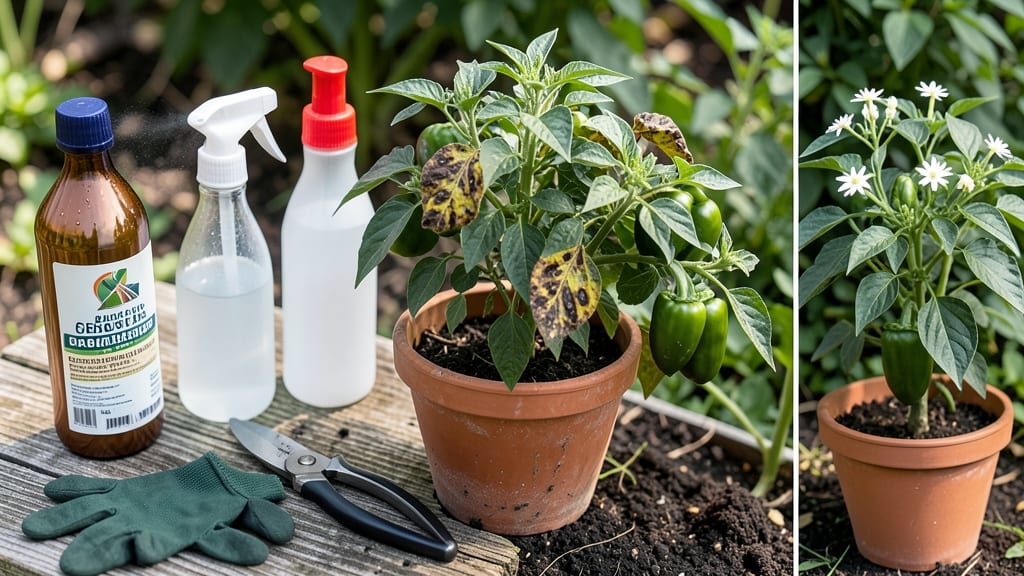
Your peppers’ crispy leaves don’t have to stay spotted and sad—but the right bacterial leaf spot pepper treatment can turn them back into lush, productive plants. Dark, greasy spots spread fast, especially in humid weather, but copper spray is the game-changer: organic, effective, and safe when used properly.
Prune infected leaves early to slow the spread, but the real fix lies in a well-mixed copper fungicide applied at dawn or dusk, repeated every 7–10 days until fresh growth appears.
The results are faster than you’d expect—expect crisp, healthy leaves within 2–3 weeks, and peppers to keep producing like nothing happened. The secret? Act fast and stay consistent. Once you see improvement, focus on prevention for next season to keep your plants thriving.
This method works for all pepper varieties—jalapeños, bell peppers, even chiles—and won’t harm beneficial insects if applied correctly. Here’s how to do it without stress or guesswork.
Root Causes Of Pepper Leaf Spots
Understanding why bacterial leaf spot ravages your pepper plants is the first step to stopping it in its tracks. This stubborn disease doesn’t just appear out of nowhere—it thrives because of specific conditions and vulnerabilities in your garden. Let’s break down the key triggers behind this destructive cycle.
Bacterial leaf spot (Xanthomonas campestris pv. vesicatoria) loves moisture—too much of it, to be exact. When pepper leaves stay wet for prolonged periods (especially overnight), bacteria get the perfect breeding ground.
Here’s why it’s a problem: - Fungal-like behavior: While bacterial, it mimics fungal spread by thriving in damp, stagnant conditions. - Root zone saturation: Overwatering weakens roots, reducing the plant’s ability to absorb nutrients and fight off pathogens. - Splashback spread: Heavy rain or overhead irrigation splashes bacteria from infected leaves onto healthy ones.
Actionable insight: Aim for 1–1.5 inches of water per week, and always water at the base (not the foliage). Mulch with straw or wood chips to improve drainage and reduce soil splatter.
Bacterial leaf spot is a warm-weather bully, peaking in temperatures between 77–86°F (25–30°C) with high humidity (above 70%).
Here’s how climate plays a role: - Faster bacterial multiplication: Warmth accelerates the bacteria’s growth rate, turning a few spots into a full-blown outbreak in days. - Slow drying time: Humid air prevents leaves from drying quickly after watering, prolonging moisture exposure. - Stress from heat: Peppers already struggle in extreme heat, making them more susceptible to infections.
Pro tip: 🌡️ Monitor your local heat/humidity index—if it’s consistently high, increase airflow with fans or prune plants for better ventilation.
Bacteria are hitchhikers, and your pruners, gloves, or even your fingers can carry them from plant to plant.
Here’s how it spreads: - Direct contact: Clipping an infected leaf and then touching a healthy one transfers the bacteria. - Reused tools: Knives, scissors, or even your hands can harbor the pathogen between uses. - Infected plant debris: Leaving fallen leaves or stems in the garden creates a reservoir for bacteria.
Critical step: 🔪 Sanitize tools with a 10% bleach solution (1 part bleach to 9 parts water) or 70% rubbing alcohol before and after use. Wear gloves when handling plants!
Stressed peppers are like open doors for bacterial invaders.
Common stressors include: - Nutrient deficiencies: Lack of calcium, magnesium, or nitrogen weakens cell walls, making them easier targets. - Physical damage: Hail, wind, or rough handling create entry points for bacteria. - Overcrowding: Poor airflow in dense plantings traps moisture and spreads disease faster.
Boost defenses: 💪 Use a balanced fertilizer (10-10-10) and space plants 18–24 inches apart for airflow. Remove yellowing or damaged leaves immediately.
If your garden has hosted infected peppers (or even tomatoes, which share the same pathogen), the bacteria may still lurk in the soil.
Key risks: - Survival in organic matter: Bacteria can persist in compost, mulch, or old plant debris for years. - Rotating crops isn’t enough: While crop rotation helps, bacterial leaf spot requires 3+ years to fully dissipate from contaminated soil. - Infected seeds or seedlings: Some bacteria can hide in seed coatings or young plants, bringing the problem straight to your garden.
Long-term fix: 🌱 Practice 3-year crop rotation and consider solarizing soil (covering with clear plastic for 4–6 weeks in summer to kill pathogens).
How to Treat Bacterial Leaf Spot
Bacterial leaf spot can feel like a death sentence for your pepper plants, but with the right approach, you can nurse them back to health—and even prevent future outbreaks. The key is acting fast, identifying the cause, and applying targeted fixes.
Below, we’ve mapped out practical solutions based on the most common triggers, plus prevention tips to keep your peppers thriving.
Cause: Spread through water splashes, wind, or contaminated tools. Fix:
- 🍅 Snip and toss: Use sterilized pruners (wipe with rubbing alcohol between cuts) to remove yellowed, spotted, or wilting leaves. Dispose of them in the trash (not compost)—this disease doesn’t break down!
- 🌿 Focus on new growth: Prioritize younger leaves, as they’re more vulnerable. Older leaves can be pruned if severely infected, but avoid over-pruning to stress the plant further.
- 💡 Pro Tip: Work early in the day when leaves are dry to minimize splashing bacteria onto healthy foliage.
Cause: Xanthomonas or Pseudomonas bacteria thrive in moist conditions. Fix:
- 👨🍳 DIY copper fungicide: Mix 1 tsp copper sulfate (or copper fungicide) with 1 gallon of water + a dish soap drop (helps it stick). Spray evenly on both sides of leaves, focusing on undersides where bacteria hide.
- ⏰ Timing matters: Apply at dawn or dusk to avoid leaf burn from sunlight. Reapply every 7–10 days or after heavy rain (copper washes off).
- ⚠️ Safety first: Wear gloves and avoid spraying in windy conditions. Keep pets/kids away until dry.
Cause: Stagnant air and overhead watering create the perfect breeding ground. Fix: - 🌬️ Space plants properly: Give peppers 18–24 inches of space between plants.
Use tomato cages or stakes to elevate foliage and improve airflow. - 💦 Water at the base: Use a soaker hose or drip irrigation to keep leaves dry.
Water early in the day so foliage dries by night. - 🌡️ Mulch wisely: Apply straw or wood chips (not fresh grass clippings) to prevent soil splashes onto leaves.
Cause: Bacteria linger in soil and tools from year to year. Fix: - 🌱 Crop rotation: Move peppers (and tomatoes/eggplants, which share diseases) to a new spot every 3 years.
Avoid planting in the same family for at least 2 years. - 🧼 Sterilize everything: Soak pruners, trellises, and containers in 1 part bleach to 9 parts water for 10 minutes, then rinse.
Disinfect pots with hydrogen peroxide (3%) if reusing. - 🎯 Soil treatment: For severe cases, amend soil with compost or aged manure to boost plant resilience. Avoid fresh manure, which can introduce more pathogens.
Cause: Weak plants are easier targets for bacteria. Fix: - 💪 Feed with fish emulsion or compost tea: Mix 1 tbsp fish emulsion in 1 gallon of water and spray foliarly (or use compost tea for a gentle probiotic boost).
Do this weekly during treatment. - 🍎 Balance nutrients: Over-fertilizing with nitrogen (fast growth = weak defense) can worsen issues. Switch to a balanced 10-10-10 or low-nitrogen fertilizer. - 🌿 Companion plants: Interplant with basil, marigolds, or garlic—they repel pests and improve air circulation.
If 50%+ of leaves are infected or the plant is wilting severely, it may be beyond saving. Yank it to prevent spread, then:
- 🔥 Burn or deep-trash the plant (don’t compost!).
- 🌱 Replace with a disease-resistant variety (e.g., ‘Aristotle’ or ‘Carmen’ peppers) in the same spot next season.
✅ Start with clean seeds/transplants—buy from reputable nurseries. ✅ Hardening off seedlings gradually to toughen them up. ✅ Avoid overhead watering—stick to drip irrigation. ✅ Monitor weather—bacterial spot flares in humid (75–85°F) conditions. ✅ Rotate crops religiously to break the disease cycle.
Remember: Patience is key—some peppers may recover fully, while others will produce fewer leaves but still yield fruit. Stay consistent with copper sprays and hygiene, and your plants will bounce back stronger! 🌱💪
Frequently asked questions
Can I still harvest peppers from plants with bacterial leaf spot?
Yes, you can harvest peppers from infected plants—but only if the fruit itself shows no visible spots or lesions. The bacteria primarily affect leaves, not the fruit, so peppers remain safe to eat. Remove and destroy any infected leaves before harvesting to prevent cross-contamination.
How often should I apply copper fungicide for best results?
Apply copper fungicide every 7–10 days during active infection periods, especially after rain. For prevention, reduce to every 2–3 weeks during humid weather. Always apply at dawn or dusk to avoid leaf burn from sunlight.
Will neem oil help treat bacterial leaf spot?
Neem oil is more effective against fungal diseases than bacterial ones, but it can still help as a supportive treatment. Mix 1 tbsp neem oil with 1 tsp dish soap and 1 quart water, then spray. Use it alongside copper treatments for better results.
Can I reuse last year's pepper pots if my garden had bacterial leaf spot?
Only if you sterilize them first! Soak containers in a 10% bleach solution (1 part bleach to 9 parts water) for 10 minutes, then rinse thoroughly. For extra safety, use hydrogen peroxide (3%) as an alternative disinfectant.
What are the best pepper varieties resistant to bacterial leaf spot?
Look for varieties like 'Aristotle', 'Carmen', or 'Jupiter'—they’re bred for disease resistance. These varieties are less susceptible, but copper treatments still help during outbreaks. Always rotate crops to reduce long-term risks.