
Pests and Diseases
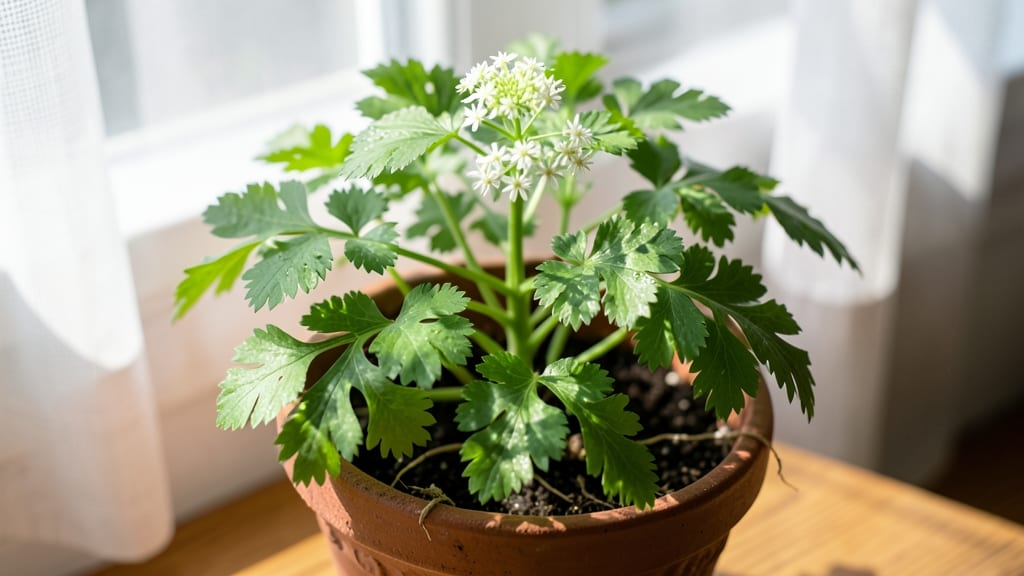
That lacy, frilly cilantro leaf shape you love in tacos comes from pruning secrets most gardeners miss. 🌿 The difference between flat-leaf and curly varieties isn't just looks—it's how you grow, harvest, and even flavor your plants.
I've grown both for years, and the curly-leaf type ('coriander') stays more compact while flat-leaf varieties bolt faster if you're not careful.
Curly-leaf cilantro thrives in partial shade and stays bushier, making it perfect for containers or small gardens. Flat-leaf cilantro needs full sun to prevent bolting, but its stronger stems handle heavier harvesting.
The key? Prune both types regularly—the more you cut, the more lush and uniform the leaves grow, and the longer they'll stay tender for cooking.
You'll notice the curly variety has finer, more delicate leaves that wilt faster when overcooked, while flat-leaf holds up better in stir-fries. For maximum yield, harvest outer leaves first and avoid cutting more than one-third at a time.
The secret to uniform growth? Consistent moisture and a light hand with the shears.
Whether you're growing for salsa or garnishes, this simple pruning routine keeps cilantro productive for 8-10 weeks—longer than most gardeners expect. The curly type stays decorative even after bolting, while flat-leaf becomes more potent-tasting as flowers form. Choose based on your cooking needs and garden space!
📚 In This Guide
- What you need
- Instructions
- Tips and common mistakes
- Wrapping up and next steps
What you need
- ● Fresh cilantro plants – Choose healthy, mature plants with at least 6–8 inches of growth (organic or pesticide-free preferred).
- ● Pruning shears or sharp scissors – Clean, sterilized tools (rubbing alcohol wipe between cuts) to avoid disease. Avoid fingers—cilantro stems are delicate!
- ○ Gloves (optional but recommended) – Protects hands from cilantro sap (which can irritate skin) and dirt.
- ● Water spray bottle – For post-pruning hydration to reduce stress on plants.
- ● Compost bin or kitchen scraps container – To repurpose trimmed leaves (they’re still edible or nutritious for compost!).
- ● Magnifying glass – Helps spot pests or early signs of disease on leaves before pruning.
- ● Pruning hormone (rooting powder) – If propagating cuttings, speeds up regrowth.
- ● Notebook & pen – Track pruning dates and plant responses for future reference.
- ● Sunlight meter or app – Ensures your cilantro gets 6+ hours of indirect light for optimal regrowth.
Instructions for pruning cilantro to encourage lacy, uniform growth
Here's the method I use to transform wild, bolt-prone cilantro into a bushy, leafy powerhouse.
✂️ Step 1: Identify and Remove Flower Stems Early
Cilantro's first sign of bolting is a thin, wiry stem that emerges from the center. This is your first pruning target—remove it immediately with clean, sharp scissors. Cut just above the leaf junction where it meets the main stem. This redirects energy into leaf production instead of seed formation.
I check plants every 3-4 days during warm weather. The moment you spot that first flower stalk, act fast. Waiting even a day lets the plant allocate resources to seed development, and you'll lose your lacy leaves for good.
🌿 Step 2: Pinch Back Leggy Growth for Bushier Plants
When cilantro grows too tall and leggy, it's time for a pinch-back pruning. Using your thumb and forefinger, gently pinch off the top 1/3 of the plant just above a set of leaves. This encourages lateral branching, giving you more leaf surface area and a fuller shape.
Do this when plants reach 6-8 inches tall. You'll notice new side shoots emerging within 5-7 days. The key is consistency—repeat this every time stems grow beyond 6 inches to maintain that compact, bushy form.
🌱 Step 3: Harvest Outer Leaves to Stimulate New Growth
Instead of cutting the whole plant, focus on harvesting the outer leaves first. Use clean scissors to snip just above the leaf junction where it meets the stem. This preserves the plant's growing point while still giving you fresh leaves. I harvest 2-3 outer leaves per plant weekly during active growth.
You'll see new leaves emerge from the center within 3-5 days. This method keeps your plants producing continuously without shocking them into bolting. The secret is balance—never take more than 1/3 of the plant's foliage at once.
☀️ Step 4: Adjust Light and Water for Optimal Leaf Shape
Cilantro needs 4-6 hours of morning sun daily—afternoon heat triggers bolting. If your plants start stretching toward light, they're not getting enough. Move them to a brighter spot or supplement with a grow light for 12 hours daily.
Water consistently to keep soil evenly moist but not soggy. I water when the top 1/2 inch feels dry. Fluctuations in moisture stress plants and accelerate bolting. Mulch with 1 inch of straw to maintain steady soil temperature and moisture.
⏰ Step 5: Time Your Final Harvest Before Bolting
When temperatures rise above 75°F, cilantro bolts quickly. Watch for the first yellow flowers—this is your final harvest window. Cut the entire plant 1 inch above the base to collect all usable leaves before seeds form.
Don't compost these plants—they'll self-seed aggressively. Instead, use them immediately in recipes or freeze them. With proper pruning, you'll get 3-4 harvests per plant before bolting becomes inevitable.
Tips & tricks for perfect cilantro leaf shape
The secret to lacy, uniform cilantro growth lies in timing and technique—here's what nobody tells you about keeping your plants productive.
Precision Timing for Flower Stems: In Step 1, that 3-4 day check interval is non-negotiable during warm weather. I've learned the hard way that even a single day's delay lets those flower stems steal energy from your leaves. Use a small notepad to mark your last pruning date—trust me, it makes all the difference. The moment you see that wiry stem, snip it at the base with clean scissors to prevent any energy transfer to seed production.
Pinch Technique Refinement: For Step 2's pinch-back pruning, focus on removing exactly one-third of the plant's height. I use my thumb and forefinger to make a clean pinch just above a leaf junction—this creates a natural branching point. The goal is to stimulate those lateral shoots without shocking the plant. If you pinch too much, you risk stressing the plant and triggering bolting.
Light Management Strategy: The 4-6 hours of morning sun requirement is critical—cilantro's nemesis is afternoon heat. I've had success using a simple grow light on a timer for 12 hours daily when natural light is insufficient. Position your plants near an east-facing window for that perfect morning sun exposure, then move them to partial shade during hot afternoons. This balance prevents the leggy growth that leads to bolting.
Harvesting Balance: When harvesting outer leaves in Step 3, remember that 2-3 leaves per plant weekly is the sweet spot. I always leave the innermost leaves intact to maintain the plant's growing point. The key is consistency—harvesting the same number of leaves each time prevents over-stressing the plant while still giving you a steady supply of fresh cilantro.
Pro Tips for Cilantro Leaf Shape
- The secret to lacy, uniform cilantro growth lies in timing and technique—here's what nobody tells you about keeping your plants productive.
- Precision Timing for Flower Stems: In Step 1, that 3-4 day check interval is non-negotiable during warm weather.
- Pinch Technique Refinement: For Step 2's pinch-back pruning, focus on removing exactly one-third of the plant's height.
Frequently asked questions
Got questions about cilantro leaf shape? You’re not alone!
Whether you're troubleshooting lacy growth or curious about timing, these FAQs cover the basics to help you grow perfect cilantro every time.
Why does my cilantro grow in lacy, feathery leaves instead of smooth?
Cilantro’s lacy, fern-like leaves are its natural shape—it’s a self-pollinating plant that produces flat, carrot-like leaves (called corriander) only when it bolts. Pruning encourages bushier, more uniform growth by promoting side shoots. If you prefer smoother leaves, try slow-bolting varieties like ‘Santo’ or ‘Calypso.’
How often should I prune cilantro for the best leaf shape?
Prune cilantro every 2–3 weeks to maintain its lacy shape and prevent bolting. Use clean scissors to snip just above a leaf node (where leaves meet the stem), leaving at least 1–2 inches of growth. Avoid over-pruning—cilantro is delicate! For a continuous harvest, prune outer leaves first to let inner growth thrive.
My cilantro leaves are turning yellow or curling—what’s wrong?
Yellowing or curling leaves often signal stress, usually from overwatering, underwatering, or heat stress. Check soil moisture—cilantro likes consistently moist (not soggy) soil. If leaves are crispy or brown, it’s too dry; if mushy or pale, it’s overwatered. Move plants to partial shade if temperatures exceed 80°F (27°C).
Can I use cilantro stems for anything besides leaves?
While stems aren’t as flavorful as leaves, they’re edible and versatile. Chop them finely for soups, stocks, or pestos, or blend into salsas or guacamole for extra depth. For cooking, blanch stems briefly to soften them. Save dried stems to make homemade cilantro-infused oil or vinegar—just steep in a jar with olive oil or apple cider vinegar for 2 weeks.
What’s the best alternative if cilantro leaf shape isn’t working for me?
If cilantro’s lacy leaves or bolting frustrate you, try these substitutes with similar flavors:
- Parsley (flat-leaf): Mild, fresh taste; great for garnishes and soups.
- Coriander (from cilantro seeds): Earthier, citrusy, and not feathery—use seeds in curries or toast for baking.
- Chervil: Delicate, anise-like flavor; pairs well with fish or eggs.
- Dill: Bold, tangy kick; perfect for pickles or yogurt sauces.
Wrapping up and next steps
Understanding the cilantro leaf shape and mastering pruning techniques can transform your garden into a thriving, lush paradise! 🌿 Whether you’re dealing with leggy stems or uneven growth, the right cuts and timing make all the difference.
With these secrets in hand, you’re now equipped to grow cilantro that’s uniform, vibrant, and ready for harvest.
Ready to put your new skills to work? Start today—grab your pruners, head to your garden, and give those cilantro leaves the care they deserve! 🌱 Try your first pruning session this weekend and watch your plants flourish.