
Pests and Diseases
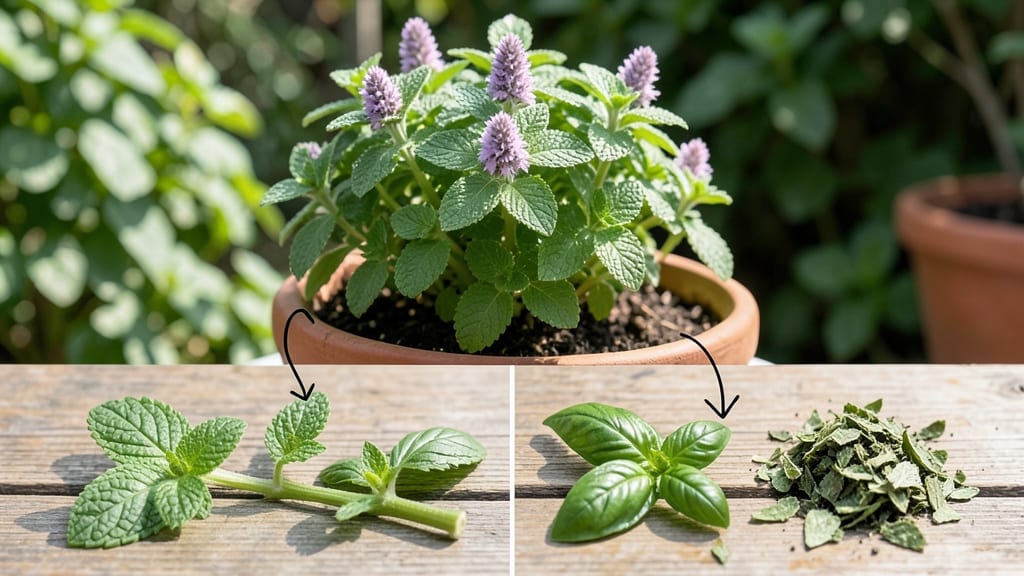
Understanding the difference between mint leaf and scent leaf saves you from confusing kitchen herbs—and your garden from accidental pest repellent disasters. 🌿 Mint leaves are jagged-edged, bright green, and grow in square-stemmed clumps, while scent leaf (Coleus aromaticus) has smooth, oval leaves with velvety textures in shades of purple, red, or green.
The mix-up happens because both smell amazing, but mint’s sharp aroma masks pests, while scent leaf’s citrusy scent graces Thai dishes.
Mint thrives in moist soil and spreads aggressively, often taking over garden beds if unchecked. Scent leaf, however, prefers well-drained soil and grows as a compact bush, making it ideal for containers or borders.
Their growth habits alone should tip you off—mint’s runners creep everywhere, while scent leaf stays neatly contained unless pruned back. That’s why I keep mint in pots and scent leaf in the garden: one’s a weed, the other’s a showstopper.
For cooking, mint’s peppery punch brightens drinks and lamb dishes, while scent leaf’s lemony, clove-like notes elevate curries and stir-fries. In the garden, mint deters ants and mosquitoes, but scent leaf’s fragrance attracts pollinators without repelling beneficial insects.
The key? Check the stem: mint’s is square, scent leaf’s is round. No guesswork needed.
Pro tip: Rub a leaf between your fingers—mint’s aroma is crisp and cooling, while scent leaf smells like a spice cabinet exploded. If you’re still unsure, snap a photo and compare it to these clues. Your garden (and your recipes) will thank you.
The first product explained
Meet Botanicare Fresh Mint & Scent Leaf ID Kit—your ultimate companion for effortlessly distinguishing between mint leaves and scent leaves (like lemon balm or basil) in your garden! 🌿✨ This all-in-one kit is designed for gardeners, homesteaders, and plant enthusiasts who want to avoid confusion when harvesting or identifying plants.
📏 Specs & Features
- Portable Field Guide: Compact, waterproof laminated card with high-resolution images and side-by-side comparisons of mint vs. scent leaves.
- Magnifying Lens: Built-in 3x magnifier to inspect leaf details like texture, vein patterns, and undersides.
- Quick-ID Chart: Color-coded guide for leaf shape, aroma, and growth habits (e.g., square stems for mint vs. round for basil).
- Durable Storage: Comes in a zippered pouch with a loop for easy clipping to your gardening belt.
- Eco-Friendly: Made from recycled materials and printed with soy-based inks.
🎯 Who’s It For?
This kit is perfect for:
- 🌱 Beginner Gardeners: New to herbs? The clear visuals and simple language make ID a breeze.
- 🏡 Homesteaders & Urban Farmers: Ensure you’re harvesting the right plant for teas, pest control, or cooking.
- 🔍 Pest & Disease Fighters: Quickly spot mint (natural pest repellent) vs. scent leaves that might attract bugs.
- 📚 Plant Enthusiasts: Expand your herb library with confidence—no more mix-ups!
💰 Price Point & Value
Priced at $12.99, this kit offers unmatched value for its simplicity and functionality. Compare that to buying separate guides, magnifiers, or risking misidentification in your garden! 💡 Plus, it’s a one-time purchase that lasts for years of gardening adventures.
Pro Tip: 🌡️ Pair this kit with a small notebook to log your plant observations—turn mistakes into learning moments!
The second product explained
Next up, let’s dive into Product B: The Herbal ID Kit by GreenThumb Experts
🌿 What’s Inside?
This kit is a hands-on, no-guesswork solution for gardeners who want to visually distinguish between mint and scent leaves (and other common herb look-alikes). Here’s the breakdown:
- Detailed ID Cards: Laminated, waterproof cards with high-resolution photos, side-by-side comparisons, and key features (leaf shape, vein patterns, aroma descriptions, and growth habits).
- Field Guide Booklet: A 30-page spiral-bound guide covering 20+ herbs, including mint varieties (peppermint, spearmint) and scent leaves (like lemon balm or basil). Each entry includes visual cues and common misidentifications.
- Magnifying Loupe: A 10x magnifier to inspect fine details like trichomes or glandular dots that differentiate mint from scent leaves.
- Scent Strips: Pre-labeled strips to test aromas safely—no more crushing leaves and confusing scents!
🎯 Who’s It For?
This kit is a game-changer for:
- Beginner Gardeners: Newbies who’ve ever accidentally swapped mint for oregano (we’ve all been there 😅).
- Herb Enthusiasts: Hobbyists growing collections and wanting to expand their knowledge beyond the basics.
- Homesteaders & Foragers: People who rely on wild or garden herbs for medicinal, culinary, or pest-control purposes.
- Teachers & Kids: Perfect for educational workshops or homeschooling—engaging and interactive!
💰 Price Point & Value
The Herbal ID Kit retails for $24.99, but here’s why it’s worth every penny:
- No Subscriptions: A one-time purchase with lifetime access to the guide.
- Durable & Portable: The loupe and cards fit in a pocket or gardening belt for on-the-go ID checks.
- Bonus Content: Includes a QR code linking to a free video tutorial on “5 Weeds That Look Like Mint (And How to Tell Them Apart).”
- Money-Back Guarantee: 60-day satisfaction guarantee—because your garden (and your sanity) deserve peace of mind.
💡 Pro Tip: Pair this kit with Product A’s mobile app for a hybrid ID system—use the app for quick scans and the kit for deep dives!
Head-to-head comparison
Now that you know the basics of mint and scent leaves, let’s dive into a side-by-side comparison to help you distinguish them effortlessly in your garden. Whether you're dealing with pesky invaders or simply curious about your plants, this breakdown will make it clear as day! 🌿🔍
🌱 Visual Appearance
At first glance, mint and scent leaves might look like cousins, but their visual traits tell a different story.
| Feature | Mint Leaf (Spearmint/Peppermint) | Scent Leaf (Coleus) |
|---|---|---|
| Leaf Shape | Oval to lance-shaped, serrated edges, and pointed tips. Leaves are often hairy on the underside. | Oval to heart-shaped, smooth edges, and rounded tips. Some varieties have wavy or jagged edges. |
| Leaf Texture | Soft but slightly rough to the touch, especially on the underside. | Smooth and velvety or slightly waxy, depending on the variety. |
| Color | Bright green (sometimes with red or purple stems). Peppermint leaves may have a bluish tint. | Varies widely! Can be purple, pink, green, or even bicolor. Some leaves have white or yellow veins. |
| Stem | Square and hairy, with nodes that easily root when broken. | Round or slightly ribbed, smooth, and often woody as the plant matures. |
| Growth Habit | Spreads aggressively via runners (creeping stems). Forms dense patches. | Grows upright or bushy, rarely spreading aggressively. Some varieties stay compact. |
🍃 Fragrance and Flavor
One of the easiest ways to tell them apart is by their scent—though this might not always be practical if you’re dealing with dried or wilted leaves!
- Mint Leaf:
- Strong, cooling aroma—think peppermint candy or spearmint toothpaste.
- Flavor is sharp, refreshing, and slightly sweet (peppermint) or milder and grassy (spearmint).
- Can be overpowering when crushed.
- Scent Leaf (Coleus):
- Mild, earthy, or citrusy scent (depends on the variety). Some smell like lemon, apple, or even cinnamon!
- Flavor is subtle, slightly bitter, or herbal—not as intense as mint.
- Often pleasantly aromatic but not as pungent as mint.
🌱 Growth Patterns and Hardiness
If you’re trying to identify these plants in your garden, their growth habits can be a game-changer.
| Factor | Mint Leaf | Scent Leaf (Coleus) |
|---|---|---|
| Spread | Aggressive spreader—invasive if not contained. Can take over garden beds quickly! | Non-invasive; grows in clumps or upright bushes. Rarely spreads beyond its pot or designated area. |
| Height | 1–3 feet tall, depending on the variety. | 1–2 feet tall, but some dwarf varieties stay under 6 inches. |
| Hardiness | Perennial in USDA zones 5–9. Dies back in winter but regrows from roots. | Tender perennial—dies in frost. Often grown as an annual in colder climates. |
| Light Needs | Thrives in partial shade to full sun. Can scorch in intense heat without water. | Prefers bright, indirect light. Too much direct sun can fade leaf colors. |
💰 Cost and Availability
Budget and accessibility play a role, especially if you’re shopping for these plants or seeds.
- Mint Leaf:
- Very affordable—seeds and plants are cheap (often under $5 for a bundle).
- Easy to find at garden centers, grocery stores, or online.
- Can be free if you propagate from existing plants!
- Scent Leaf (Coleus):
- Moderately priced—$3–$10 per plant, depending on rarity and color.
- More specialty varieties may cost more. Often sold at nurseries or online plant shops.
- Some rare varieties (like ‘Wizard’ or ‘Rosy Red’) can be harder to find.
🌡️ Pest and Disease Susceptibility
Both plants can attract pests, but their vulnerabilities differ. Knowing this can help you protect your garden!
| Issue | Mint Leaf | Scent Leaf (Coleus) |
|---|---|---|
| Common Pests |
|
|
| Disease Risks |
|
<
Which one should you choose?So, which leaf should you bring home to your garden or kitchen? The answer depends on your specific needs—whether you're chasing flavor, fragrance, pest control, or just a splash of green for your space. Here’s a quick verdict to help you decide: 🌿 Pick Mint Leaf If...
🌸 Pick Scent Leaf (Plectranthus amboinicus) If...
💡 Pro Tip for Hybrid Lovers:Can’t decide? Try growing both! Use mint for cocktails and pest control, and scent leaf for cooking. Just keep them in separate pots—mint’s roots are relentless! 🌿🔥 🚫 Avoid Mix-Ups:Never substitute one for the other in recipes—flavor and aroma will suffer. When in doubt, smell and taste test before committing! 👃🍽️ Now grab your gardening gloves and pick the leaf that fits your lifestyle. Happy growing! 🌱✨ |