
Companion Plants
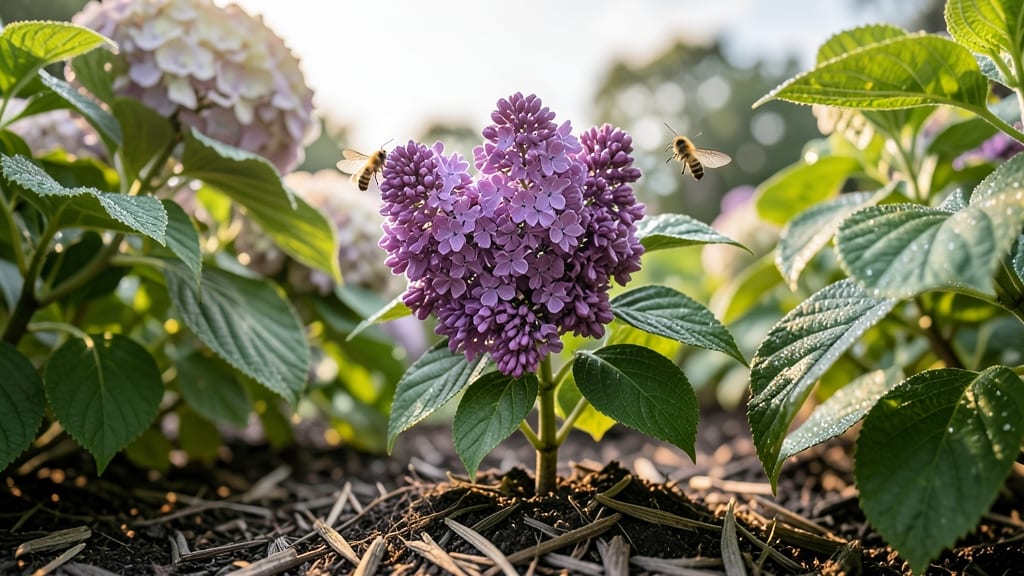
Oakleaf hydrangeas add stunning seasonal color to gardens, but their success depends on the right companions. These 10 plants enhance growth, deter pests, and create showstopping shade or sun-friendly pairings that elevate your landscape design.
Astilbe for Soft Textural Contrast
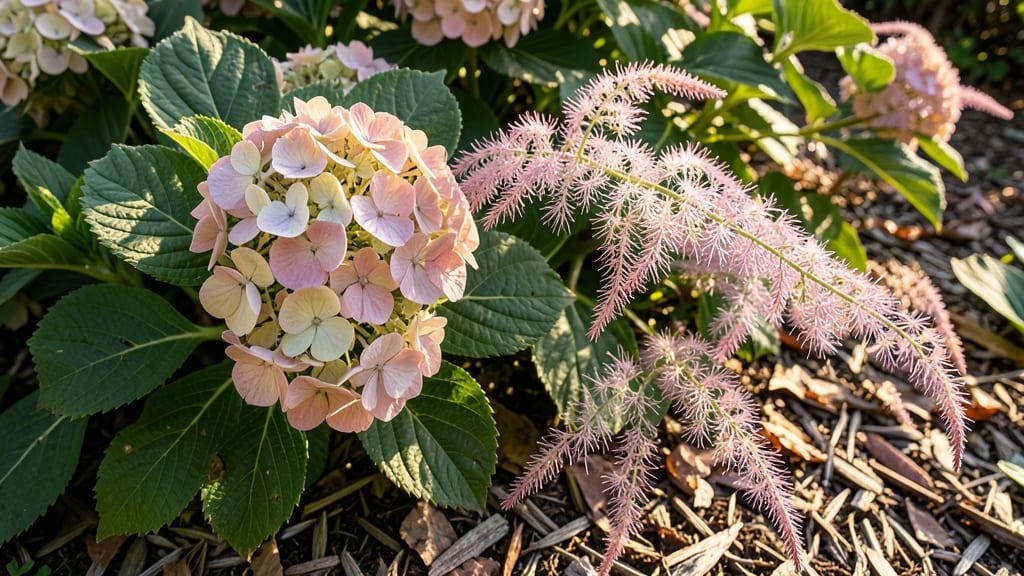
Looking for a textural dream team to pair with your oakleaf hydrangea? Astilbe delivers soft, feathery plumes that dance beside hydrangea blooms like a romantic waltz in your garden. This shade-loving perennial thrives in the same moist, well-draining soil your hydrangeas prefer, making it a low-maintenance match.
Choose from pink, white, or lavender varieties to complement your hydrangea's color palette while adding height variation. Plant astilbe in clusters of 3-5 around your hydrangea's base for maximum visual impact. Its airy foliage also helps deter pests by improving airflow around your hydrangea's leaves.
Cottage garden enthusiasts will love how astilbe's delicate structure contrasts with hydrangea's bold foliage. This pairing is perfect for gardeners who want season-long interest with minimal fuss. 🌿
Japanese Forest Grass for Movement
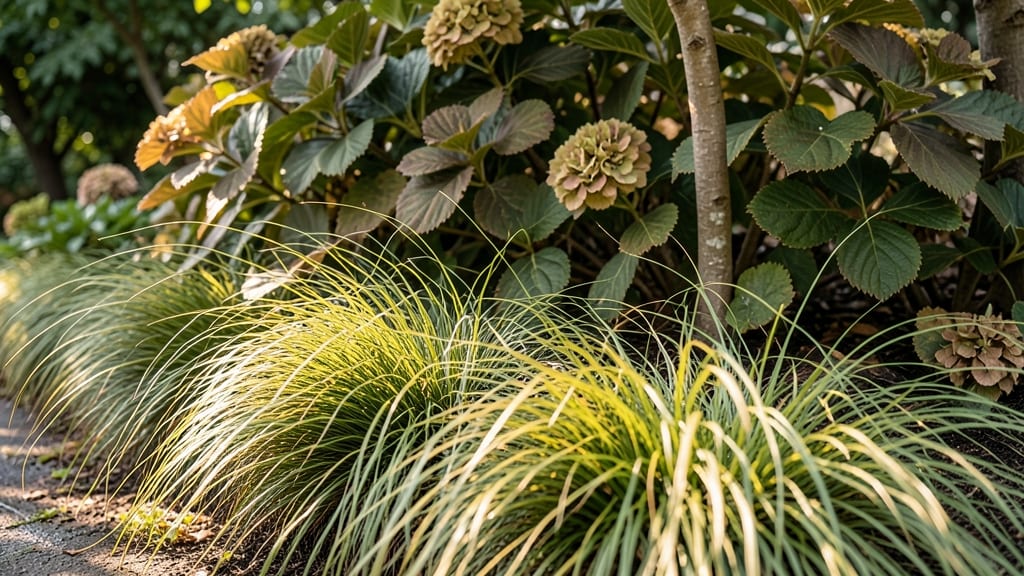
Want to add movement and texture to your hydrangea garden without extra work? Japanese forest grass (Hakonechloa macra) dances in the breeze while suppressing weeds and thriving alongside your oakleaf hydrangea.
This clumping ornamental grass adapts to both sun and partial shade, making it versatile for most garden spots. Its golden or green blades sway elegantly, creating a dynamic contrast to hydrangea's bold foliage. Plus, its dense growth naturally blocks weeds, reducing maintenance.
Perfect for gardeners who love low-maintenance plants with high visual impact, this grass adds year-round interest and pairs beautifully with hydrangeas in containers or garden beds. 🌿
Hostas for Low-Light Pairings
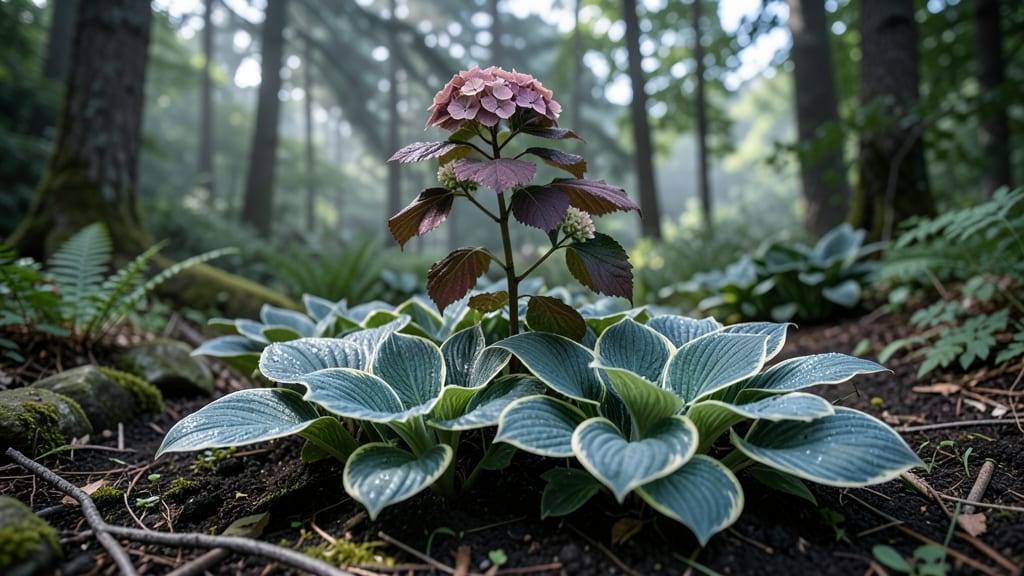
When your oakleaf hydrangea struggles in deep shade, hostas swoop in as the perfect understory ally. Their broad, glossy leaves thrive where hydrangeas might wilt, creating a lush carpet that keeps soil moist and suppresses weeds—ideal for woodland gardens or north-facing beds.
Choose blue-green varieties like 'Blue Angel' or 'Halcyon' to contrast hydrangea's deep foliage, or opt for variegated types for extra visual interest. Plant hostas 12-18 inches apart at the base of your hydrangea to maximize their ground-cover benefits while ensuring both plants get adequate moisture.
This pairing is especially valuable for gardeners with shady spots who want year-round interest without high maintenance. The hosta's dense foliage also helps protect hydrangea roots from temperature swings. 🌿
Russian Sage for Pollinator Support
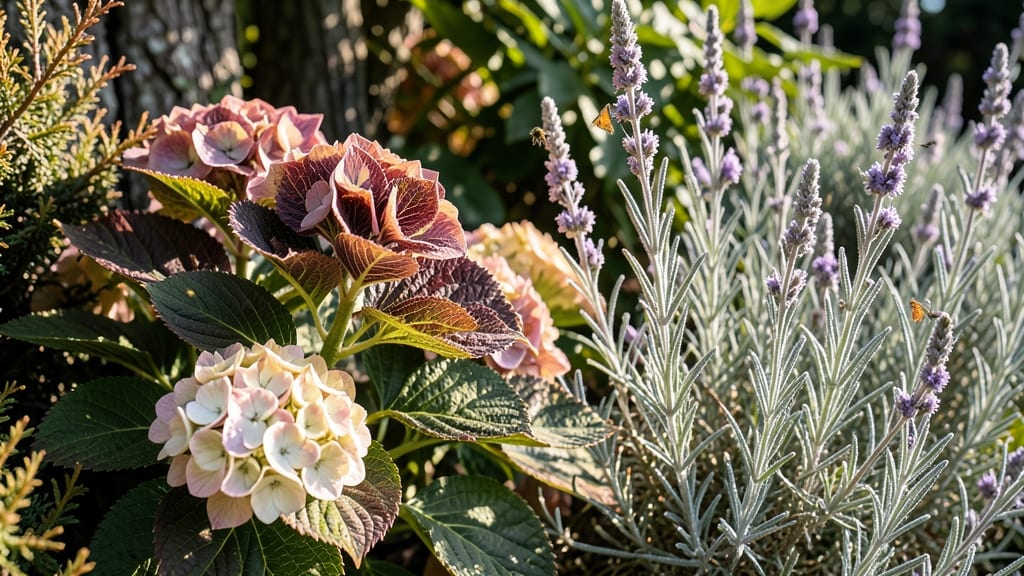
If your oakleaf hydrangea thrives in sunny spots but struggles with aphids, Russian sage is the perfect ally. This hardy perennial not only attracts pollinators like bees and butterflies but also naturally repels pests that target hydrangeas—making it a dual-purpose powerhouse for sunny garden edges.
Plant Russian sage at the border of your hydrangea bed where it gets full sun to partial shade and well-drained soil. Its silvery-green foliage and lavender-blue flower spikes (blooming from mid-summer to fall) create a striking contrast while requiring minimal water once established. The plant’s strong fragrance also deters deer and rabbits, adding an extra layer of protection for your hydrangeas.
This low-maintenance perennial is ideal for gardeners in USDA zones 5-9 who want to boost pollinator activity without extra effort. Pair it with hydrangeas to create a vibrant, pest-resistant sunny border that thrives on neglect. 🌻
Coral Bells for Season-Long Color
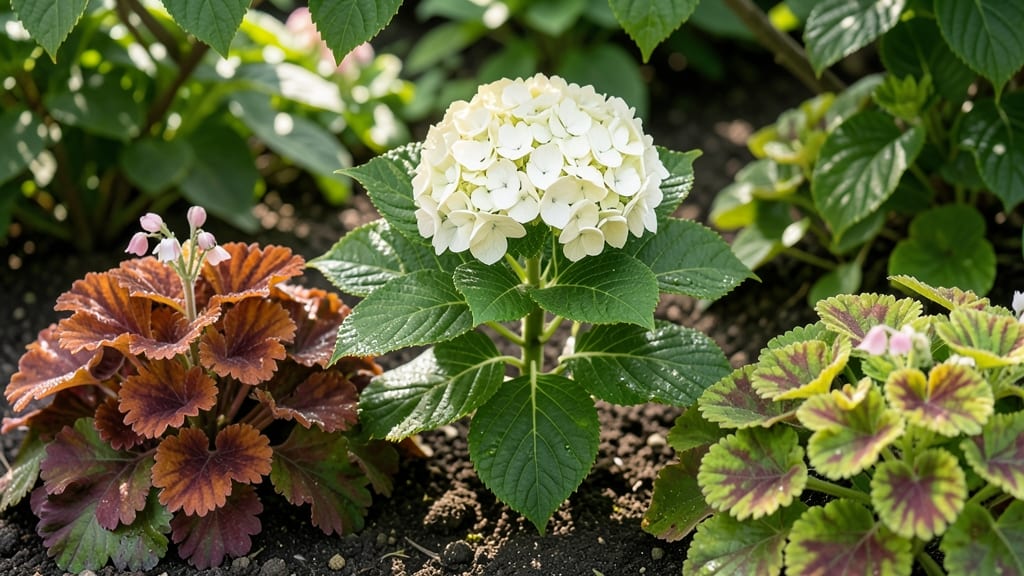
Want a garden that blooms nonstop without the fuss? Coral bells (Heuchera) deliver season-long color from spring through fall, filling gaps between oakleaf hydrangea's seasonal blooms with vibrant flowers and striking foliage.
These versatile plants thrive in the same moist, well-drained soil as hydrangeas and offer foliage in every shade from chartreuse to deep purple. Choose varieties like 'Berry Smoothie' for rich burgundy leaves or 'Lime Rickey' for bright chartreuse accents that contrast beautifully with hydrangea blooms. Plant in clusters of 3-5 for continuous color and texture.
Perfect for gardeners who love low-maintenance plants with high impact, coral bells also attract pollinators while deterring slugs—making them a win-win companion. 🌟
Ferns for Moisture Retention
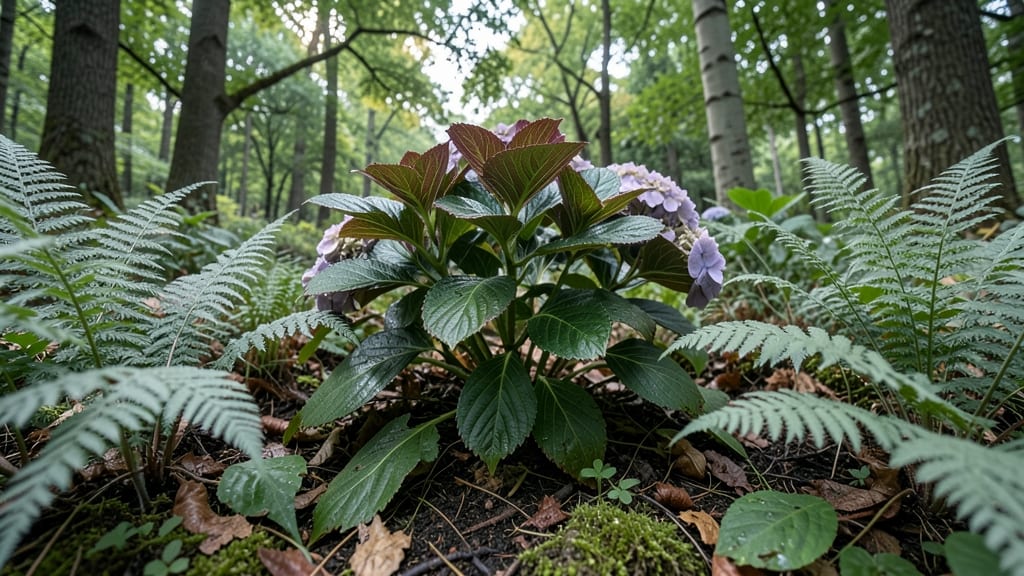
If your oakleaf hydrangea thrives in shady spots but still needs a little extra moisture boost, ferns are the unsung heroes of your garden. Their lush, feathery fronds create a natural humidity layer that keeps hydrangea roots consistently moist—ideal for woodland settings where air can dry out quickly.
Ferns like maidenhair or autumn fern thrive in partial to full shade, mirroring hydrangeas' preferences, while their dense growth naturally suppresses weeds. Plant them within 12-18 inches of your hydrangea to maximize moisture retention and texture contrast. Their delicate, arching fronds also add a soft, romantic touch to garden borders.
This pairing is perfect for gardeners who love low-maintenance, shade-loving plants that enhance both form and function. 🌿
Lavender for Pest Deterrence
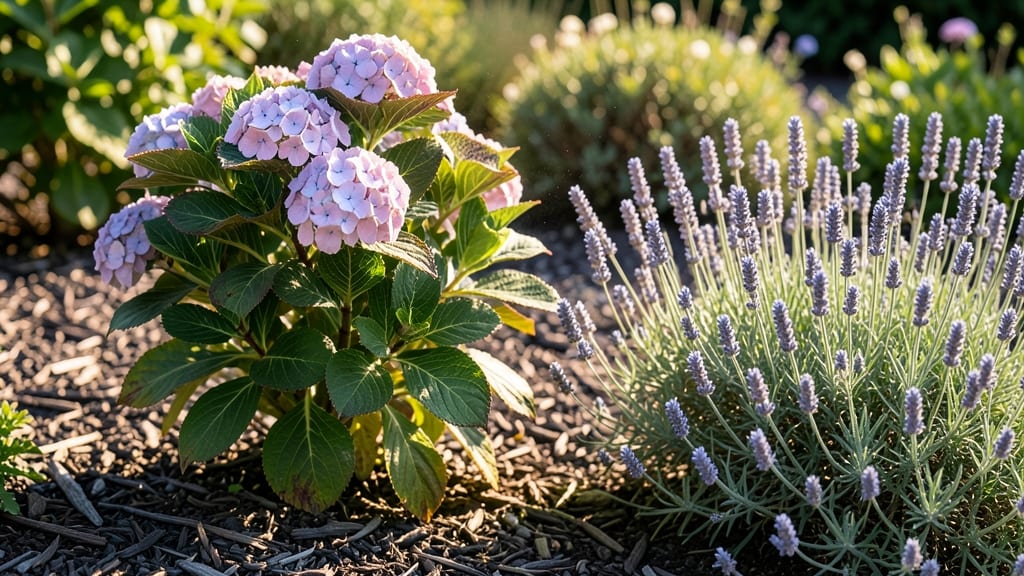
If you're tired of battling Japanese beetles and spider mites in your garden, lavender is the unsung hero you need. This fragrant perennial doesn’t just repel pests—it thrives in sunny spots where oakleaf hydrangeas often perform best, making it a perfect companion for sunny garden edges.
Lavender’s strong scent naturally deters insects while attracting beneficial pollinators, creating a balanced ecosystem. Plant it in well-drained soil with 6+ hours of sun daily, and enjoy its silvery foliage and purple blooms from mid-summer to fall. Its drought tolerance also means less watering for you!
This low-maintenance plant is ideal for gardeners who want to reduce chemical pesticides while adding fragrance and texture. 💚
Bleeding Heart for Vertical Interest
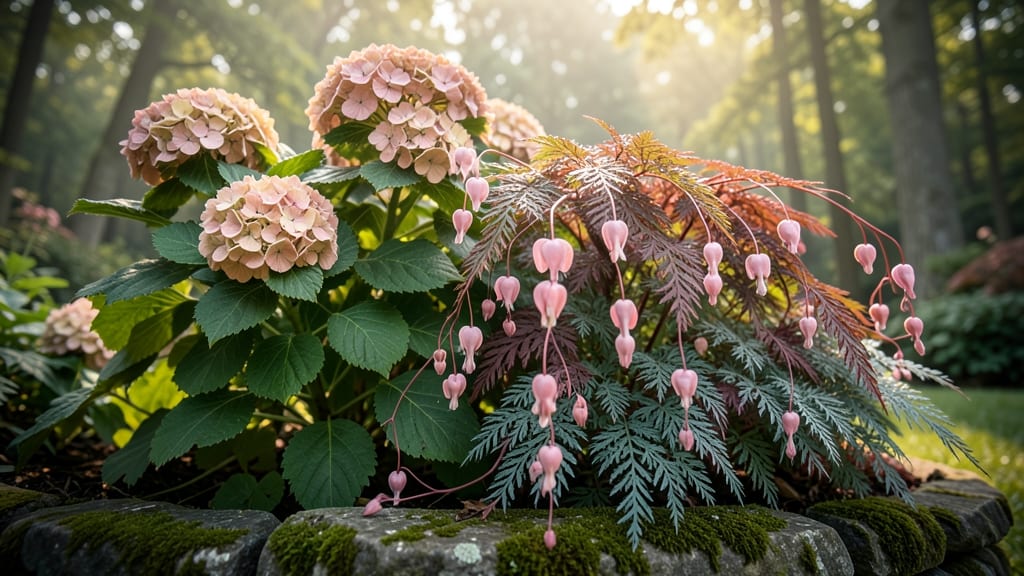
Looking to add a romantic, cascading element to your oakleaf hydrangea garden? Bleeding heart (Dicentra spectabilis) brings ethereal vertical interest with its heart-shaped blooms, creating a dreamy contrast that lifts the eye upward while sharing the same love for shade.
This spring-blooming perennial thrives in partial to full shade, just like hydrangeas, and its arching stems (2-3 feet tall) spill gracefully over garden edges or containers. Plant it 18-24 inches apart to allow its delicate foliage to mingle with hydrangea leaves while preventing competition. For extended interest, choose varieties like 'Gold Heart', which offers golden foliage in fall.
Perfect for woodland gardens or shaded borders, bleeding heart pairs beautifully with hydrangeas to create a layered, textured display. Urban gardeners with limited space will love its compact growth habit when grown in containers. 🌷
Heuchera for Foliage Variety
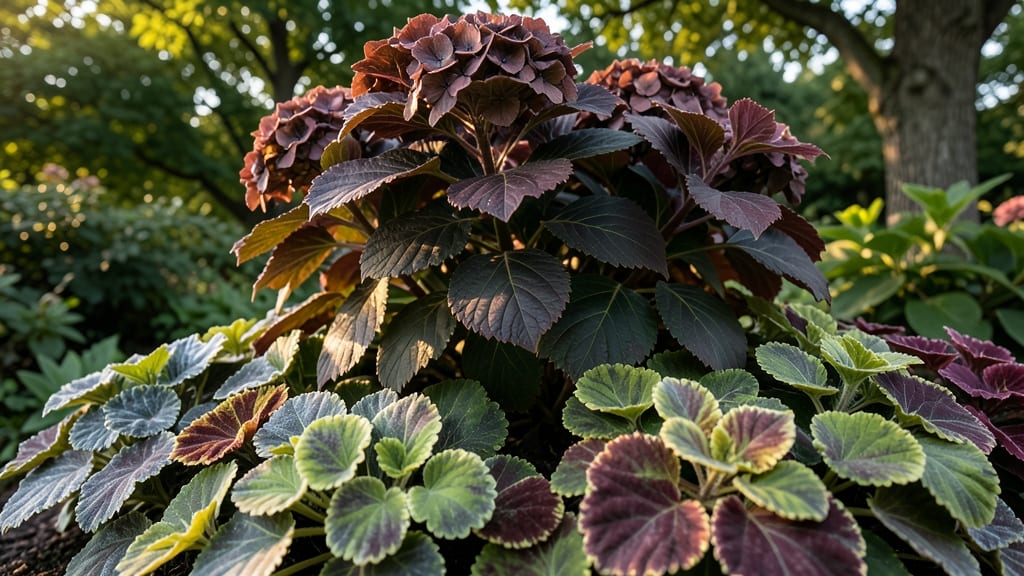
Looking to add a year-round pop of color without relying solely on blooms? Heuchera, or coral bells, delivers dramatic foliage in shades of silver, burgundy, lime green, and deep purple—perfect for framing your oakleaf hydrangea like a living painting.
This versatile perennial thrives in both sun and shade, making it ideal for gardens with shifting light conditions. Plant varieties like 'Palace Purple' or 'Lime Rickey' within 12–18 inches of hydrangeas to create a striking contrast between their velvety leaves and hydrangea blooms. Heuchera also shares similar moisture needs, reducing competition for water.
Urban gardeners and modern landscape designers love heuchera for its low-maintenance nature and ability to brighten shady spots. Pair it with hydrangeas for a season-long show that’s as easy to grow as it is stunning. 💚
Dwarf Lilac for Fragrant Accents

Bring the scent of spring to your garden with dwarf lilac, a compact powerhouse that blooms earlier than most hydrangeas. Its fragrant purple flowers not only attract bees and butterflies but also create a pollinator-friendly haven right when your oakleaf hydrangea is just waking up.
This low-maintenance shrub shares hydrangea’s love for well-drained soil and morning sun to partial shade, making it a seamless companion. Prune after flowering to maintain its tidy 3-4 foot height, and enjoy year-round interest from its glossy foliage. The best part? It thrives in containers too, perfect for small spaces or balcony gardens.
Ideal for gardeners who want fragrance without the fuss, dwarf lilac pairs beautifully with hydrangeas while keeping care simple. 🌷