
Aphids
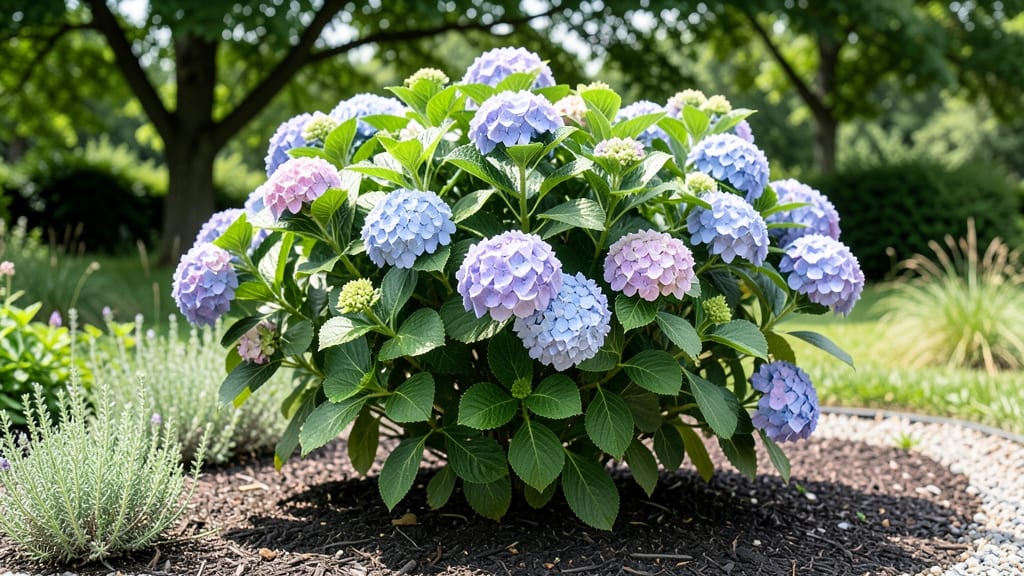
Growing the Endless Summer bigleaf hydrangea means year-round blooms that outshine every other shrub in your yard. 🌸 I’ve had mine for five years now, and it’s never failed to deliver lush, vibrant blooms from spring through frost—even after aphids tried to ruin the party last summer.
The secret lies in its reblooming nature and aphid-resistant foliage, but you’ll need the right conditions: morning sun and afternoon shade, rich but well-draining soil, and consistent moisture.
Pruning at the right time (late winter or early spring) ensures those iconic blue-to-pink blooms keep coming back bigger and brighter each season. By summer’s end, you’ll have a 6-foot-tall beauty covered in flowers, with foliage so dense that pests struggle to take hold.
The color shifts naturally with soil pH—alkaline for blue, acidic for pink—so you can tweak it like a pro. This hydrangea thrives in zones 4-9, making it one of the most versatile shrubs for nearly any climate. Let’s get yours blooming nonstop!
📚 In This Guide
- What you need
- Instructions
- Tips and common mistakes
- Wrapping up and next steps
What you need
- ● Endless Summer Hydrangea Plant: 1 nursery-grown plant (bare-root or potted, 2-3 years old for best results)
- ● Well-draining soil: Mix of 60% topsoil, 30% compost, and 10% perlite or sand (pH 5.2–6.2 for optimal blooms)
- ● Organic mulch: 2–3 inches of shredded bark or wood chips (to retain moisture and regulate temperature)
- ● Slow-release fertilizer: 10-10-10 or 12-12-12 (apply in early spring and mid-summer)
- ● Watering can or hose with a gentle spray nozzle: For deep, consistent watering (1–1.5 gallons per watering, 2–3 times per week)
- ● Garden gloves and pruning shears: Sharp, clean shears (sterilize with rubbing alcohol between cuts)
- ● Staking or support: 1–2 bamboo stakes or a small trellis (if planting in windy areas or for heavy blooms)
- ● Neem oil or insecticidal soap: For proactive aphid prevention (mix 1 tbsp neem oil + 1 tsp mild soap per quart of water)
- ● Copper tape or mesh: To deter slugs and snails from young plants
- ● Soil moisture meter: To monitor hydration levels (especially in hot climates)
- ● Epsom salt: 1 tbsp per gallon of water (monthly foliar spray for extra magnesium and green foliage)
- ● Decorative rocks or pebbles: For a polished mulch finish (adds aesthetic appeal!)
How to plant and care for Endless Summer bigleaf hydrangea
Here’s the straightforward method I use to keep these vibrant bloomers thriving with minimal fuss.
🌱 Step 1: Choose the Perfect Planting Spot
Endless Summer hydrangeas need partial shade—think morning sun and afternoon shade—to prevent leaf scorching while keeping blooms vibrant. I always pick a location with dappled sunlight (like under a tree canopy) or a spot where they’ll get 4-6 hours of filtered light daily. Too much direct sun fades the flowers faster, while too little shade weakens growth.
Check the soil first—these plants love moist, well-draining soil with a pH of 5.5-6.5. If your soil is heavy clay or sandy, mix in 2-3 inches of compost before planting to improve drainage and fertility. A simple pH test kit (available at garden centers) confirms whether you need to amend with sulfur (to lower pH) or lime (to raise it).
🪴 Step 2: Plant at the Right Depth and Spacing
Dig a hole twice as wide as the root ball but only as deep as the container’s height. This prevents burying the stem too deeply, which can cause rot. Gently remove the plant from its container and loosen any circling roots with your fingers—this encourages outward growth instead of strangling itself.
Place the hydrangea in the hole so the top of the root ball sits level with the surrounding soil. Backfill with native soil mixed with 1 cup of compost, pressing lightly to remove air pockets. Space plants 4-6 feet apart—they’ll spread over time, but crowding leads to weak stems and fewer blooms. Water deeply right after planting to settle the soil.
☀️ Step 3: Water and Mulch for Consistent Moisture
Endless Summer hydrangeas hate drying out, but they also can’t tolerate soggy roots. Water 1-2 times per week (more in extreme heat) until the top 2 inches of soil feel moist. You’ll know it’s time to water when the soil feels dry to the touch—don’t wait until leaves wilt. Deep watering encourages strong root growth.
Apply 2-3 inches of mulch (like shredded bark or pine straw) around the base, keeping it 2 inches away from the stem. Mulch locks in moisture and regulates soil temperature. Replenish mulch annually in spring to maintain protection. Avoid over-mulching—too much can suffocate roots and attract pests.
✂️ Step 4: Prune for More Blooms Year-Round
Prune late winter or early spring (before new growth starts) to shape the plant and encourage reblooming stems. Cut back last year’s stems by half—this removes dead wood and redirects energy to new growth. For any leggy or crossing branches, trim them back to a healthy outward-facing bud. Never prune in fall, as it removes next year’s blooms.
Deadhead spent flowers throughout the season to prompt more blooms. Snip off faded clusters just above a set of leaves or bud. I also remove any yellowing or diseased leaves immediately to keep the plant healthy. A sharp pair of pruners (sterilized with rubbing alcohol) prevents tearing and minimizes stress on the plant.
💧 Step 5: Feed and Protect for Long-Term Health
Feed in early spring with a balanced, slow-release fertilizer (like 10-10-10) or a hydrangea-specific formula. Follow package instructions—over-fertilizing burns roots and leads to fewer blooms. I also add 1 cup of organic compost around the base in spring to replenish nutrients naturally.
Watch for aphids or powdery mildew, which can stress the plant. Spray leaves with neem oil (mixed as directed) if you spot pests, and ensure good air circulation by pruning crowded branches. In hot climates, provide afternoon shade during peak summer to prevent leaf scorch. With consistent care, your Endless Summer hydrangea will reward you with bold blooms from early summer through fall.
Tips & tricks for perfect Endless Summer hydrangea care
These simple strategies will help your hydrangea thrive with less effort and more stunning blooms.
Soil pH Secret: Test your soil pH before planting—blue hydrangea flowers thrive at pH 5.5-6.5, while pink flowers prefer 6.5-7.0. If your soil is outside this range, adjust it gradually over 2-3 months. I use a simple test kit and add sulfur or lime as needed, following package instructions. The color change happens naturally as the pH shifts!
Root Ball Rescue: When planting, gently tease apart any circling roots you find in the root ball. These can strangle new growth if left intact. I use my fingers to loosen them while the plant is still in the container—this encourages roots to spread outward into the surrounding soil. Don't worry if it looks messy; the plant will thank you with stronger stems.
Watering Wisdom: Water deeply until the top 2 inches of soil feel moist—this encourages roots to grow deeper rather than staying near the surface. I use a moisture meter to check, but you can also stick your finger in the soil. In extreme heat, you might need to water every 2-3 days, but always let the topsoil dry slightly between waterings to prevent root rot.
Pruning Precision: When cutting back last year's stems by half in Step 4, look for the first set of outward-facing buds. Cut just above these buds to encourage new growth in the right direction. I always sterilize my pruners with rubbing alcohol between cuts to prevent spreading disease. This careful pruning is what gives these hydrangeas their legendary year-round blooms!
Pro Tips for Endless Summer Bigleaf Hydrangea
- These simple strategies will help your hydrangea thrive with less effort and more stunning blooms.
- Soil pH Secret: Test your soil pH before planting—blue hydrangea flowers thrive at pH 5.5-6.5, while pink flowers prefer 6.5-7.0.
- Root Ball Rescue: When planting, gently tease apart any circling roots you find in the root ball.
Frequently asked questions
Got questions about keeping your Endless Summer bigleaf hydrangea thriving? Here are some of the most common ones—plus quick answers to help you grow with confidence!
How do I know if my hydrangea is truly Endless Summer?
The Endless Summer variety is one of the few bigleaf hydrangeas that blooms on both old and new wood. If your plant flowers in spring and again in summer/fall, it’s likely the real deal! Check the label or ask your nursery—some lookalikes (like Oakleaf) only bloom once.
Why aren’t my blooms changing color like they should?
Hydrangea flower color shifts based on soil pH! For Endless Summer, blue blooms need acidic soil (pH 5.5–6.0), while pink blooms thrive in neutral/alkaline soil (pH 6.5–7.5). Test your soil with a kit and amend with lime (for blue) or sulfur (for pink). Patience is key—color changes take 4–6 weeks.
Are aphids really a big problem for this hydrangea?
While no plant is 100% aphid-proof, Endless Summer is highly resistant compared to other hydrangeas. Still, you might spot them on new growth. Spray with neem oil or a soapy water solution (1 tsp mild soap + 1 quart water) for a gentle fix. Prune heavily infested stems to prevent spread.
When is the best time to prune Endless Summer hydrangeas?
Prune right after flowering (late summer/early fall) to encourage next year’s blooms. Avoid cutting back in spring—this removes buds for the current season! Deadhead spent blooms in fall to tidy up, but leave some for winter interest. Use clean, sharp shears to avoid disease.
Can I grow Endless Summer in a container?
Containers work great for Endless Summer, especially in colder climates where you can move them indoors during winter. Use a well-draining potting mix and a pot at least 12–15 inches wide. Choose a spot with morning sun + afternoon shade and water consistently—containers dry out faster!
Wrapping up and next steps
The Endless Summer Bigleaf Hydrangea is a game-changer for gardeners craving bold, aphid-resistant blooms that last all season! 🌸 Its resilience, vibrant colors, and low-maintenance charm make it a standout choice—whether you're a beginner or a seasoned pro.
With the right care, you’ll enjoy year-round beauty without the hassle of pests.
Ready to transform your garden? Start by selecting your plants and follow the tips above to keep them thriving. Happy gardening—your future hydrangea oasis awaits! 🌿