
Propagation
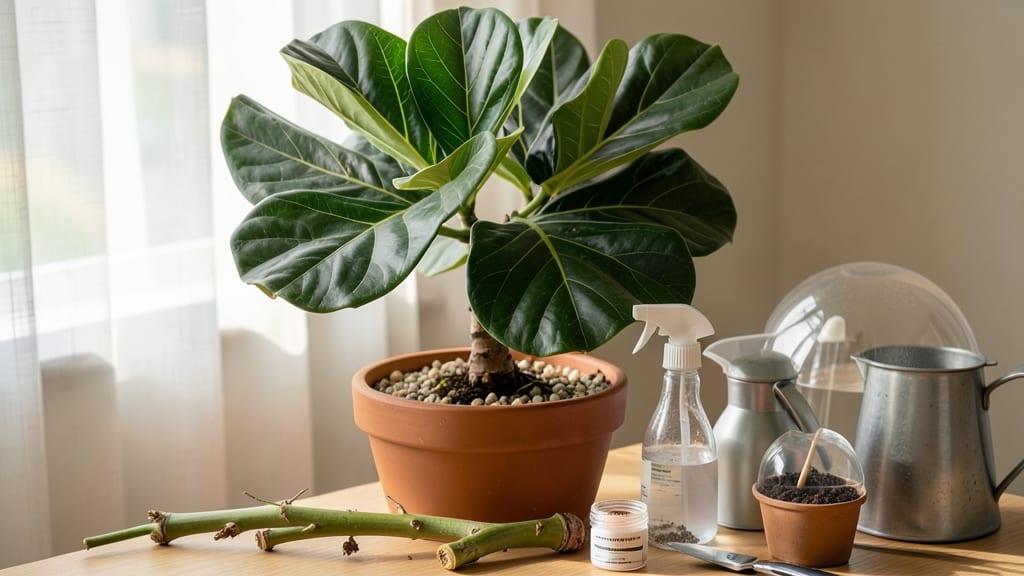
Fiddle leaf tree propagation from stem cuttings is the easiest way to grow a new plant—no fancy equipment or green thumb required. 🌱 I’ve rooted more than a dozen cuttings, and the secret lies in clean cuts, patience, and keeping the water fresh. Unlike soil propagation, water lets you watch roots grow, which is oddly satisfying (and reassuring when you’re nervous about failure).
The best time to take cuttings is spring or early summer, when the plant is actively growing. You’ll need sharp pruners, a clean jar of water, and a healthy stem with at least 4-5 leaves.
Avoid overwatered plants—they rot faster than you can say “fiddle leaf flop.” The right stem makes all the difference between thriving roots and a sad, mushy end.
Within 2-4 weeks, you’ll see tiny white roots sprouting from the stem. Keep the water changed weekly and the jar in bright, indirect light—no direct sun, or the leaves will crisp like overcooked fries.
Once roots reach 2-3 inches, it’s time to transplant into soil, where your cutting will grow into a full-sized tree with minimal stress.
This method works for beginners and pros alike, and the results are foolproof if you stick to the basics. No soil mess, no guesswork—just roots growing right before your eyes. Ready to turn one plant into five? Let’s get started.
📚 In This Guide
- What you need
- Instructions
- Tips and common mistakes
- Wrapping up and next steps
What you need
- ● Healthy fiddle leaf tree stem cuttings: 4–6 inches long, with at least 2–3 sets of leaves (use sharp, sterilized scissors or pruning shears).
- ● Clean, room-temperature water: Distilled or filtered water (avoid tap water with chlorine/fluoride). Use a clear glass jar (16–20 oz) for visibility.
- ○ Rooting hormone (optional but helpful): A powder or gel (e.g., Clonex or Hormex) to boost root growth.
- ● Small pebbles or marbles: 3–5 pieces to weigh down the cutting and submerge the nodes (where leaves grow).
- ● Spray bottle with water: For misting leaves to prevent wilting.
- ● Bright, indirect light: A south- or east-facing window or a grow light (12+ hours/day).
- ● Hydrogen peroxide (3% solution): 1–2 drops in water to prevent bacterial growth.
- ● Humidity dome or plastic bag: To create a mini greenhouse effect (remove once roots form).
- ● Labeling tags: To track cuttings by date (roots typically appear in 2–6 weeks).
- ● Coconut coir or sphagnum moss: For transitioning rooted cuttings to soil later.
Fiddle leaf tree propagation: Step-by-Step stem cutting guide
Here’s my foolproof method for growing new fiddle leaf trees from cuttings—no fancy tools or guesswork required.
🌱 Step 1: Select and Prepare Healthy Stem Cuttings
Choose a 4-6 inch stem from your fiddle leaf tree, making the cut just below a leaf node where roots naturally form. I always pick stems that are pencil-thick—thinner ones struggle to root, while thicker ones rot before they take. Use clean, sharp scissors or pruning shears to avoid crushing the stem.
Remove the lower leaves, leaving only 2-3 sets of leaves at the top. This reduces moisture loss while the cutting focuses energy on root growth. Dip the cut end in room-temperature water for about 10 seconds—this helps hydrate the cells before rooting. I keep a small jar of water nearby for this quick soak.
💧 Step 2: Place Cuttings in Water for Root Development
Fill a clean glass or jar with filtered or distilled water—tap water’s chlorine can inhibit rooting. Position the cutting so only the lower 2 inches are submerged, leaving the leaves above water to prevent rot. Change the water every 3-5 days to keep it fresh and oxygenated.
Place the jar in bright, indirect light—think east-facing window or under a sheer curtain. Direct sun scalds the leaves, while too little light stunts root growth. You’ll see tiny white bumps along the submerged stem in 2-3 weeks—these are root hairs forming. Once roots reach 1-2 inches, your cutting is ready for planting.
☀️ Step 3: Transition Cuttings to Soil for Establishment
After roots form, transfer the cutting to a 4-inch pot filled with well-draining potting mix. I mix 50% peat moss and 50% perlite to prevent soggy soil. Gently tap the sides of the pot to settle the mix, then create a small hole with your finger and slide the cutting in, burying the roots 1 inch deep. Press the soil lightly around the stem to secure it.
Water lightly until moisture drains from the bottom, then place the pot in bright, indirect light for 2 weeks. Avoid direct sun—new plants burn easily. You’ll know it’s thriving when new leaves appear in 4-6 weeks. This is the moment you’ve been waiting for: your cutting has officially become a tree.
✂️ Step 4: Care for New Plants Through the First Year
Keep the soil evenly moist but never soggy—fiddle leaf trees hate wet feet. I water when the top inch of soil feels dry, usually every 5-7 days. Mist the leaves occasionally to maintain humidity, especially if your home is dry. Fertilize lightly with a balanced liquid fertilizer every 2 months during spring and summer to encourage steady growth.
Rotate the pot quarter-turn weekly so the tree grows straight, not lopsided. Watch for yellow leaves—this usually means overwatering or poor drainage. If you see it, reduce watering and check the pot’s drainage holes. With patience, your propagated fiddle leaf tree will reach 3-4 feet in its first year, just like its parent.
Tips & tricks for fiddle leaf tree propagation success
These little details make all the difference between a thriving new plant and a sad, failed experiment.
Cutting Selection Matters: In Step 1, focus on stems that are pencil-thick and have at least 2-3 sets of mature leaves. I've tried thinner stems and they often rot before rooting, while thicker ones can become waterlogged. Look for stems that feel firm but bend slightly—they're perfect for propagation. The cut should be clean and diagonal just below a leaf node, which is where roots naturally form.
Water Quality is Critical: For Step 2, filtered or distilled water is a game-changer. Tap water's chlorine can actually inhibit root growth, and I've seen cuttings that looked perfect after 2 weeks suddenly fail because of this. If you don't have filtered water, let tap water sit out for 24 hours before using—this allows chlorine to evaporate. Change the water every 3-5 days to prevent bacterial growth that can rot your cuttings.
Lighting Secrets: The bright, indirect light in Step 2 and Step 3 is crucial—direct sun will scorch those delicate new leaves while too little light stunts growth. I place my cuttings on an east-facing windowsill where they get gentle morning sun. If you don't have good natural light, a simple grow light on a timer works wonders. You'll know you've got the right balance when you see those white root hairs forming in 2-3 weeks.
Soil Mix Matters: In Step 3, that 50/50 peat moss and perlite mix prevents soggy soil that would drown your new roots. I add a handful of orchid bark to mine for extra aeration. When planting, bury the roots just 1 inch deep—any deeper and they'll struggle to breathe. The first 2 weeks are critical, so keep the soil consistently moist but never soggy, and watch for those new leaves to appear in 4-6 weeks.
Pro Tips for Fiddle Leaf Tree Propagation
- These little details make all the difference between a thriving new plant and a sad, failed experiment.
- Cutting Selection Matters: In Step 1, focus on stems that are pencil-thick and have at least 2-3 sets of mature leaves.
- Water Quality is Critical: For Step 2, filtered or distilled water is a game-changer.
Frequently asked questions
Got questions about propagating your fiddle leaf tree? You’re not alone!
Here are some of the most common concerns—and their easy solutions—to help you grow those lush, new plants with confidence.
When is the best time to take fiddle leaf tree cuttings?
The ideal window is late spring or early summer when the plant is actively growing. Avoid winter dormancy—cuttings taken then struggle to root. If you’re impatient, spring is your best bet for success! Just ensure your cuttings are healthy and free of pests.
How do I know if my cutting is ready to root?
Look for 4-6 inches of stem with 2-3 sets of mature leaves. Trim just below a leaf node (where roots form) at a 45-degree angle for maximum surface area. Avoid woody stems—they root poorly. Pro tip: Lower leaves should be removed to reduce moisture loss.
Why isn’t my cutting rooting in water?
Common culprits: chlorine (use filtered or rainwater), direct sunlight (place in bright, indirect light), or bacterial growth (change water every 3-5 days). If leaves yellow or stems rot, try hormone rooting gel or switch to soil propagation for stubborn cuttings.
Can I propagate fiddle leaf trees in soil instead of water?
Mix perlite or sand with potting soil for drainage, dip the cutting in rooting hormone, and keep the soil moist but not soggy. Cover with a plastic bag to retain humidity (remove daily for airflow). Soil propagation speeds up rooting for some growers—just be patient!
How long does it take for roots to form?
In water, roots typically appear in 2-4 weeks, while soil can take 4-8 weeks. Patience is key! Monitor for tiny white bumps (early roots) or gentle tugs (resistance = roots!). Once roots hit 1-2 inches, transplant to soil—just handle gently to avoid shock!
Wrapping up and next steps
Propagating a fiddle leaf tree from stem cuttings is a rewarding and surprisingly simple process—no green thumb required! 🌱 With just a few basic supplies and patience, you can grow a thriving new plant in water before transitioning it to soil.
Whether you're a beginner or a seasoned plant parent, this method offers a low-stress, high-reward way to expand your leafy collection.
Now that you’re armed with the know-how, give it a try! Start with a healthy cutting, follow the steps, and watch your new fiddle leaf tree take root. Once it’s ready, share your success—or your struggles—with fellow plant lovers. Happy growing! 🌿