
Pruning
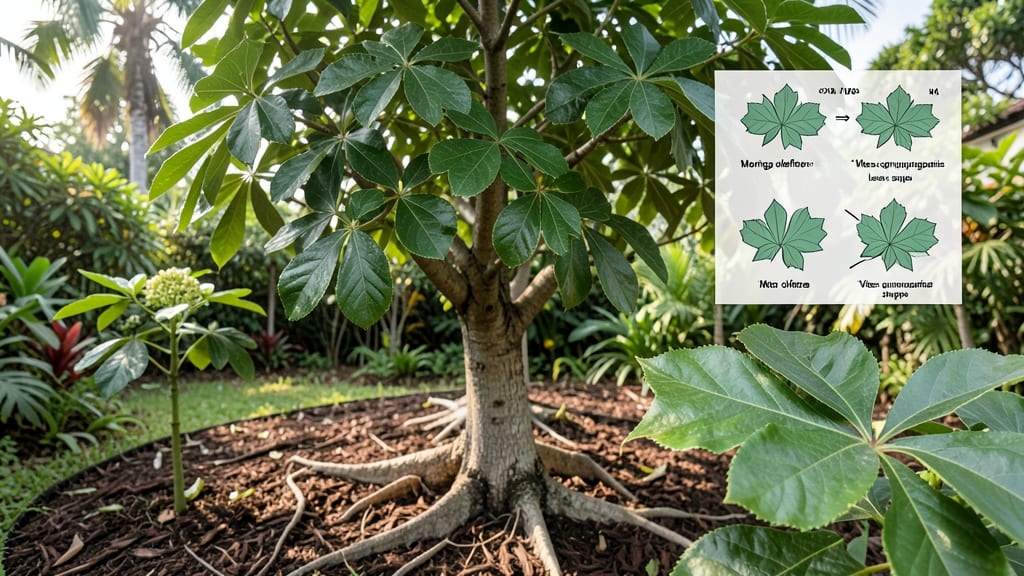
That "classic" five-leaf tree identification might be poison ivy—and knowing it could save your skin 🌿. The moment I saw those familiar clusters of three shiny leaflets (actually five if you count the two smaller ones at the base), I knew it wasn’t just a random vine.
That’s the key: poison ivy’s leaves grow in groups of three, but each leaf is actually made of five leaflets—three larger ones and two smaller ones hidden at the base.
Look closer: the edges are smooth, the leaves are glossy, and they grow in a zigzag pattern along the stem. The bark is smooth when young but develops a scaly texture as it matures.
If you’re scratching your head wondering why your yard has these vines, check for hairy roots or aerial roots clinging to trees—classic poison ivy behavior. And yes, that itchy rash is your body’s way of saying "don’t touch this."
But not all five-leaf trees are troublemakers. Virginia creeper (Parthenocissus quinquefolia) has five leaflets too, but they’re softer, palm-shaped, and turn a brilliant red in fall. No rash, just stunning autumn color.
The trick is the arrangement: poison ivy’s leaves grow in a more staggered pattern, while Virginia creeper’s are evenly spaced like fingers on a hand.
Why does this matter? Poison ivy thrives in disturbed soil, fences, and even your favorite hiking trail. Misidentifying it could mean a week of misery—or worse, spreading it accidentally.
Grab a magnifying glass, check the leaf arrangement, and remember: "Leaves of three, let it be." That’s the classic rule gardeners and hikers swear by.
The Hidden Triggers Behind Leaf Patterns
Understanding why a tree develops five distinct leaves—especially in species like the horse chestnut (Aesculus hippocastanum)—often comes down to a mix of genetics, environmental stress, and growth habits.
While some trees naturally produce five-leaf clusters (palmate compound leaves), others may mimic this pattern due to external factors. Below, we break down the key reasons behind this fascinating phenomenon.
Some trees, like the horse chestnut, are hardwired to grow in five-leaf arrangements due to their genetic coding.
This trait is a defining feature of the Hippocastanaceae family, where the leaf structure is optimized for: - Efficient sunlight capture – Five broad leaflets maximize surface area for photosynthesis. - Structural stability – The central stem (rachis) anchors the leaves, reducing wind damage. - Species identification – This unique pattern helps pollinators and animals recognize the tree.
💡 Pro Tip: If you’re identifying a tree and see consistent five-leaf clusters, it’s a strong hint that it’s a horse chestnut—or a close relative like the red buckeye (Aesculus pavia).
Not all five-leaf patterns are genetic.
Some trees develop this appearance due to environmental pressures, such as: - Nutrient deficiencies – Lack of magnesium (Mg) or potassium (K) can cause abnormal leaf growth, sometimes leading to clustered or malformed leaflets. - Waterlogging or drought – Poor drainage or extreme dryness forces trees to conserve resources, sometimes resulting in stunted, palmate-like leaves. - Pruning mistakes – Over-pruning or top-heavy cuts can stress a tree, leading to compensatory growth where new leaves sprout in unusual clusters.
🔥 Actionable Fix: If your tree’s leaves are developing odd patterns due to stress, test soil pH and nutrients, adjust watering, and avoid aggressive pruning in late summer.
Sometimes, pests or pathogens alter leaf structure, creating a five-leaf appearance where none was originally intended.
Common culprits include: - Leaf miners (larvae that tunnel through leaves) – Can cause distorted growth, making healthy leaves look fragmented. - Fungal infections (like anthracnose) – Weakens leaf tissue, leading to premature leaf drop and irregular regrowth. - Bacterial blight – Causes leaf curling and splitting, sometimes mimicking palmate shapes.
🛡️ Prevention Tip: Regularly inspect leaves for unusual spots, holes, or discoloration. Early treatment with neem oil or fungicides can prevent permanent damage.
Young trees often exhibit different leaf patterns than mature ones due to:
- Juvenile vs. mature leaves – Some species (like sweetgum, Liquidambar) start with simple leaves but develop lobed or compound leaves as they age.
- Seasonal variations – Spring flushes may produce smaller, more clustered leaves before the tree’s full canopy develops.
- Grafting or hybridization – If a tree is a grafted hybrid, its leaves may blend traits from multiple parent species, sometimes resulting in unexpected five-leaf clusters.
⏰ Timing Matters: If you’re identifying a young tree, wait a season—its leaf structure may stabilize as it matures.
Sometimes, human activity alters leaf patterns:
- Selective breeding – Nurseries may propagate trees with desirable traits, including leaf shape.
- Physical damage – Hail, lawnmower strikes, or animal grazing can tear leaves, creating a false five-leaf effect.
- Chemical exposure – Herbicides, air pollution, or salt spray (near roads) can cause leaf deformation.
🚫 Avoid Common Mistakes: If you suspect chemical damage, test soil for contaminants and consider mulching to protect roots.
While the horse chestnut is the most famous five-leaf tree, others—like the sweetgum, tulip tree, or some maples—can develop similar patterns due to the reasons above. Always check bark, buds, and overall tree shape for accurate identification.
Would you like a side-by-side comparison table of common five-leaf trees vs. lookalikes? Let us know in the comments!
Quick Fixes for Five-Leaf Tree Confusion
Identifying a five-leaf tree—like the iconic Japanese maple or horse chestnut—can be tricky, especially when growth patterns or leaf shapes seem off. Whether you're dealing with misidentification, poor growth, or pest-related stress, these practical solutions will help you diagnose and resolve common issues.
Below, we’ve mapped out cause-specific fixes, complete with prevention tips to keep your tree thriving.
If your tree’s leaves look like they should have five points but don’t, you might be dealing with a lookalike species. Here’s how to correct the confusion:
🔍 Step 1: Compare Leaf Structures - Japanese maple (Acer palmatum): True five-leaf palmate shape (like fingers spreading from a central point).
If leaves are lobed or serrated, it’s likely a different maple (e.g., Acer rubrum). - Horse chestnut (Aesculus hippocastanum): Large, opposite compound leaves with 5–7 leaflets (not a single five-pointed leaf). Confuse it with a maple?
Check for bud scars—maples have 3 buds, while horse chestnuts have 2.
📸 Step 2: Take Reference Photos
Use your phone to snap close-ups of leaf undersides, bark, and buds. Apps like PictureThis or LeafSnap can cross-check your findings against a database.
💡 Pro Tip:
> If your tree has alternate leaves** (one per node, spiraling up the stem) but five points, it’s probably a maple. Opposite leaves (pairs at each node) suggest a horse chestnut, buckeye, or magnolia.
If your five-leaf tree is growing slowly or leaves are yellowing, it’s likely a soil or care issue. Here’s how to revive it:
🌱 Step 1: Test Soil pH and Nutrients - Japanese maple: Prefers acidic soil (pH 5.0–6.5).
Test with a soil kit or send a sample to a local extension office. - Horse chestnut: Tolerates neutral to slightly alkaline soil (pH 6.0–7.5) but needs phosphorus and potassium for strong growth. - Fix: Amend soil with compost (for organics) or slow-release fertilizer (like 10-10-10 NPK in spring).
💧 Step 2: Adjust Watering Habits
- Overwatering? Yellow leaves + mushy stems = root rot. Let soil dry 1–2 inches deep between waterings.
- Underwatering? Crispy leaf edges + drooping = thirsty tree. Water deeply 1–2x per week (more in heatwaves).
🍃 Step 3: Prune for Airflow
Crowded branches trap moisture, inviting fungus. Thin out 10–20% of branches in late winter to improve airflow.
| Issue | Cause | Fix | Prevent |
|---|---|---|---|
| Yellow leaves (bottom) | Nitrogen deficiency | Apply blood meal or fish emulsion | Mulch with compost annually |
| Slow growth | Compacted soil | Aerate + top with sand/peat mix | Avoid heavy foot traffic near roots |
| Leaf scorch (brown edges) | Underwatering or sunburn | Mulch + water early morning | Plant in partial shade if needed |
Spots, holes, or webbing on leaves? Pests or diseases are likely the culprits. Act fast to save your tree.
🐜 Step 1: Identify the Culprit
- Japanese beetles: Skeletons leaves, chew five-leaf maples aggressively.
- Aphids: Sticky residue (honeydew) on leaves.
- Fungal spots: Dark circular patches (common in humid climates).
🛡️ Step 2: Apply Targeted Treatments
| Pest/Disease | Treatment | Prevention |
|---|---|---|
| Japanese beetles | Neem oil spray or milky spore | Plant trap crops (e.g., roses) |
| Aphids | Soapy water spray (1 tsp dish soap + 1L water) | Introduce ladybugs (natural predators) |
| Powdery mildew | Baking soda spray (1 tsp + 1L water + drop of soap) | Space plants for air circulation |
🌡️ Pro Tip:
> Prevent fungal issues by watering at the base (not overhead) and removing fallen leaves in autumn.
Frost cracks, sunscald, or dieback after winter? These steps will help your tree bounce back.
🌡️ Step 1: Inspect for Damage
- Peeling bark or blackened branches = frost crack. Prune damaged wood in late winter.
- Sunburnt leaves (brown patches on south side) = winter sun exposure.
🪴 Step 2: Protect Next Winter
- Wrap young trees in burlap (especially horse chestnuts).
- Mulch heavily (4–6 inches) to insulate roots.
- Avoid pruning in late summer/fall (encourages new growth that can’t harden off).
To keep your five-leaf tree healthy and easy to ID:
- Label young trees with species tags.
- Monitor soil annually (test pH every 2–3 years).
- Prune in late winter (before buds swell).
- Watch for pests in spring/summer (early detection = easier fixes).
By tackling issues early and precisely, your five-leaf tree will stay distinct, vibrant, and pest-free—making identification a breeze! 🌳💚
Frequently asked questions
Why do some trees have five leaflets instead of three?
Many trees develop five leaflets due to their genetic makeup. For example, Virginia creeper has five leaflets per leaf, while poison ivy has three larger leaflets with two smaller ones hidden at the base. This pattern often helps with sunlight capture and species recognition.
How can I tell if my five-leaf tree is poison ivy?
Check for these key signs: hairy roots, zigzag growth patterns, and smooth-edged leaves. Unlike Virginia creeper, poison ivy leaves grow in a staggered pattern, not evenly spaced. Remember the saying: "Leaves of three, let it be."
Are all five-leaf trees toxic?
No! While poison ivy is toxic, many five-leaf trees like Virginia creeper or Japanese maple are completely safe. The key difference is leaf arrangement and texture—poison ivy leaves are glossy and grow in clusters of three (with hidden fifth leaflets). Always verify with a reliable plant ID app.
What's the best way to photograph a tree for accurate identification?
Capture close-ups of leaves (front and back), bark texture, and buds. Include a reference object (like a coin) for scale. Use natural light and apps like PictureThis or LeafSnap for instant matches. Avoid blurry or cropped images—details matter!
Can I safely touch a tree with five leaflets?
Only if you've confirmed it's non-toxic! Even safe trees can cause skin irritation if you have allergies. When in doubt, wear gloves and wash your hands thoroughly afterward. For poison ivy, never touch it—the oil (urushiol) can cause severe rashes.